Archive Room Seven

Kyoto Nightlife and Workshops

Kyoto does not end when the temple gates close. It narrows into chosen rooms: vinyl bars, red signs, whisky glasses, river windows, studio fire, sharpened metal, lit alleys, club counters, and the small urban chambers where attention is gathered deliberately rather than inherited. This gallery follows the city after dark and under the hand: nightlife, making, performance, and the intimate rooms of selected mood.
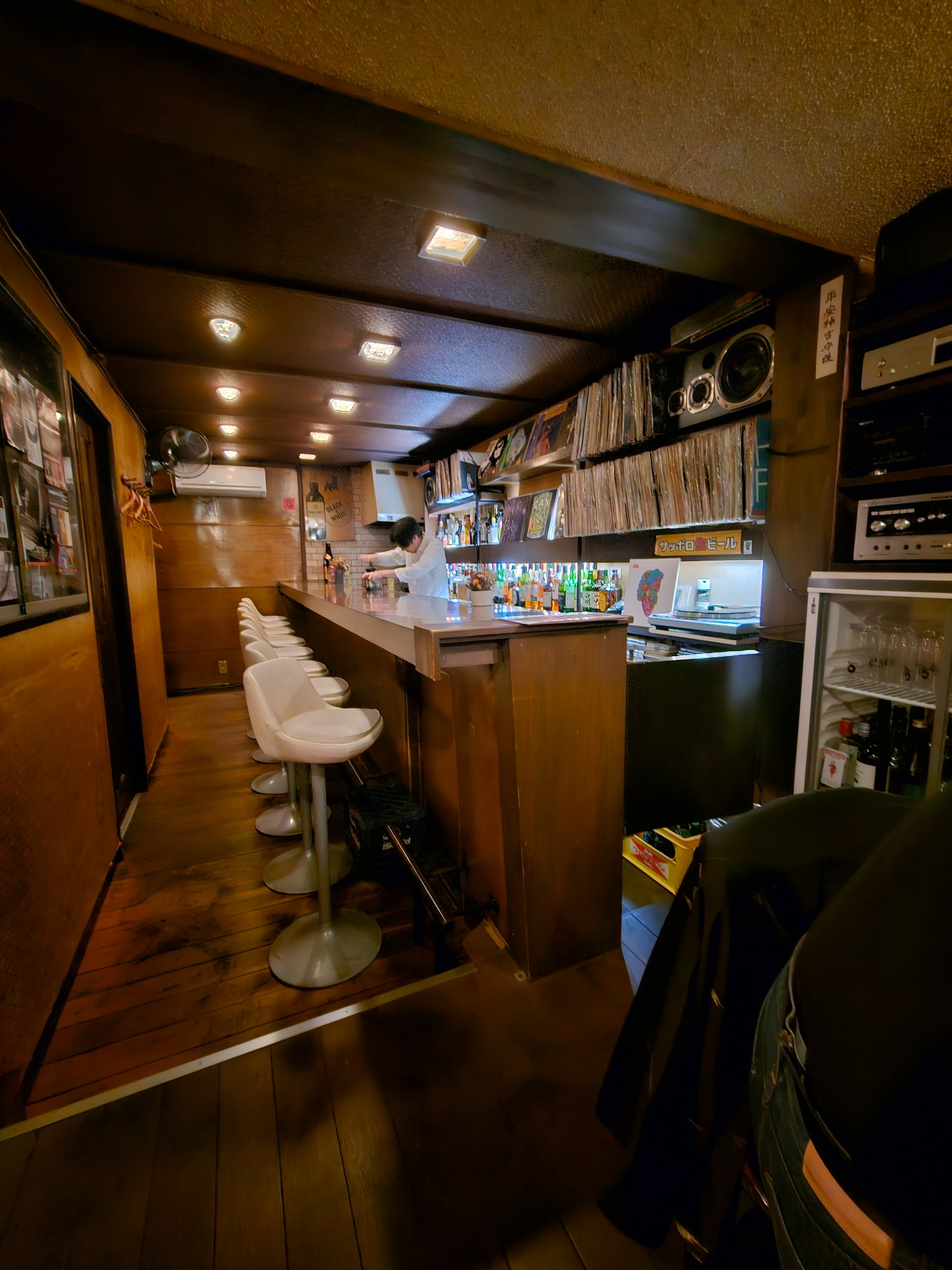
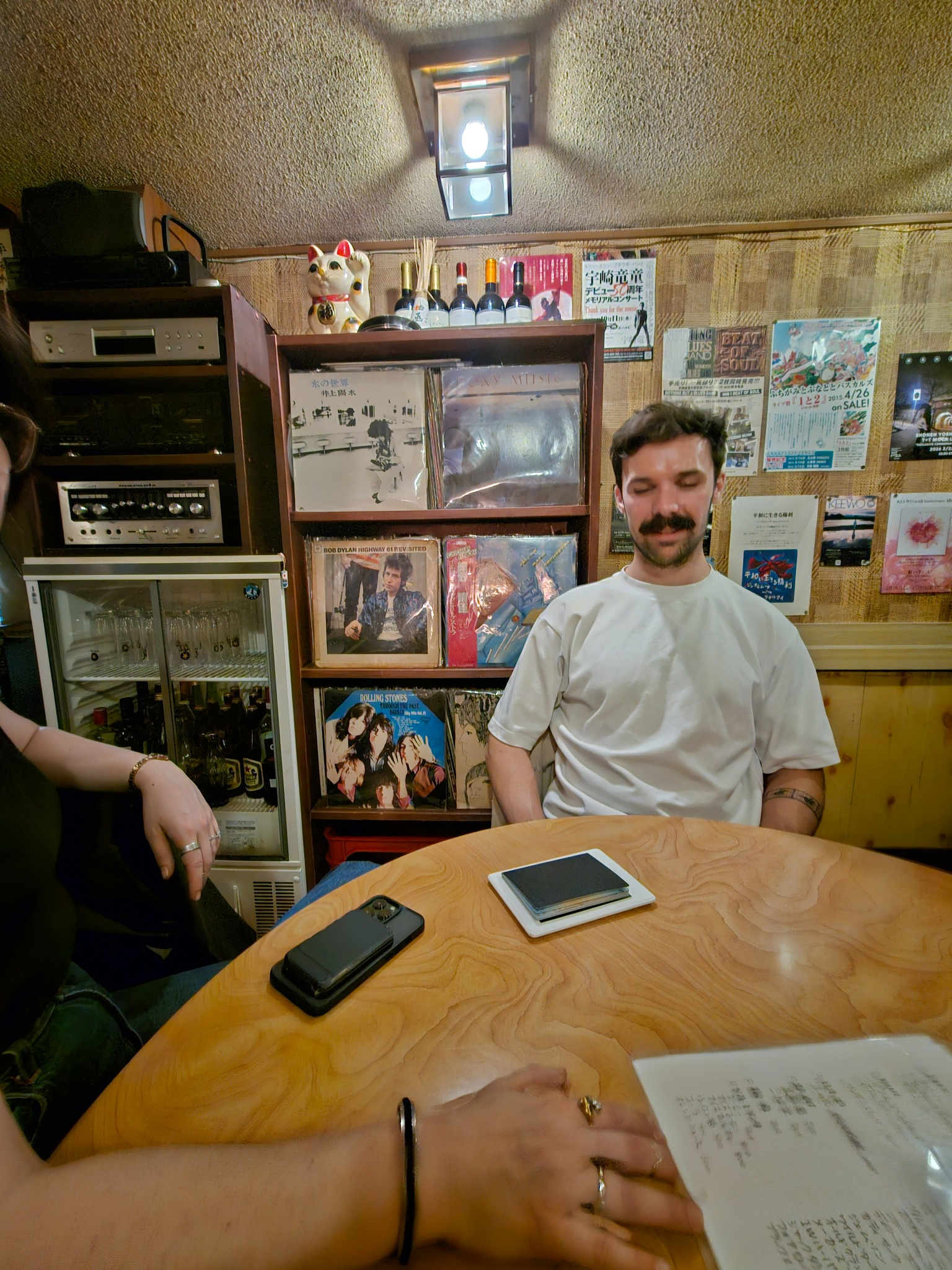
Interior of Bar Mitchell in Kyoto with records and warm light.
The chosen room begins where the city stops instructing and starts composing mood.

Some rooms are inherited. Others are chosen on purpose. Kyoto by night is full of the second kind. A bar sign glowing above the street. A turntable waiting under low light. A whisky glass catching amber. A workshop flame. A target block with a red shuriken. A narrow passageway. A room small enough that every object inside it has already agreed to the same atmosphere. These places do not happen by accident. They are assembled.

This gallery gathers Kyoto’s assembled rooms: nightlife, craft, demonstration, costume, club, neon, records, metalwork, and the kind of urban attention that lives by curation rather than inheritance. The image selection is drawn from your uploaded archive inventory. :contentReference[oaicite:0]{index=0}

Night does not erase the city’s seriousness.
It concentrates it into smaller rooms.

Bar Mitchell and the Vinyl Rooms
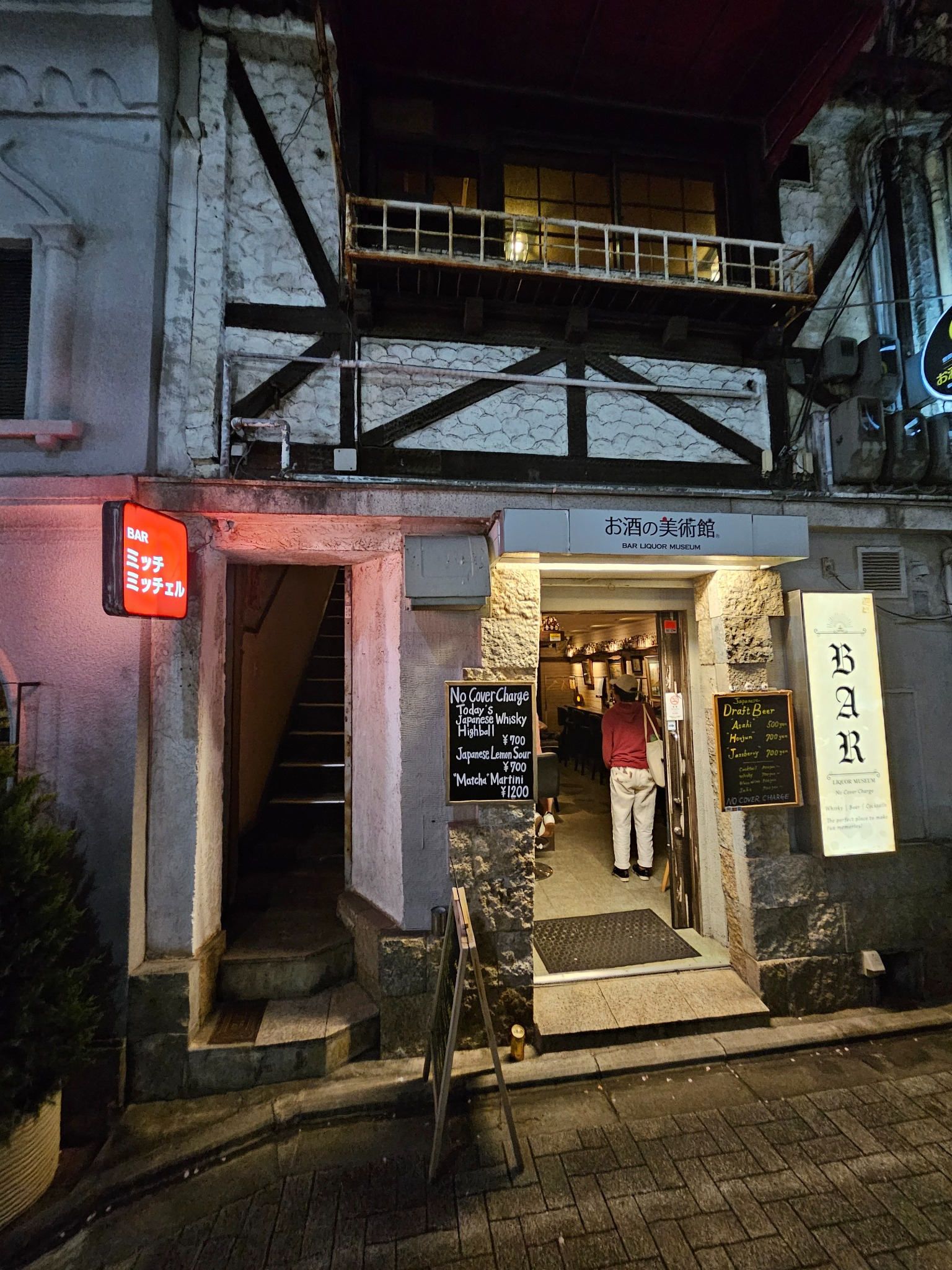
Bar Mitchell and Liquor Museum frontage in Kyoto.
The frontage announces the chosen room before the door is even opened.
Interior of Bar Mitchell vinyl bar in Kyoto.
Records, wood, bottles, and low light make attention feel curated rather than casual.
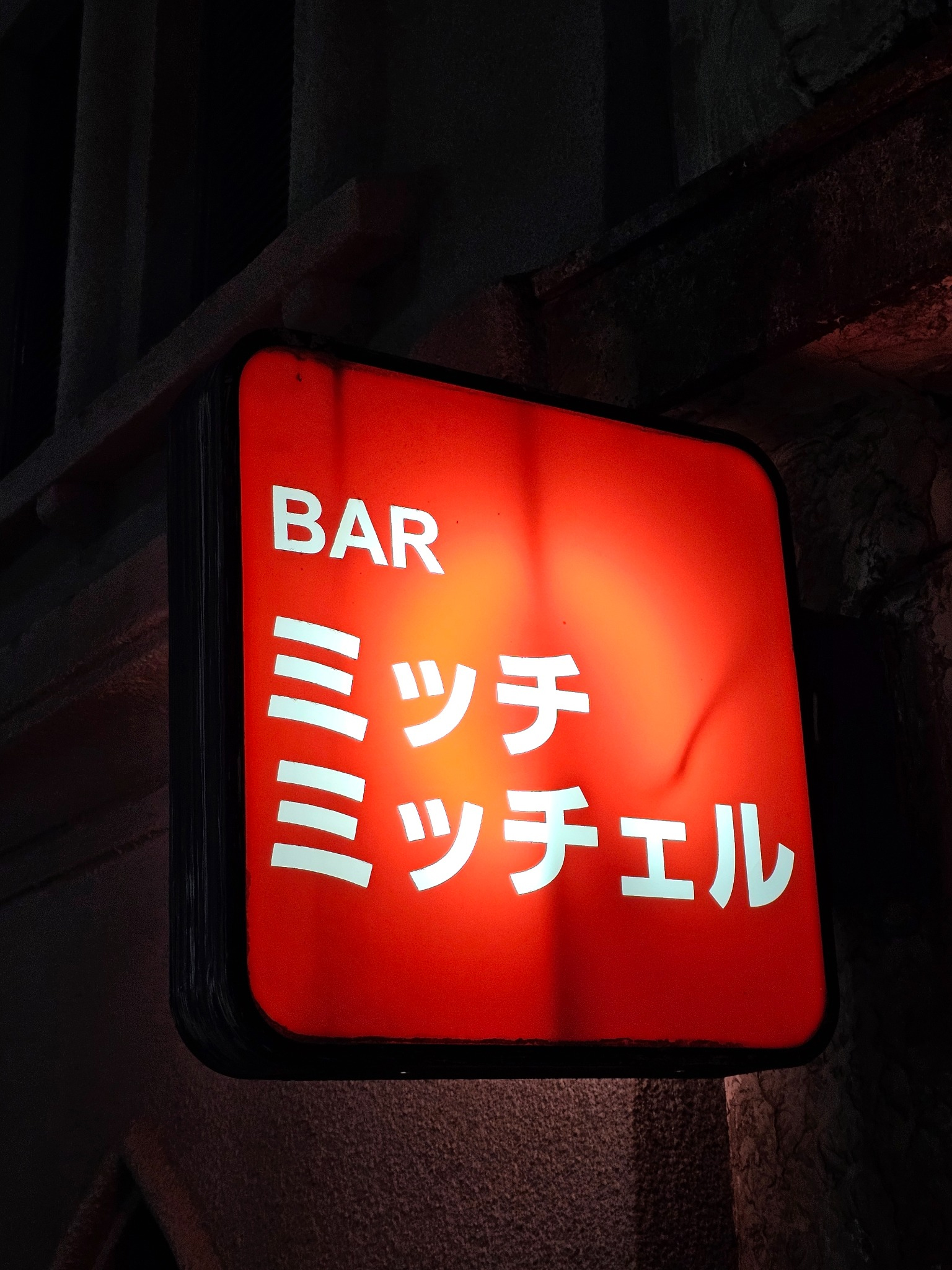
Bar Mitchell red sign in Kyoto.
A red sign turns the street into invitation.
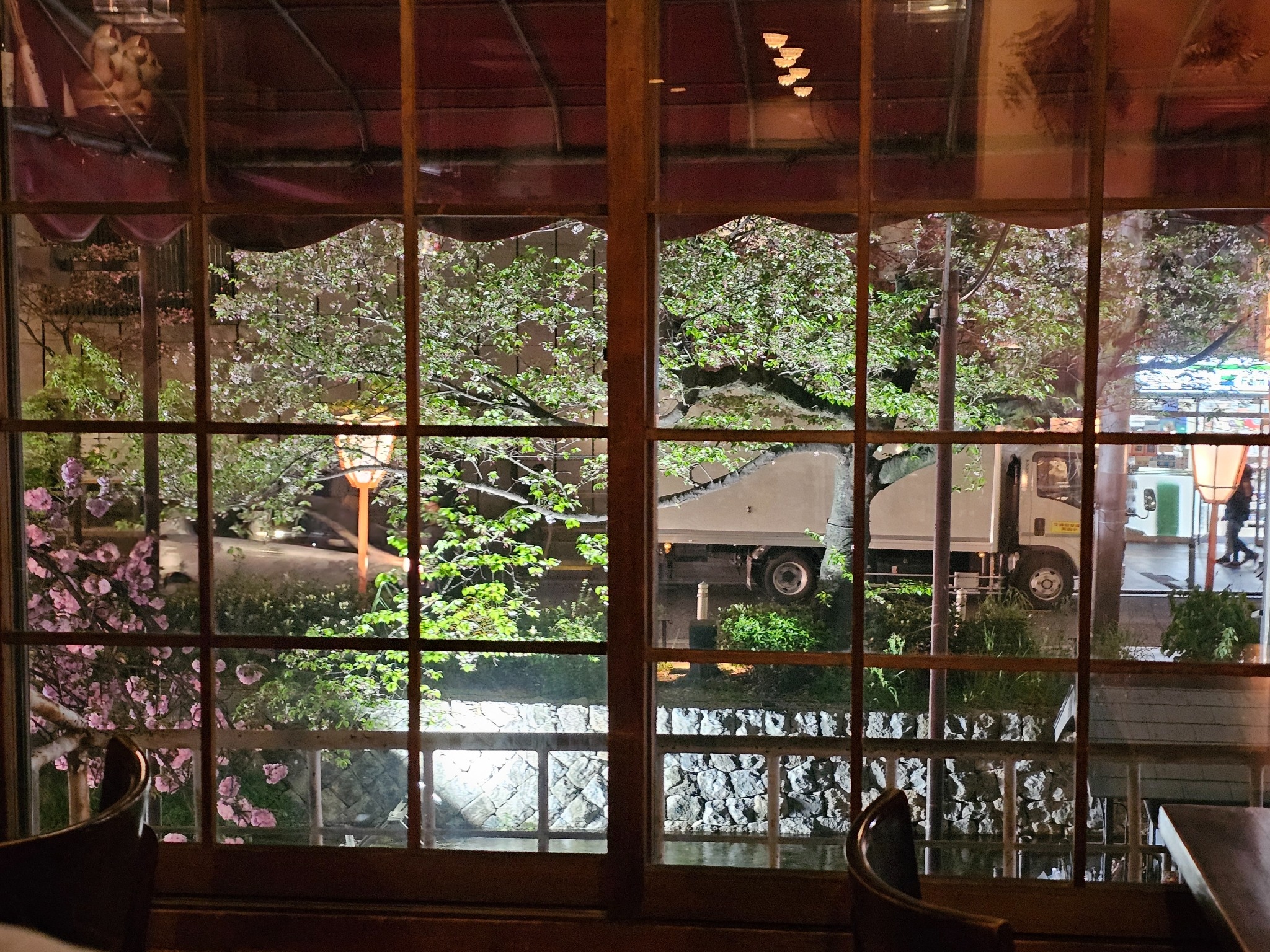
River view window at Bar Mitchell.
Even the window belongs to the room once the city is framed correctly.
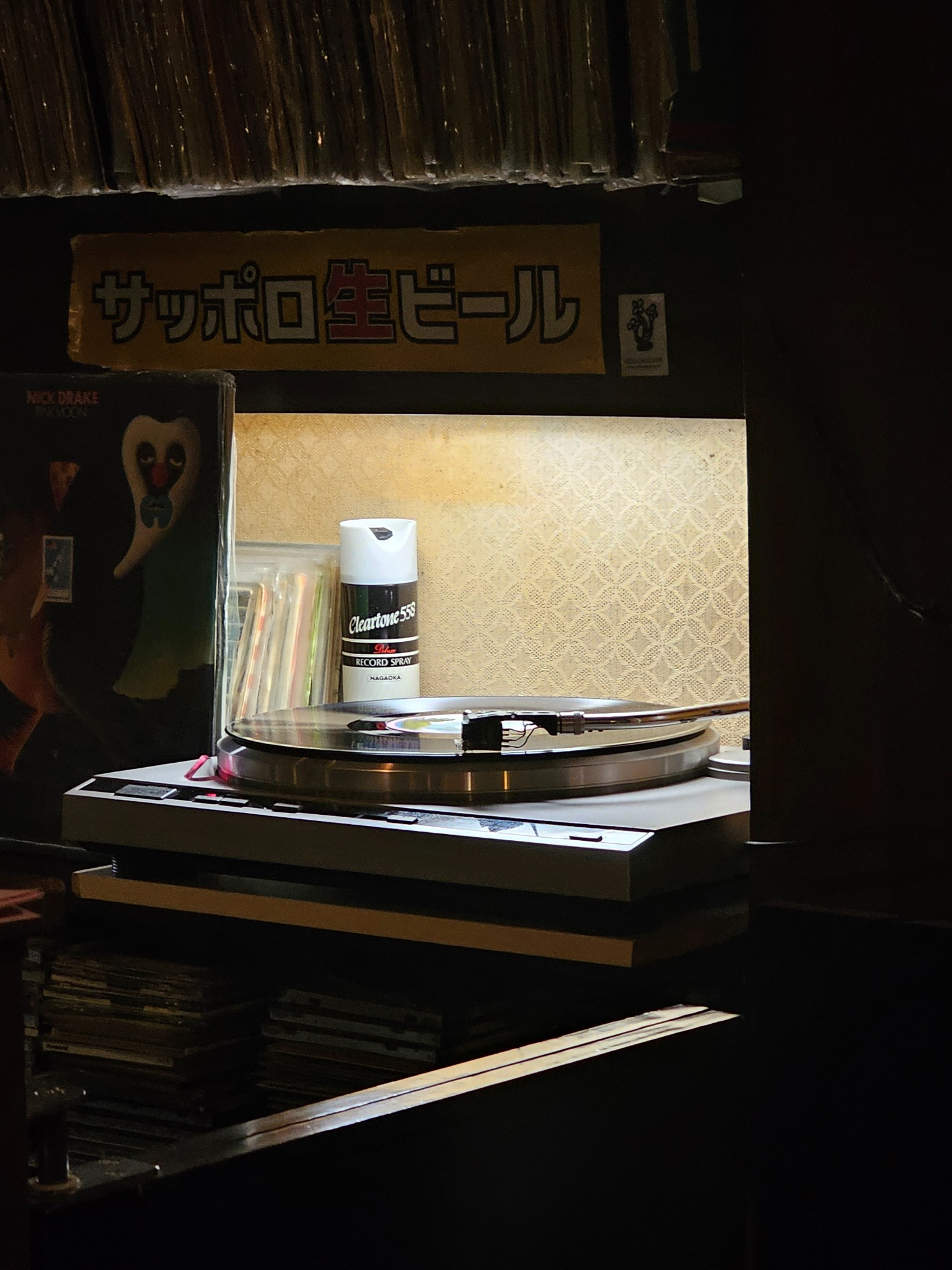
Turntable and records at Bar Mitchell.
Music is stored here the way old houses store bowls: carefully, materially, and within reach.
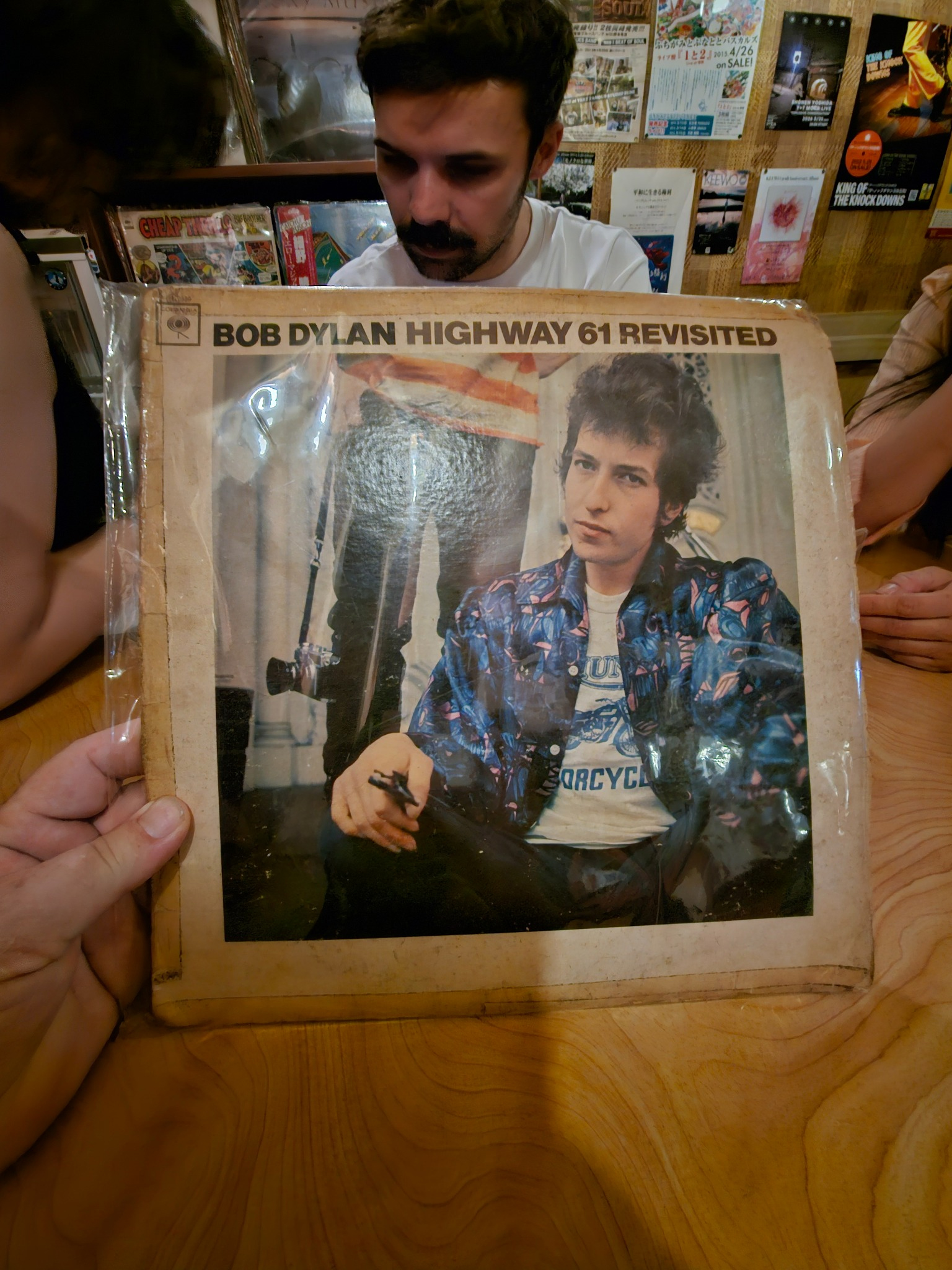
Bob Dylan Highway 61 record at Bar Mitchell.
One record sleeve can carry an entire extra climate into the room.
Friends at Bar Mitchell in Kyoto.
A room becomes nightlife only when the human scale enters it.
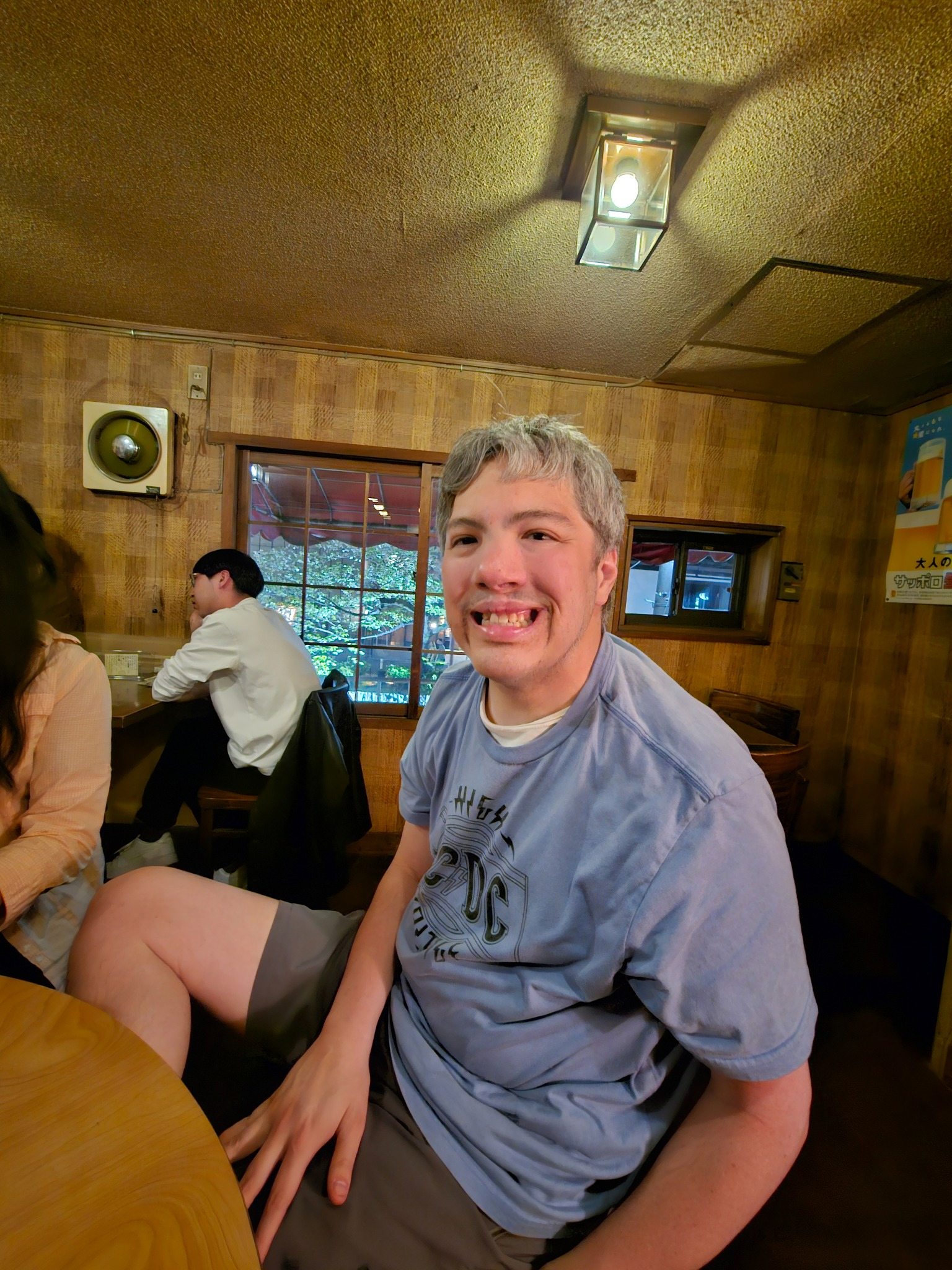
Tatsunari at Bar Mitchell in Kyoto.
Family presence keeps even the chosen room from drifting into abstraction.
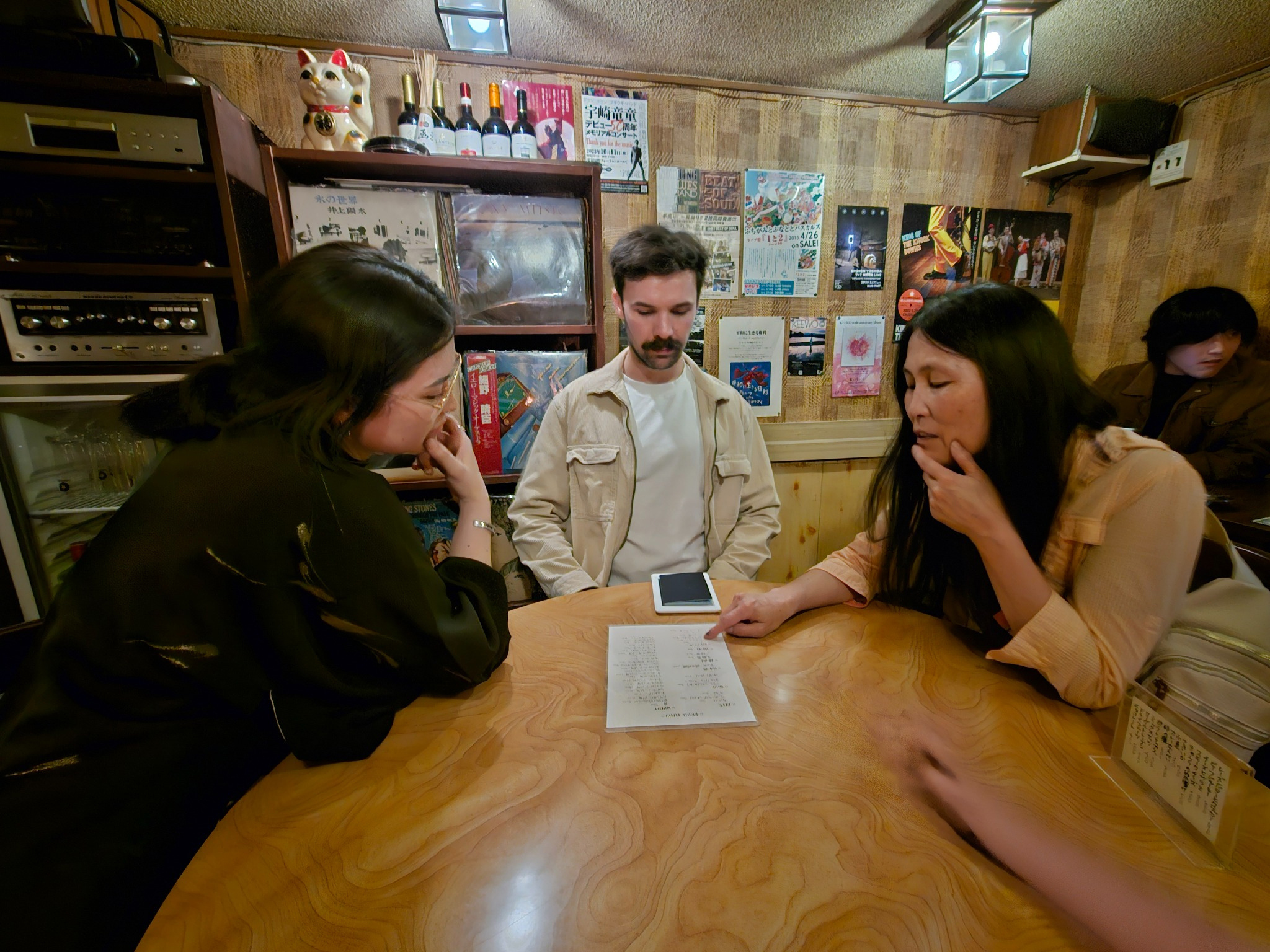
Menu discussion at Bar Mitchell.
The room is completed by talk, choice, and the small rituals of ordering.

Whisky, Counter, and Club Light

Nightlife becomes exact not through noise alone, but through placement: the backbar, the counter, the sign, the ice sphere, the saxophone, the bottle line, the chair spacing, the kind of light that allows amber and shadow to cooperate. These are rooms of measured indulgence. Not chaos. Selection.

Kyoto’s night bars belong here because they show another version of the city’s discipline. Pleasure, too, can be arranged with form.
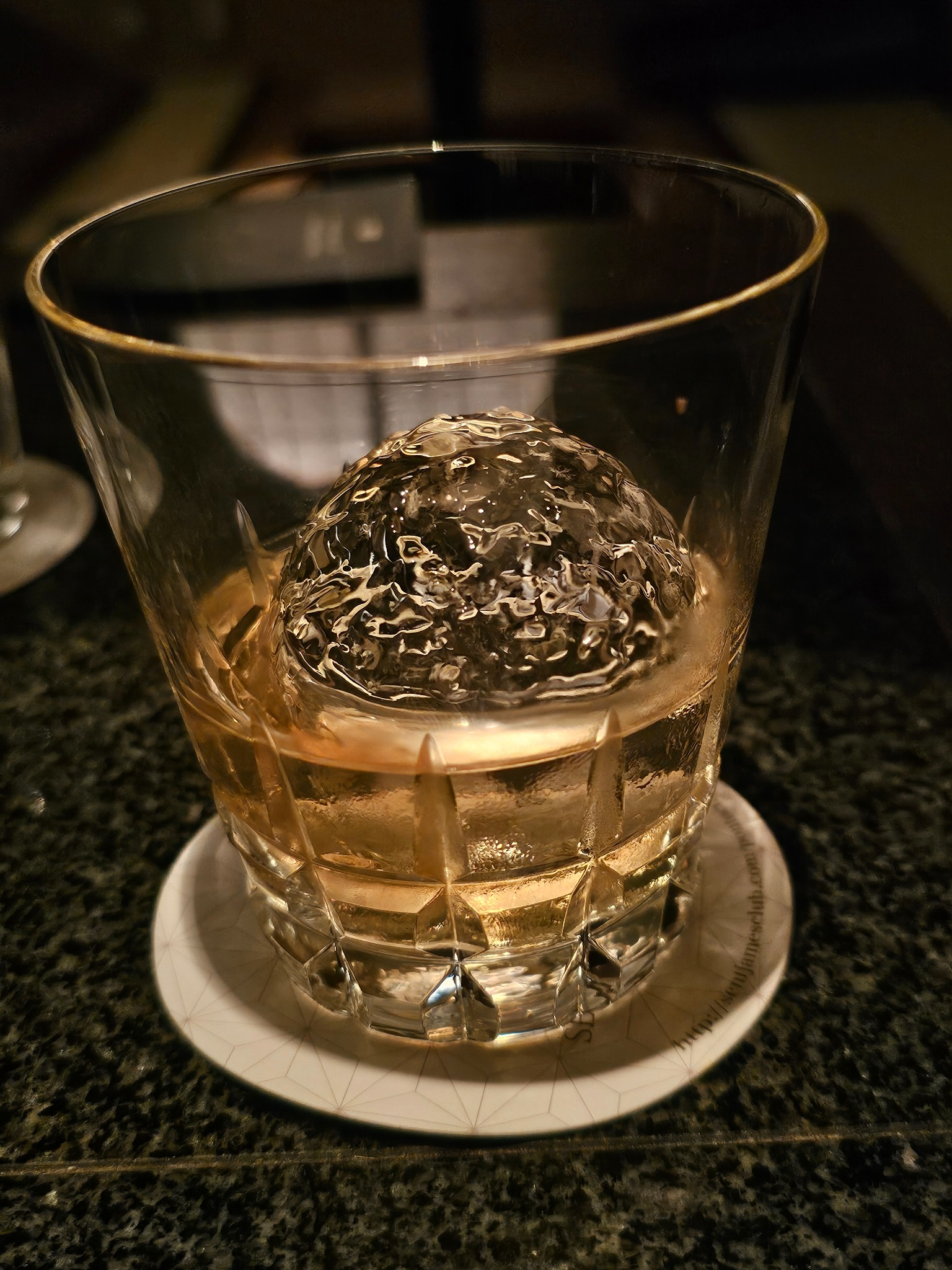
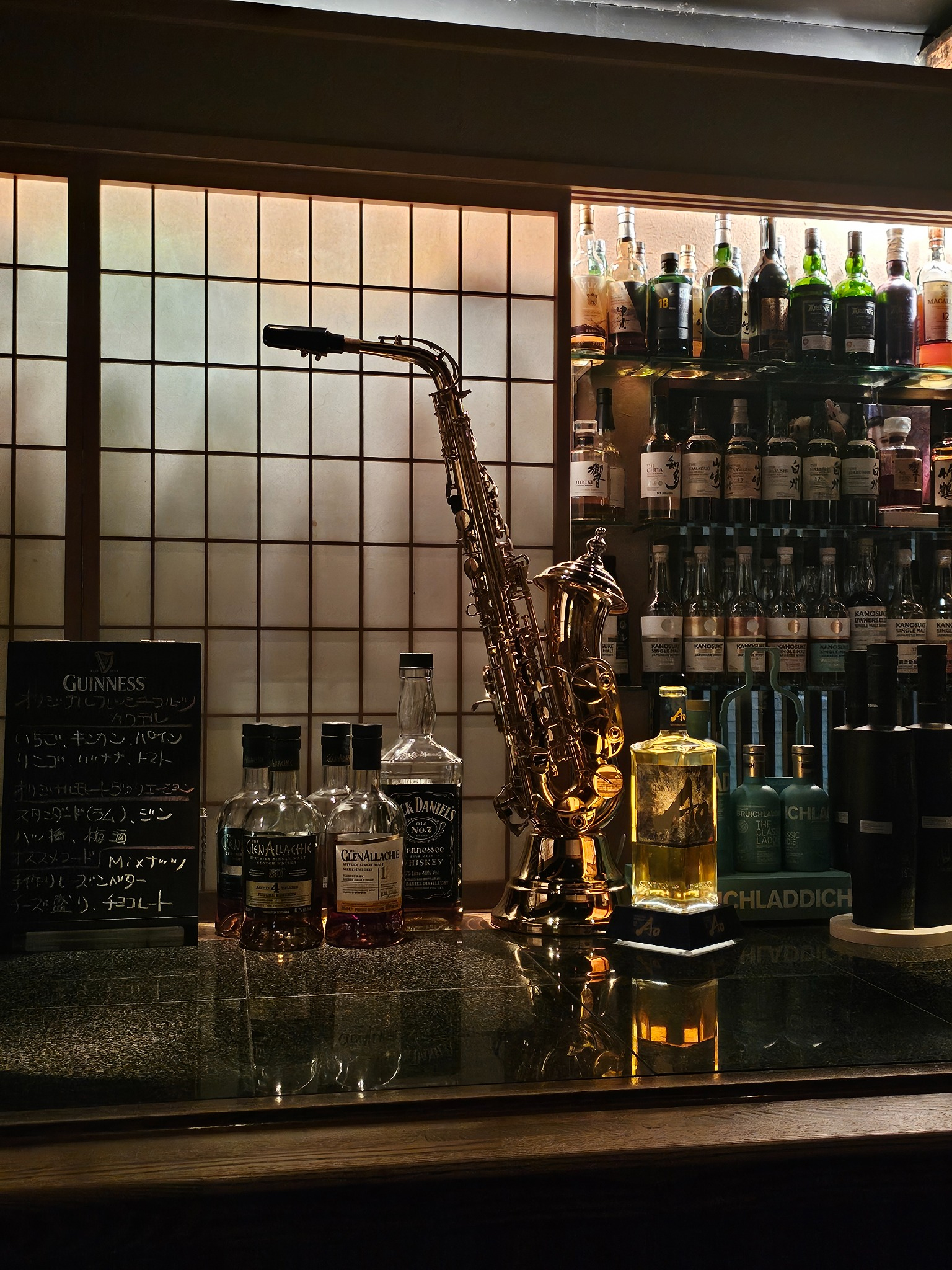
Whisky with large ice sphere in Kyoto.
Even a drink can become architectural once the glass, light, and room agree.
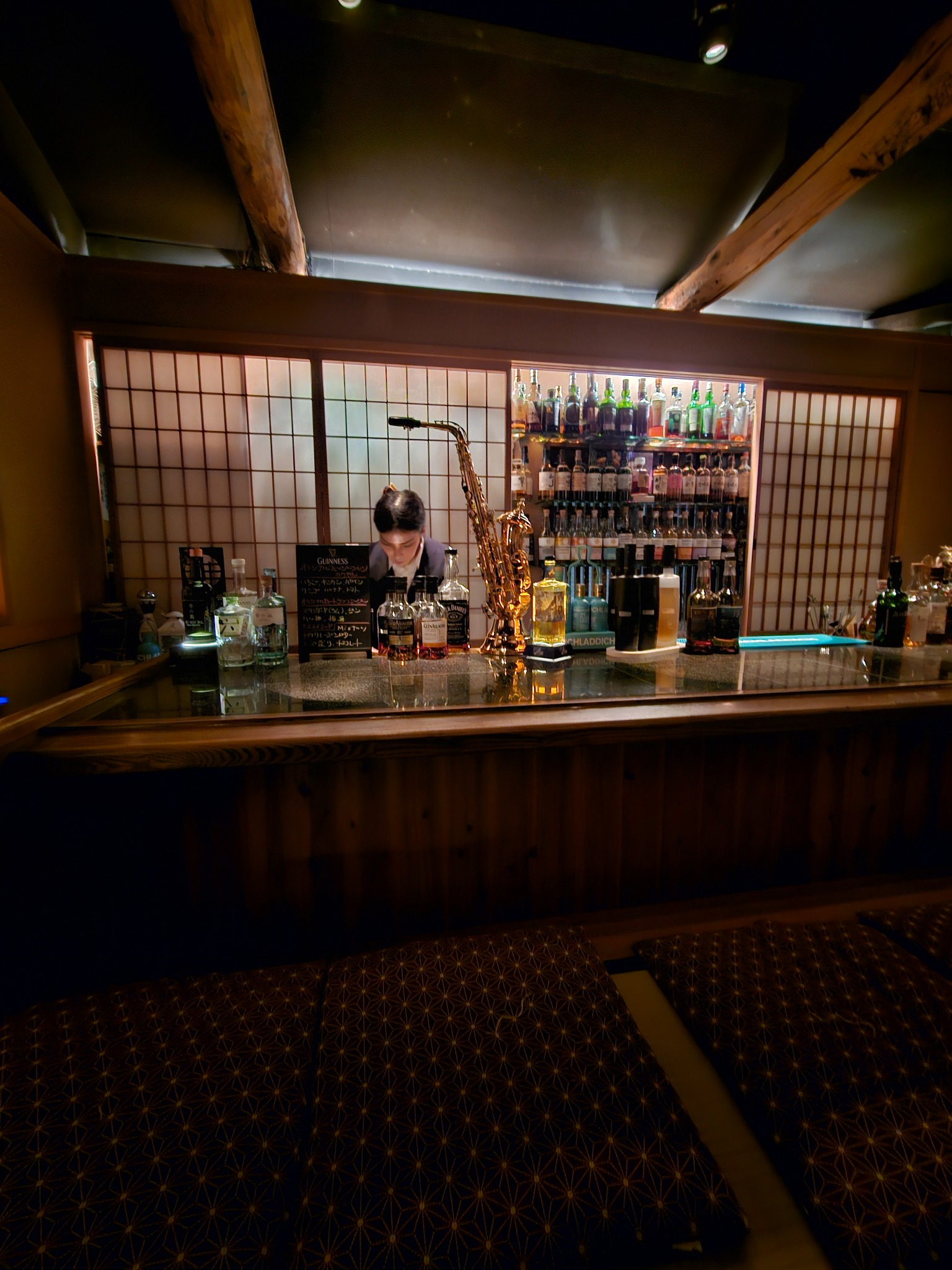
Saxophone and whisky backbar in Kyoto.
The backbar turns collection into atmosphere.
Sent James Club bar counter in Kyoto.
The counter is where selection becomes encounter.
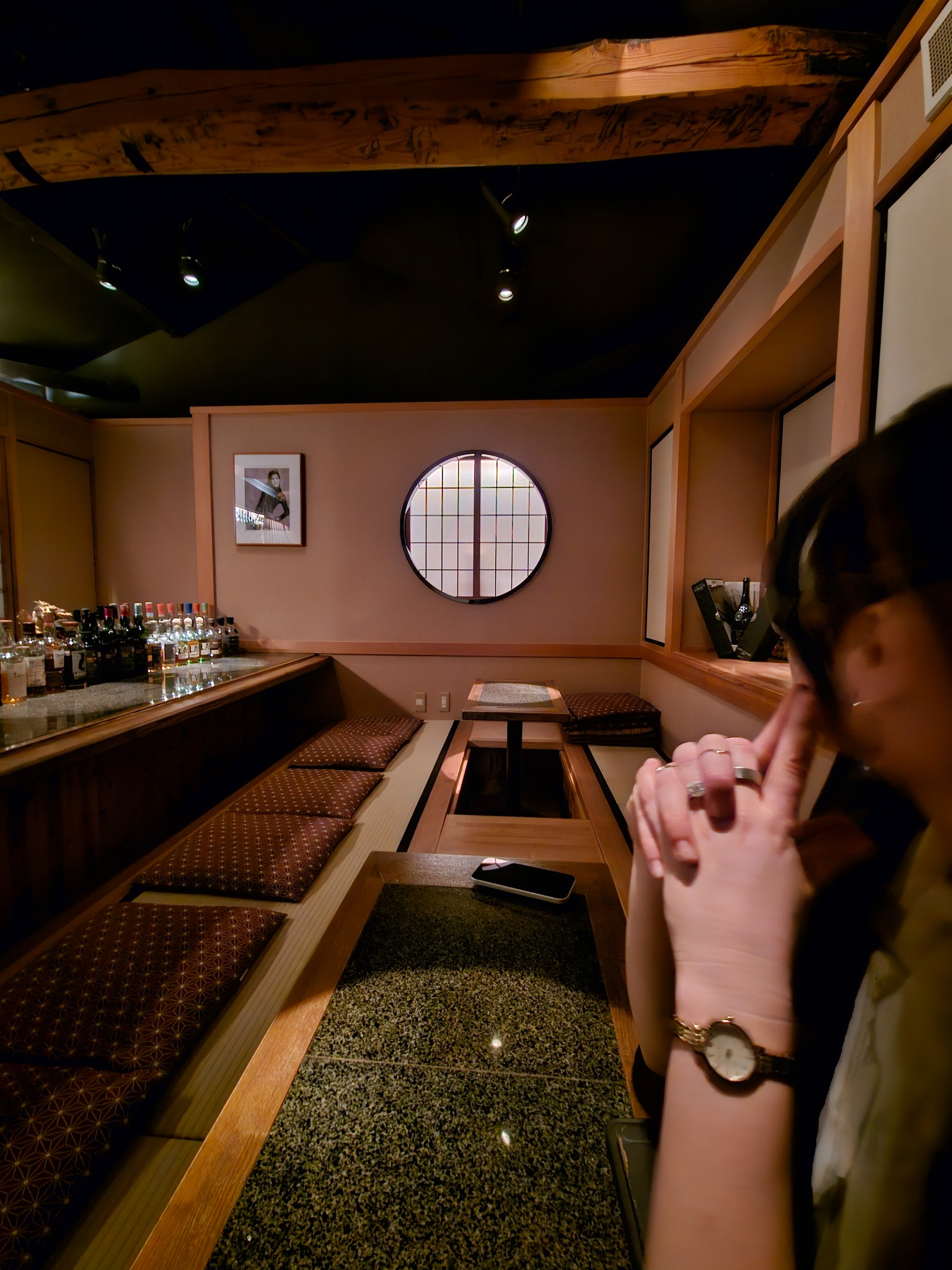
Interior of Sent James Club bar in Kyoto.
Chosen rooms teach the body to lower its voice without being told.
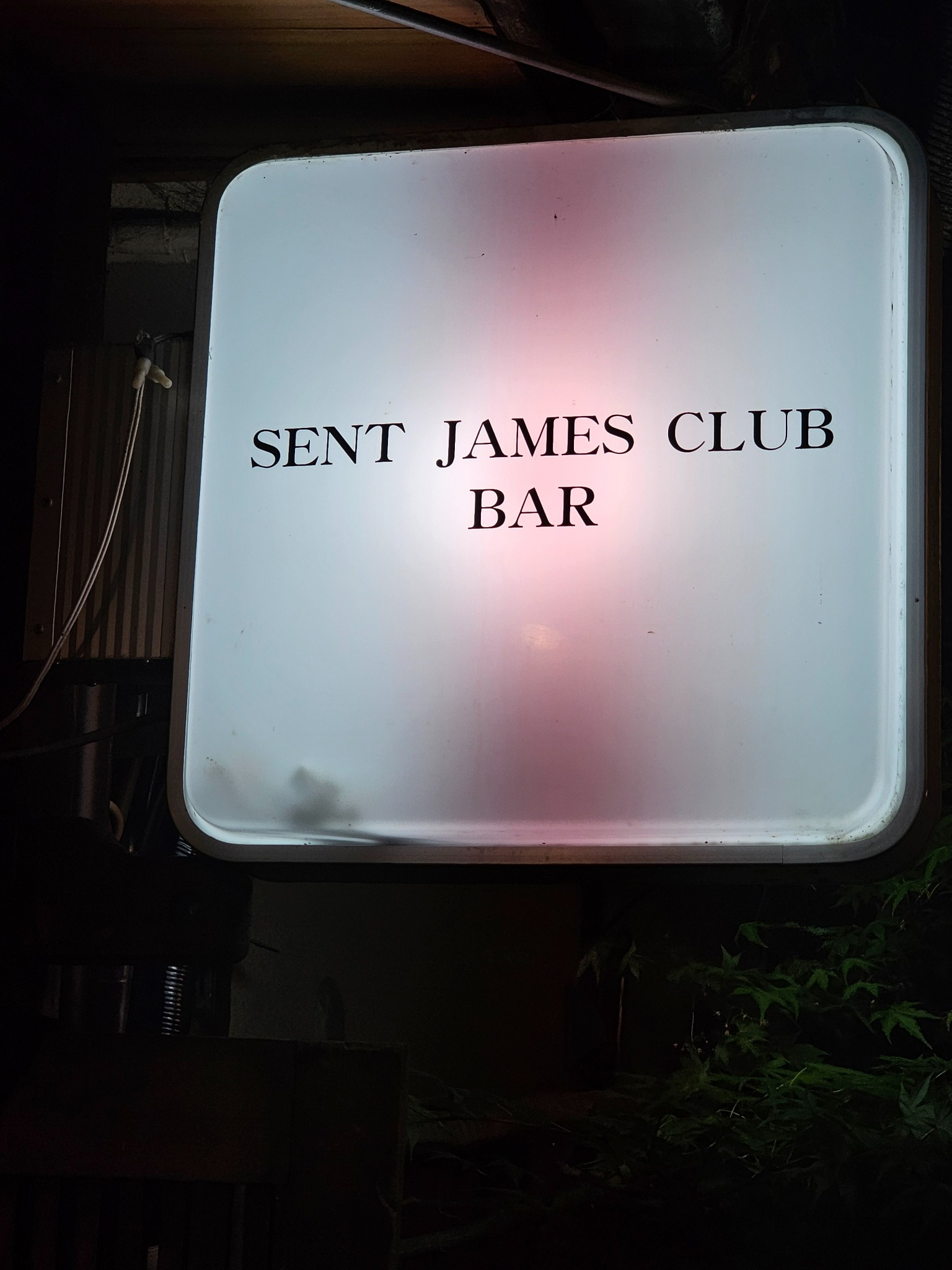
Sent James Club bar sign in Kyoto.
A small sign can open a whole secondary city.
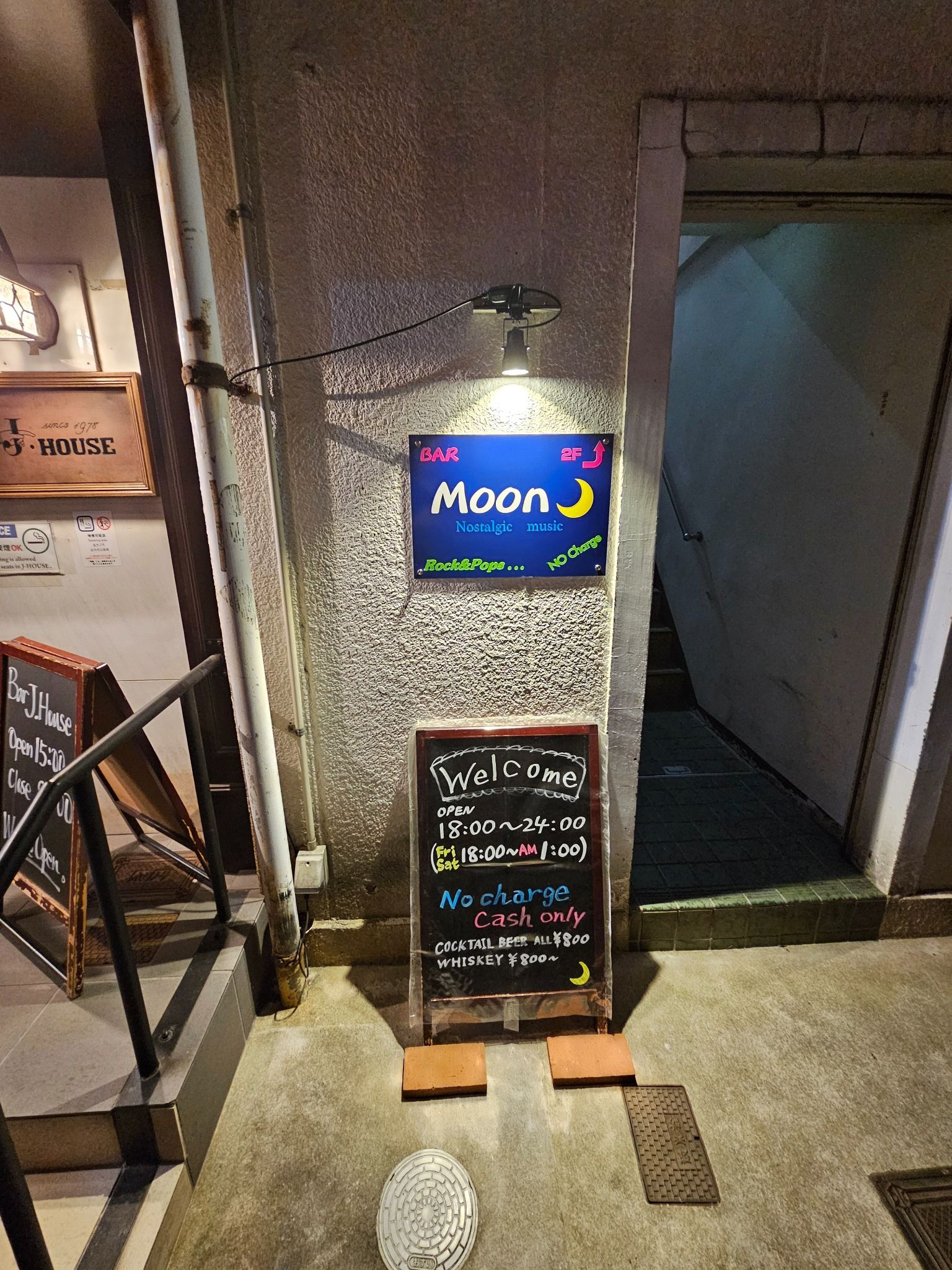
Bar Moon sign in Kyoto.
Night gathers itself in names, fonts, and lit promises.

Studio Nin and the Workshop Rooms

Workshops are nightlife too when fire is involved. Studio Nin changes the archive from room-mood to room-labor: charcoal, engraving, belt sander, target block, forged metal, finished shuriken, and the modest drama of learning by hand. Kyoto does not only display finished things. It still makes things in public enough that the traveler can enter the making.

That matters because the family story is full of objects whose labor had to be imagined backward from survival. Here, labor steps into the light.
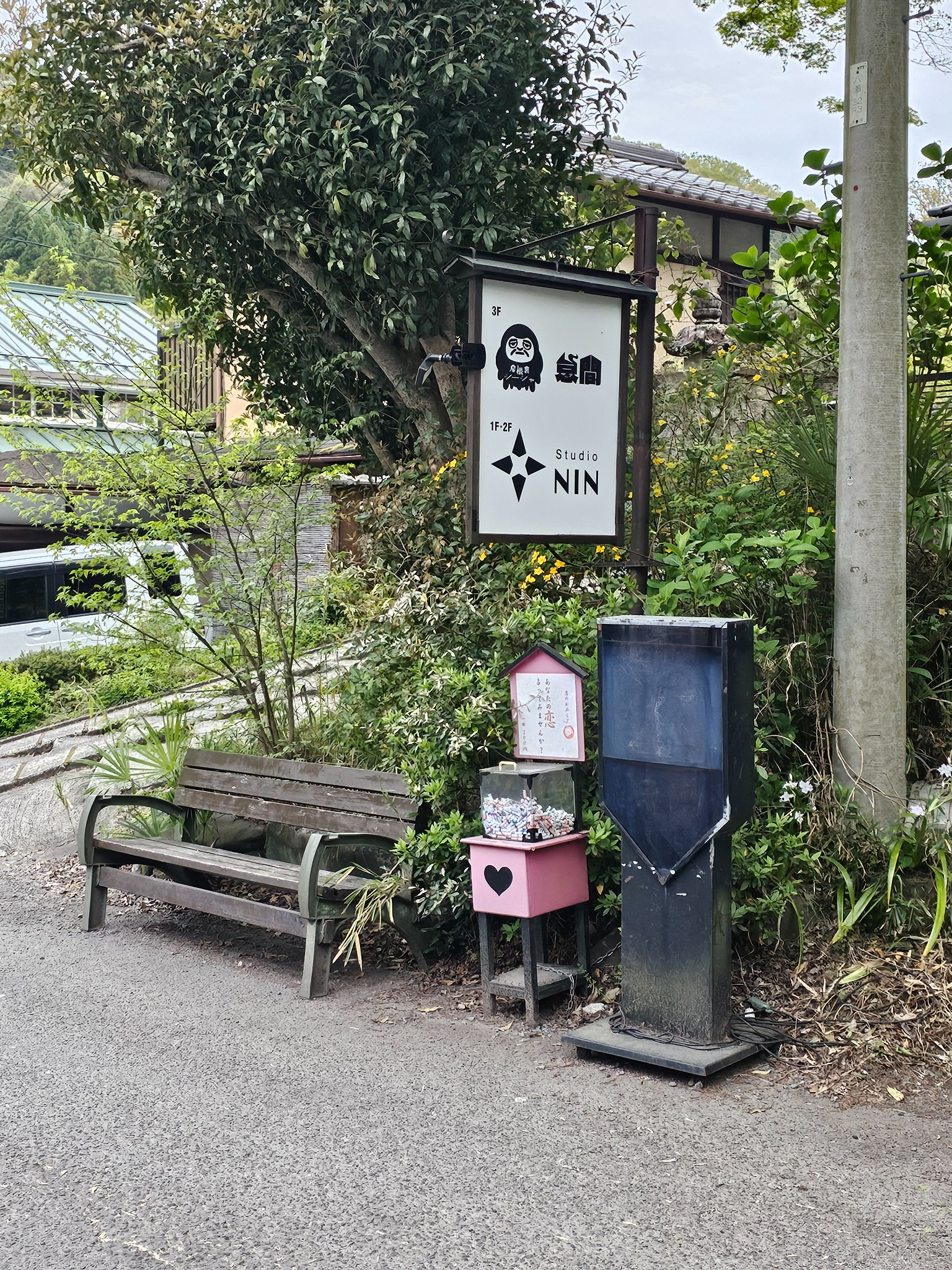
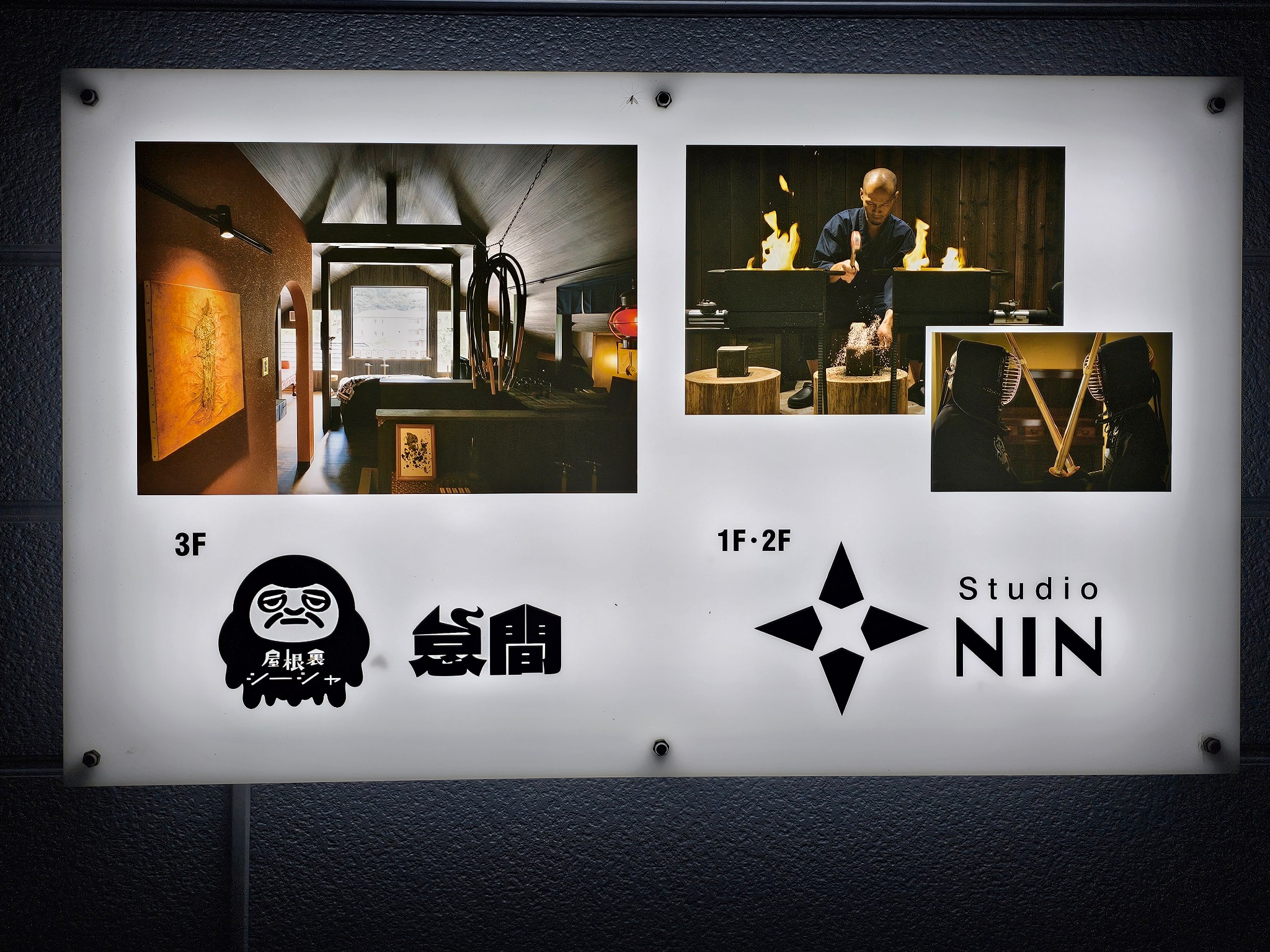
Studio Nin sign in Kyoto.
The workshop announces itself like a room of deliberate transformation.
Illuminated Studio Nin sign.
Illumination changes instruction into invitation.
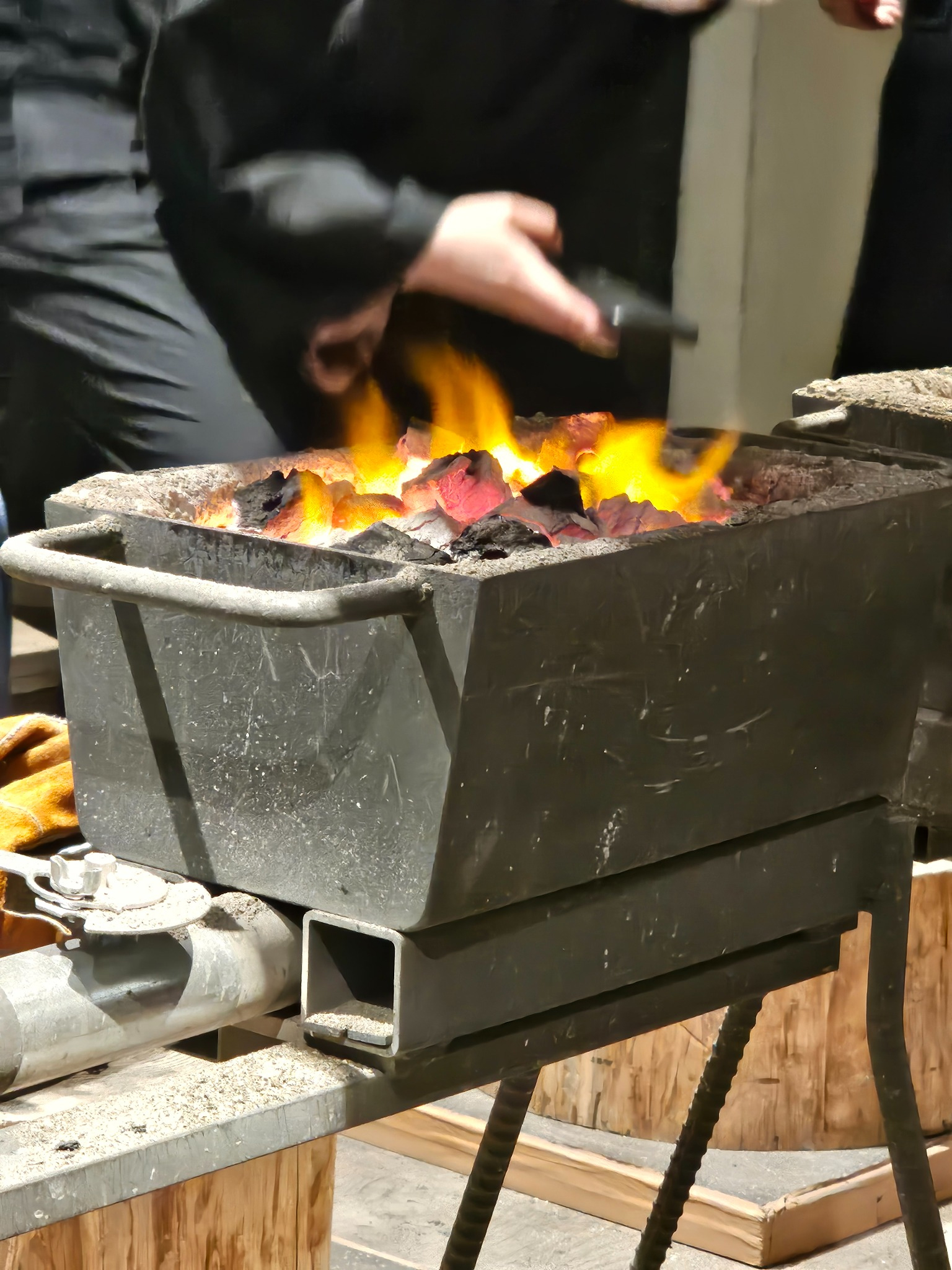
Charcoal fire forging demonstration in Kyoto.
Fire returns craft to the level of bodily seriousness.
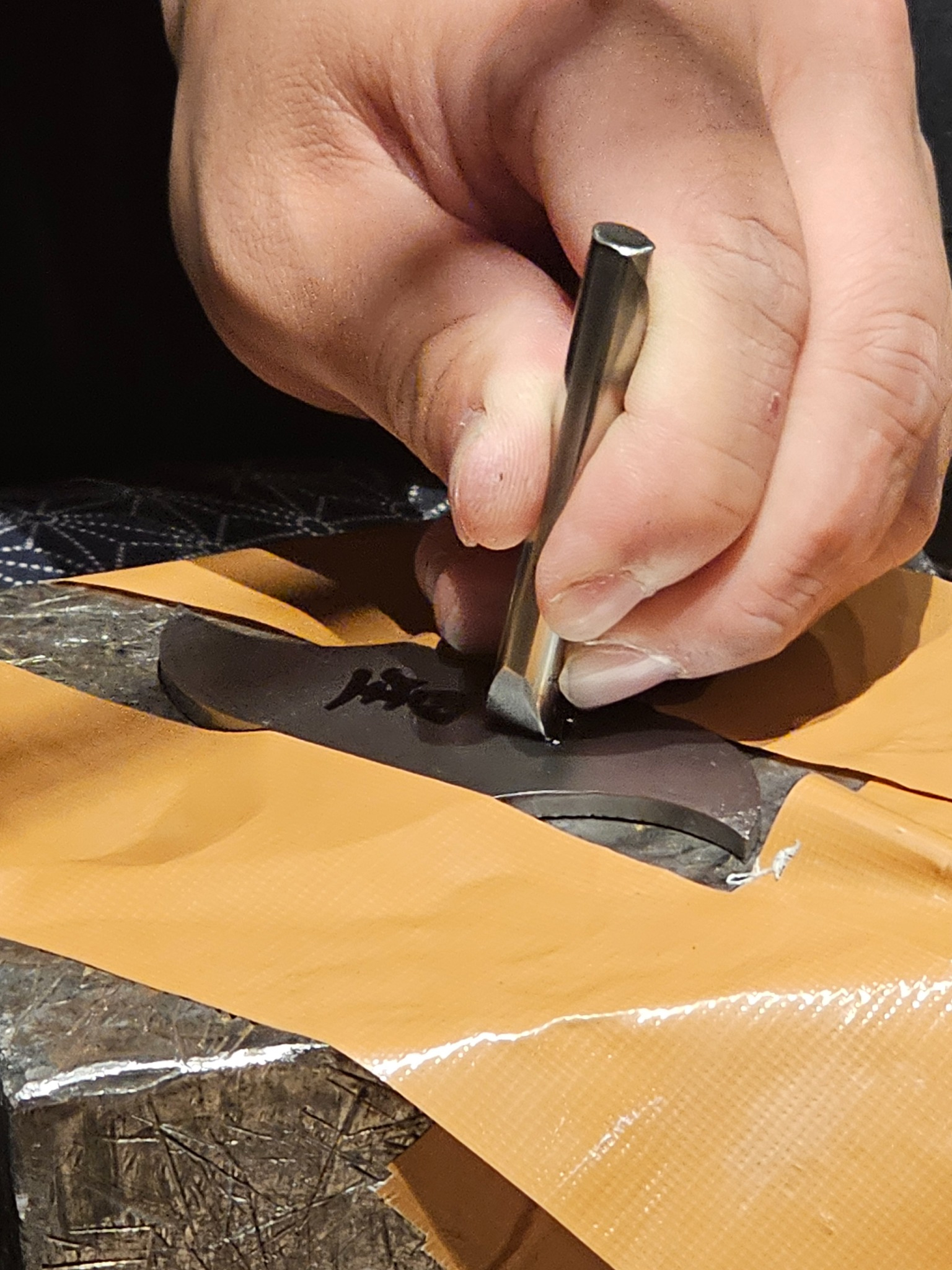
Hand engraving a shuriken in Kyoto.
Precision appears here not as theory, but as wrist, tool, and pressure.
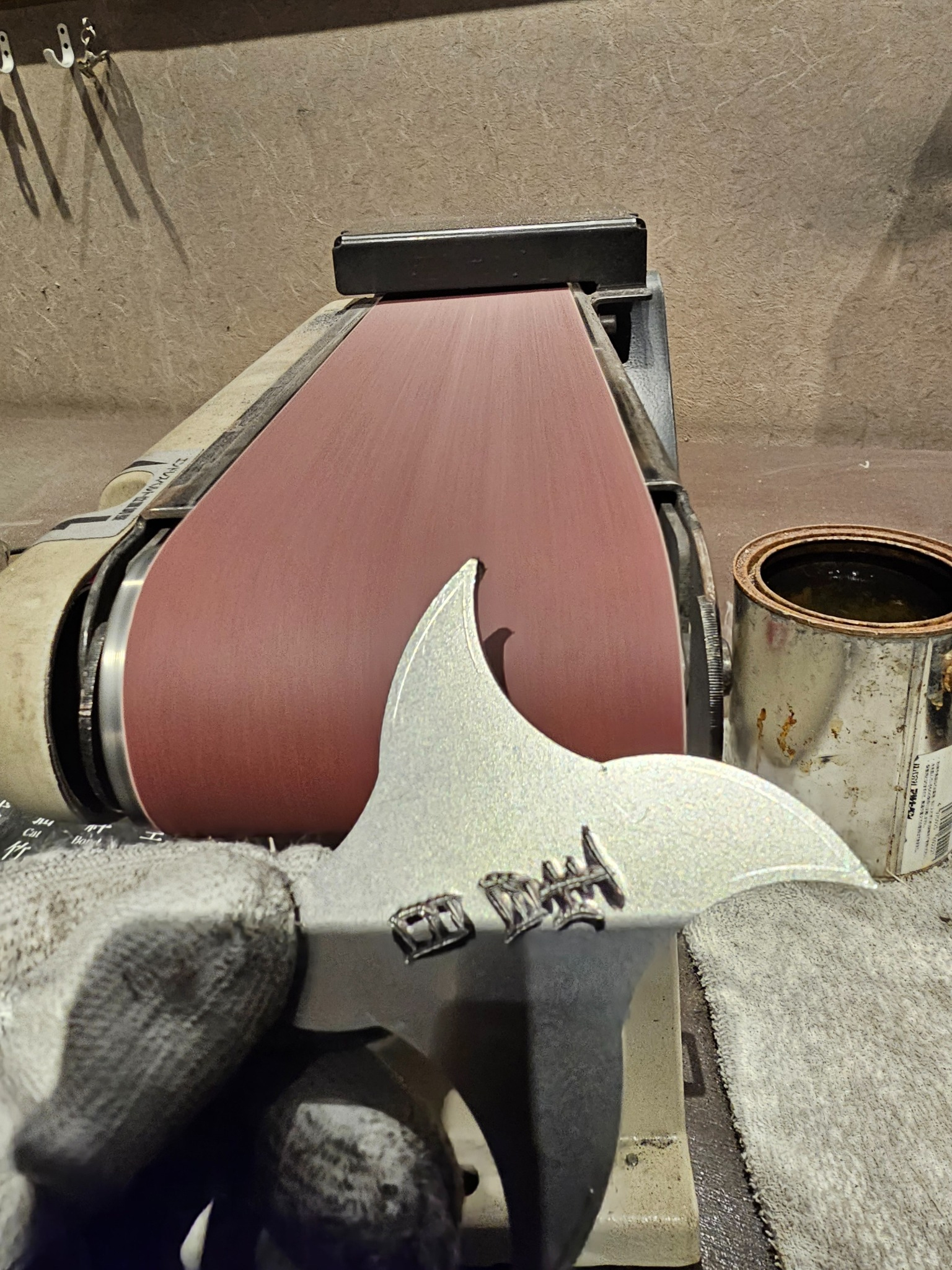
Shuriken on belt sander.
The modern machine joins the older discipline without apology.
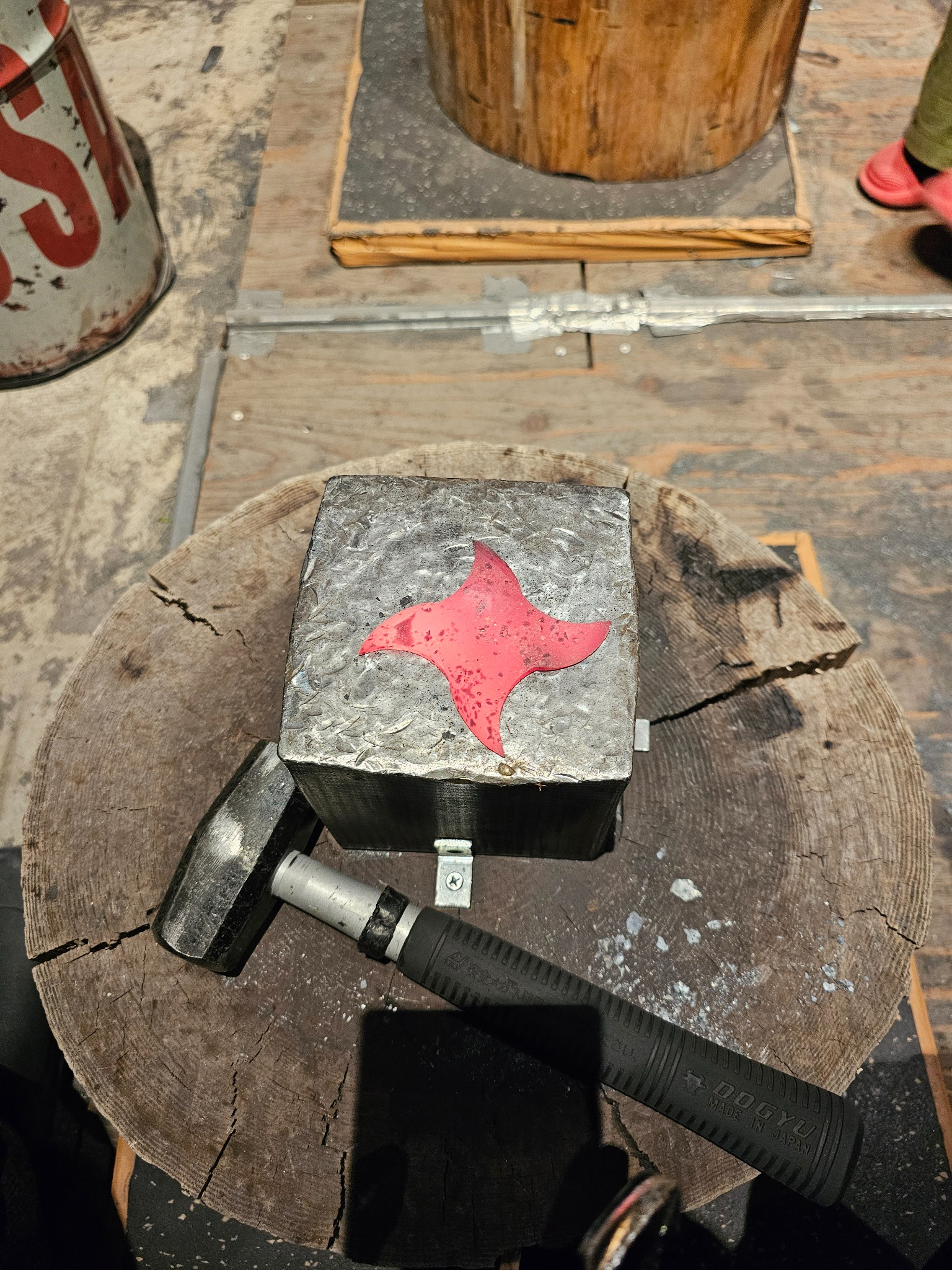
Target block with red shuriken.
Practice becomes visible where impact leaves its mark.
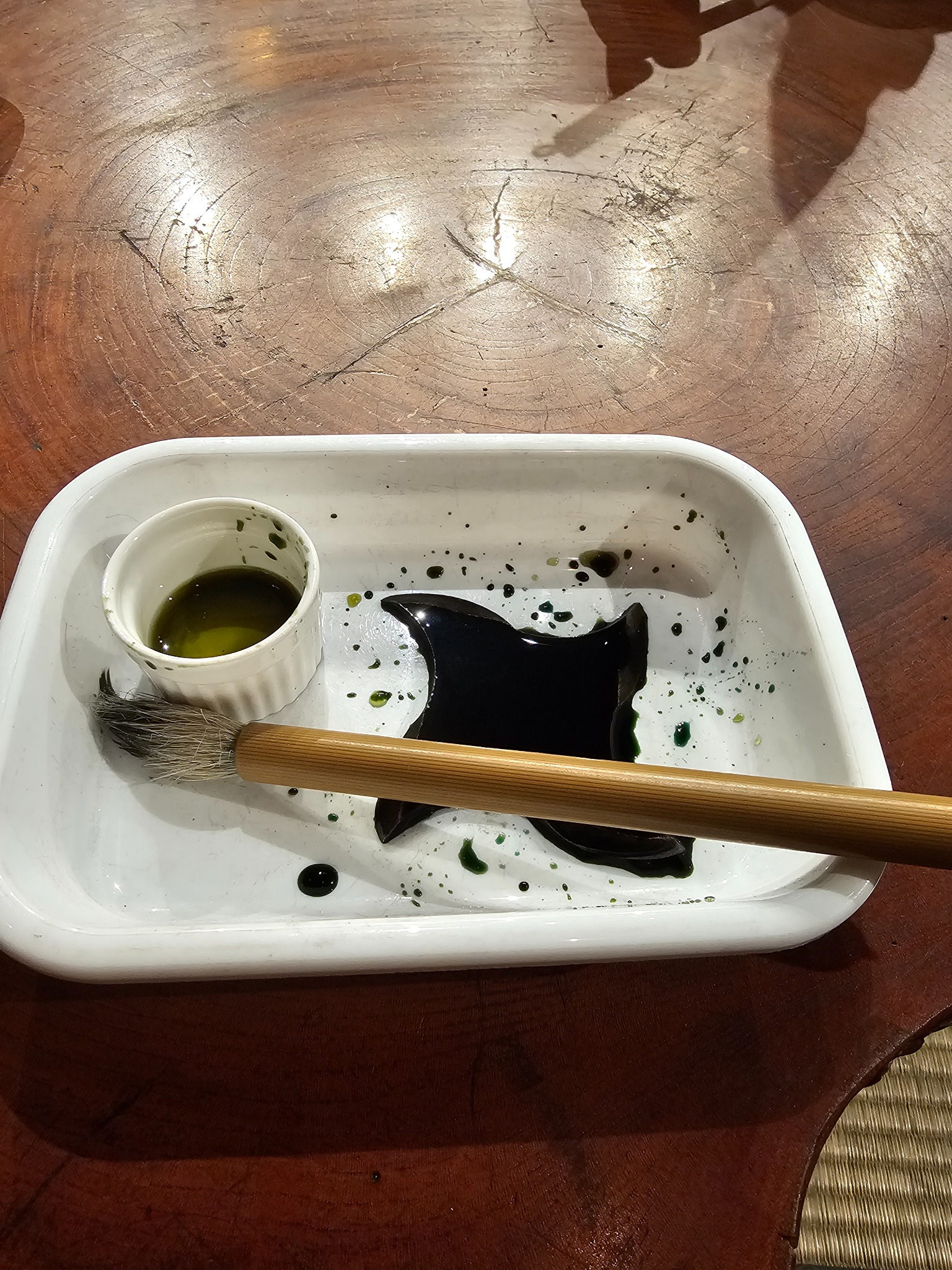
Finished shuriken with brush and patina.
Completion is another kind of room: the moment the object stops being process.
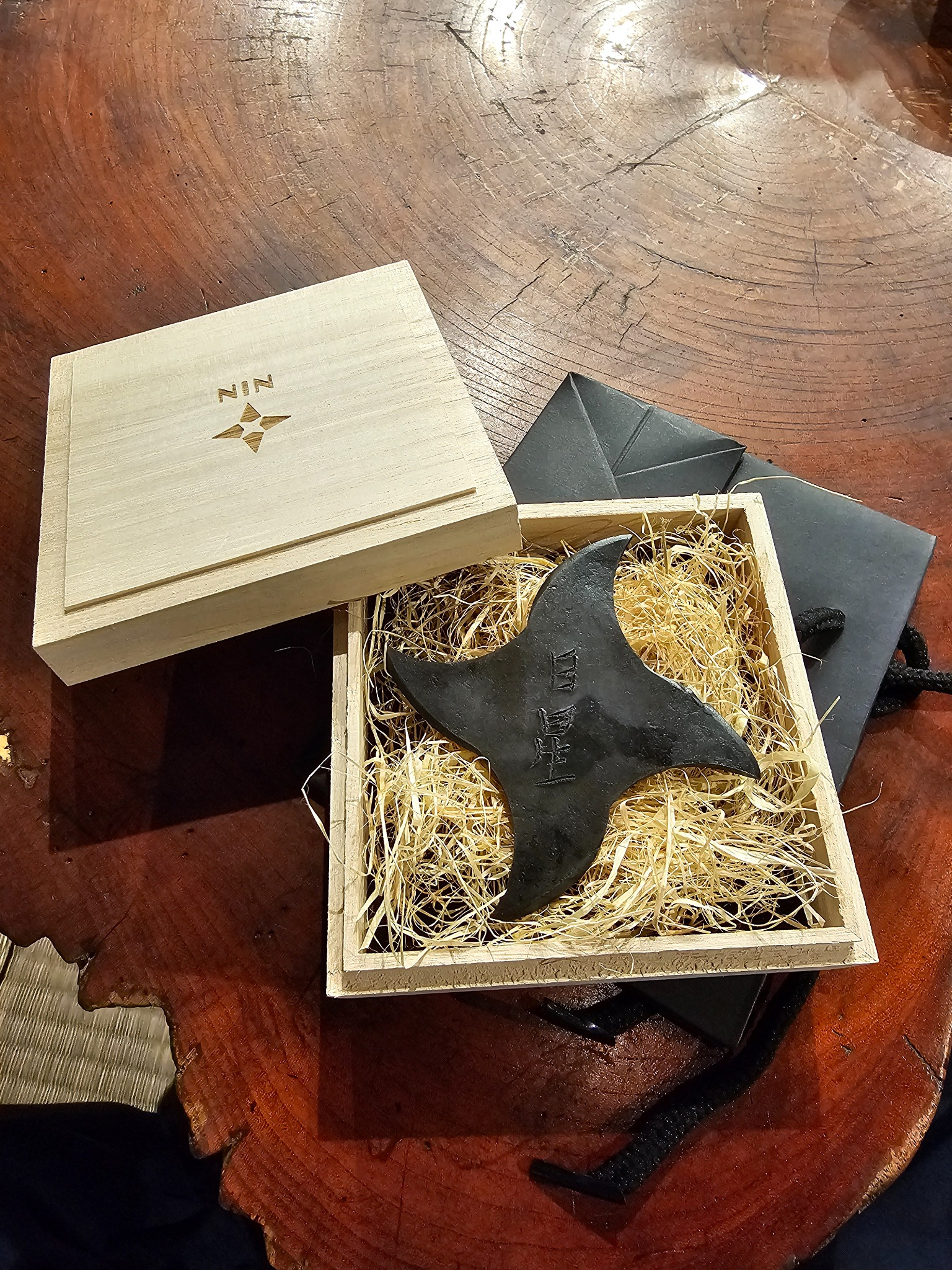
Shuriken in wooden box.
Even workshop outcomes return to the old grammar of storage and box.
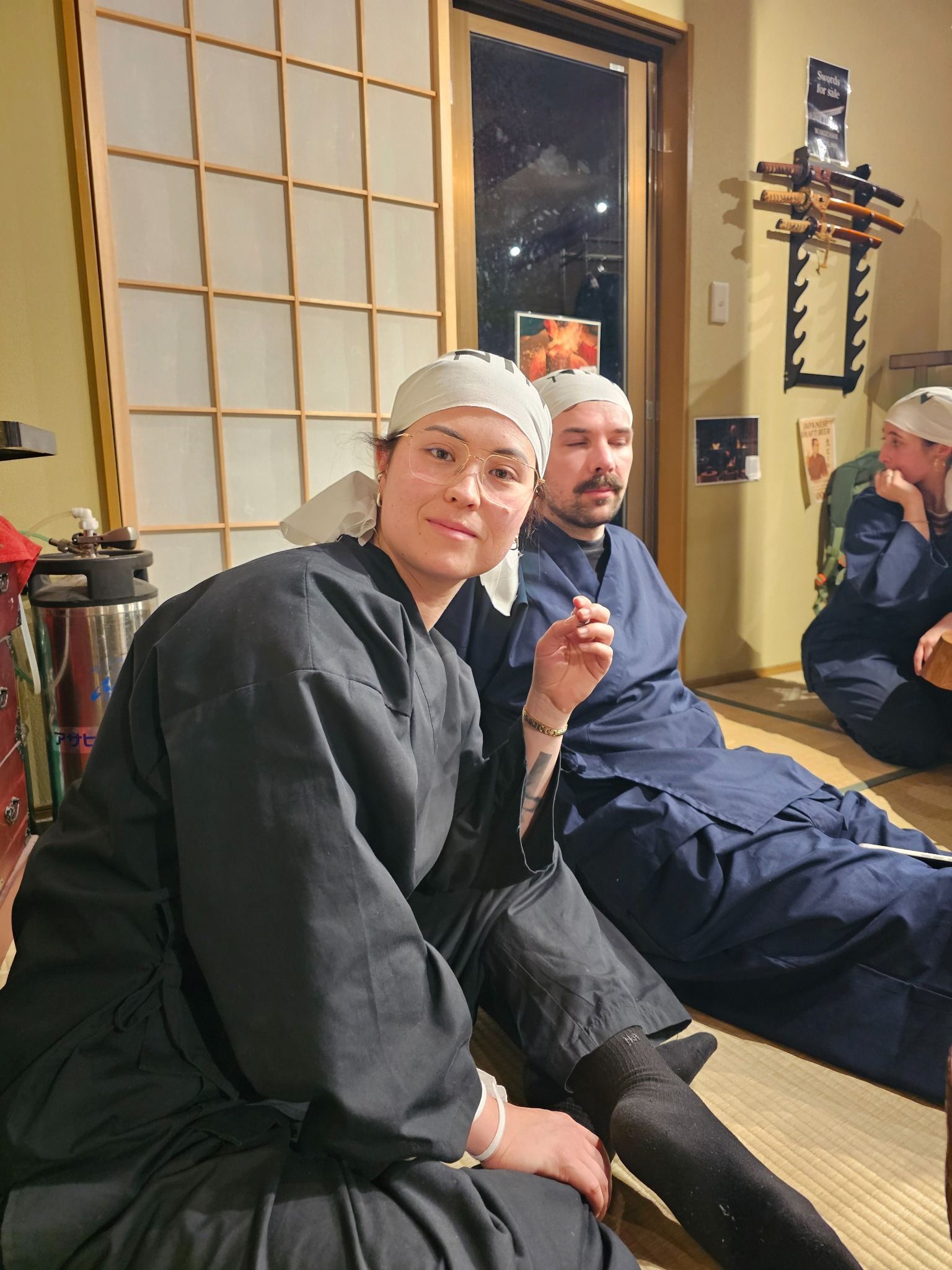
Two guests seated in workshop.
Learning changes scale once the body sits down inside the room of making.

Costume, Performance, and Chosen Identity

Kyoto after dark also plays with form through role and costume. Helmet, baton, headcloth, historical pose, ninja garb, workshop gear, and staged photographs all belong to the city’s willingness to let visitors enter older surfaces without pretending they have become the past itself. These images matter because they show one more kind of room: the room where identity is temporarily selected and worn.

Performance does not cheapen seriousness here. It reveals how much of culture is entered first through surface, gesture, and willing play.
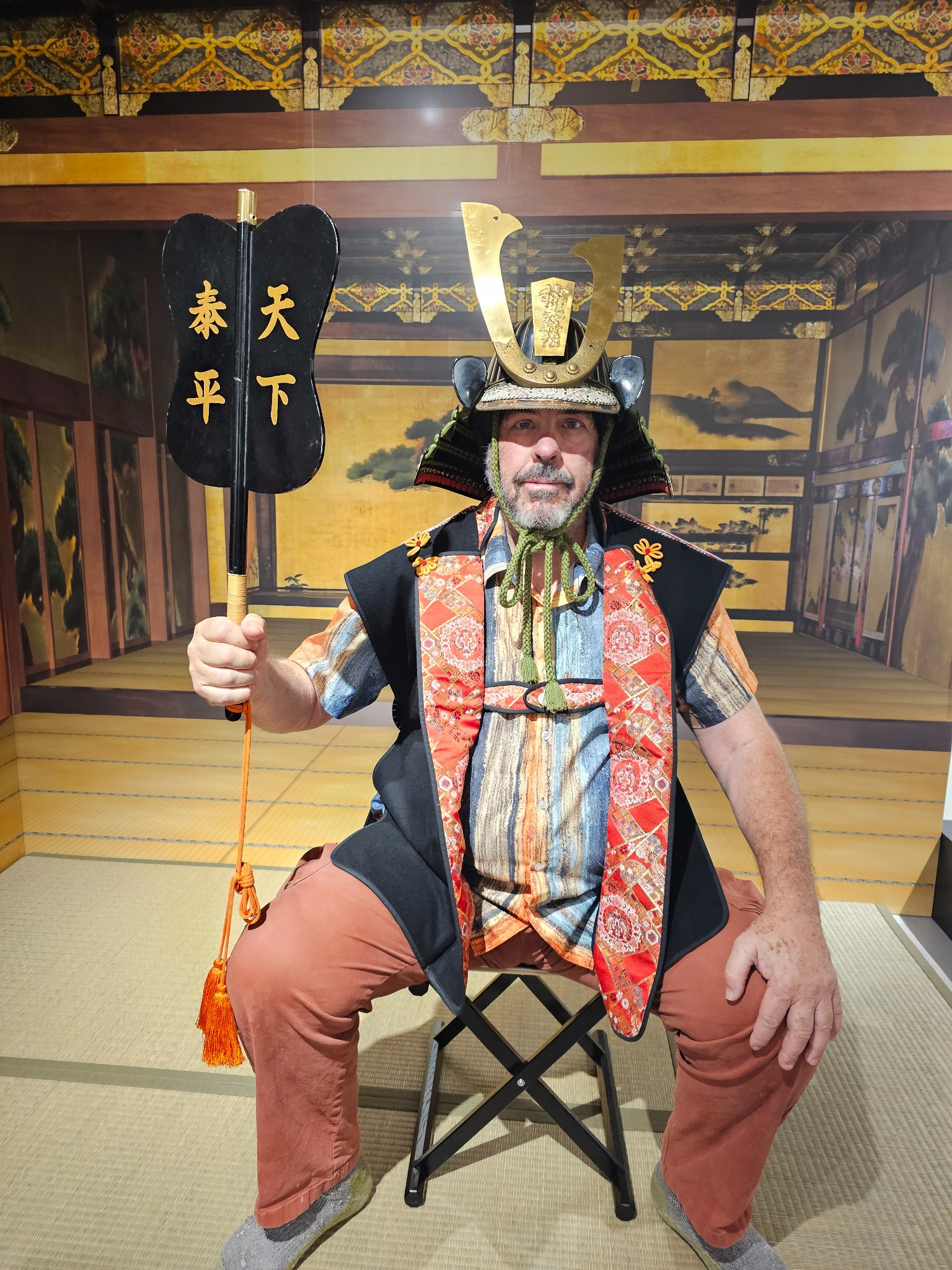
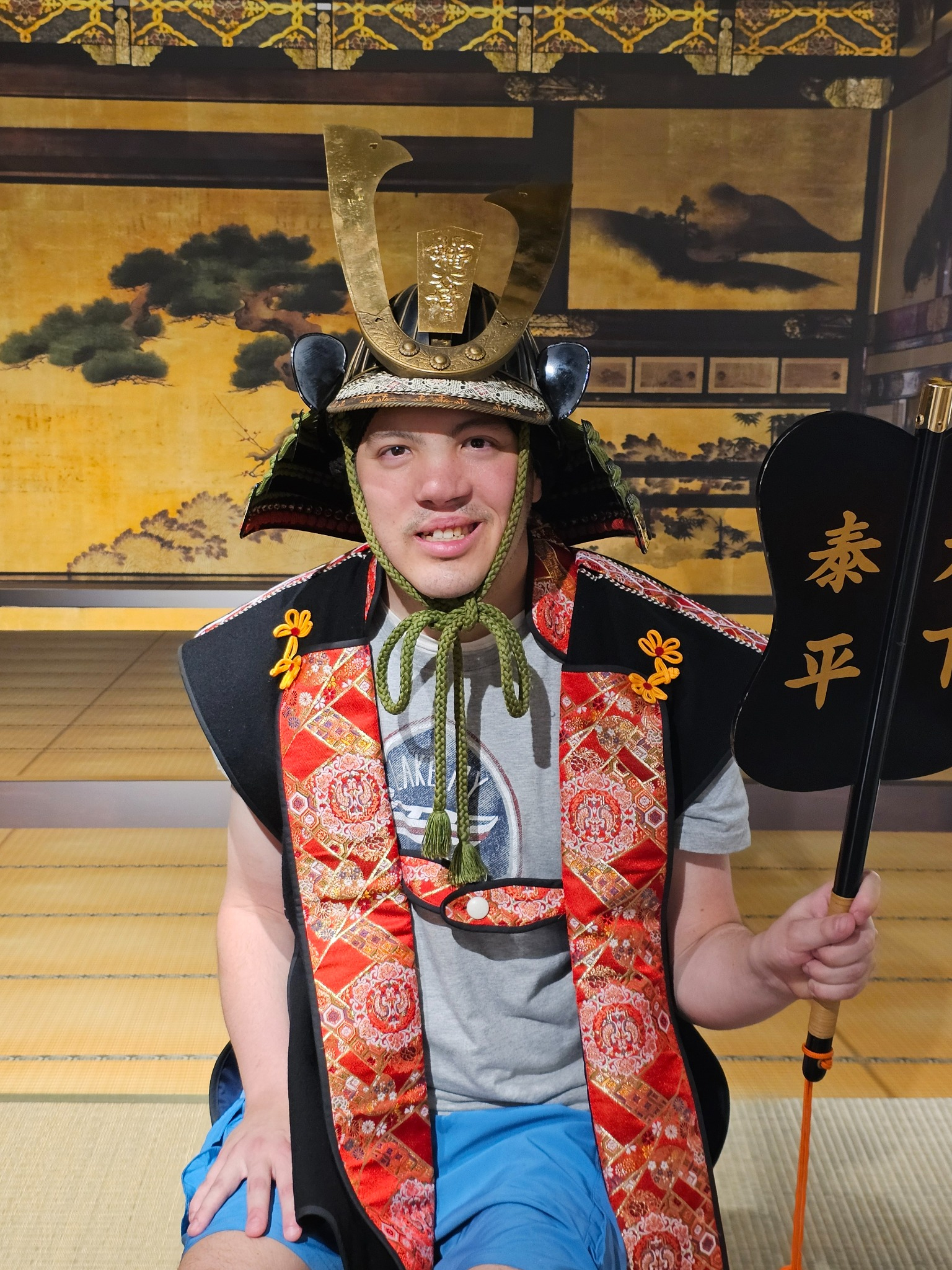
Brad in samurai helmet and command baton.
Role enters the room through posture before it enters through thought.
Young man in samurai helmet.
Historical costume concentrates attention by changing the silhouette of the body.
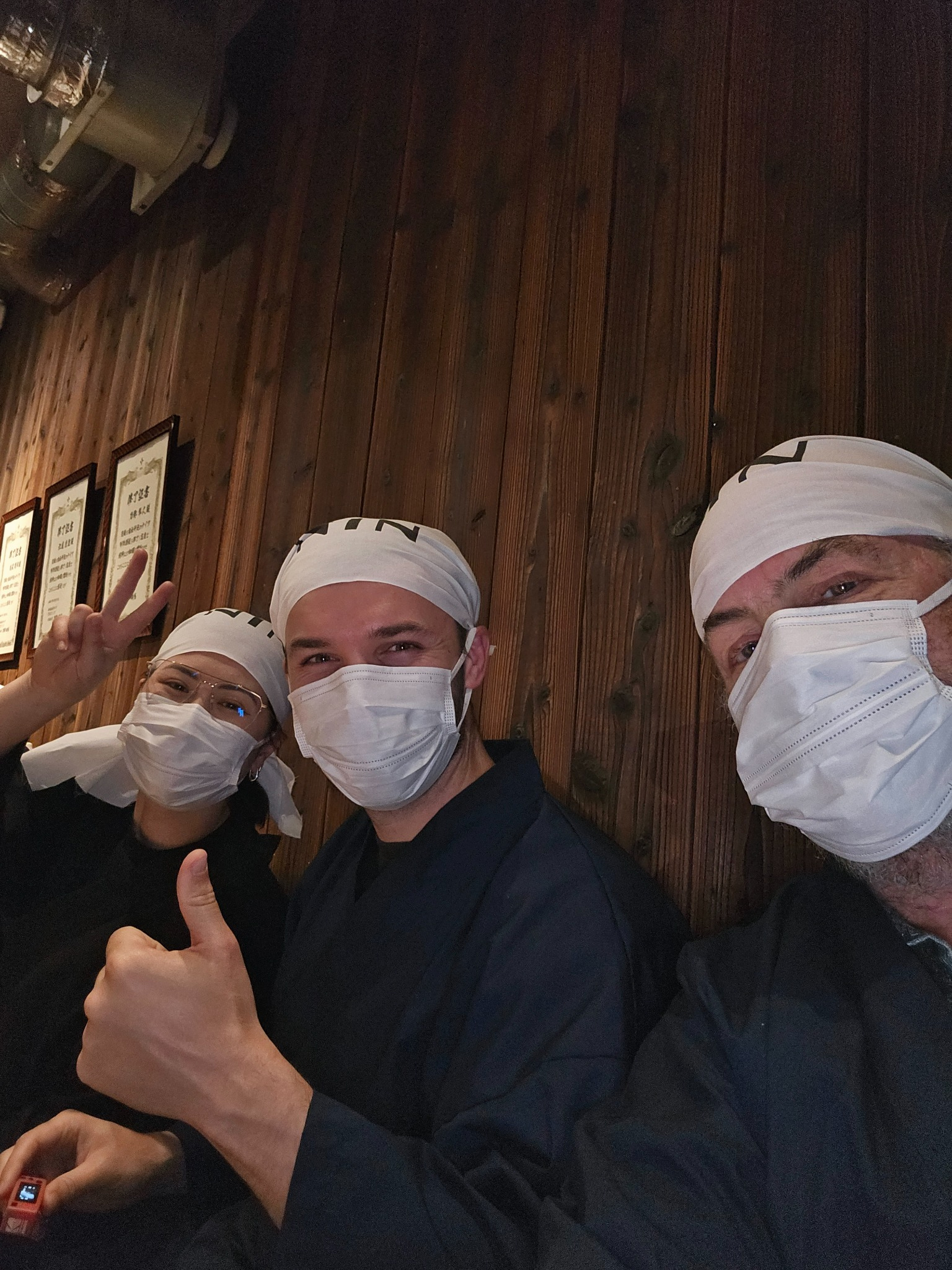
Brad in ninja headcloth with thumbs up.
Play belongs in the archive too when it reveals a culture’s secondary thresholds.
Marie, Charlie, and Brad in ninja garb.
Chosen costume returns even staged history to family scale.
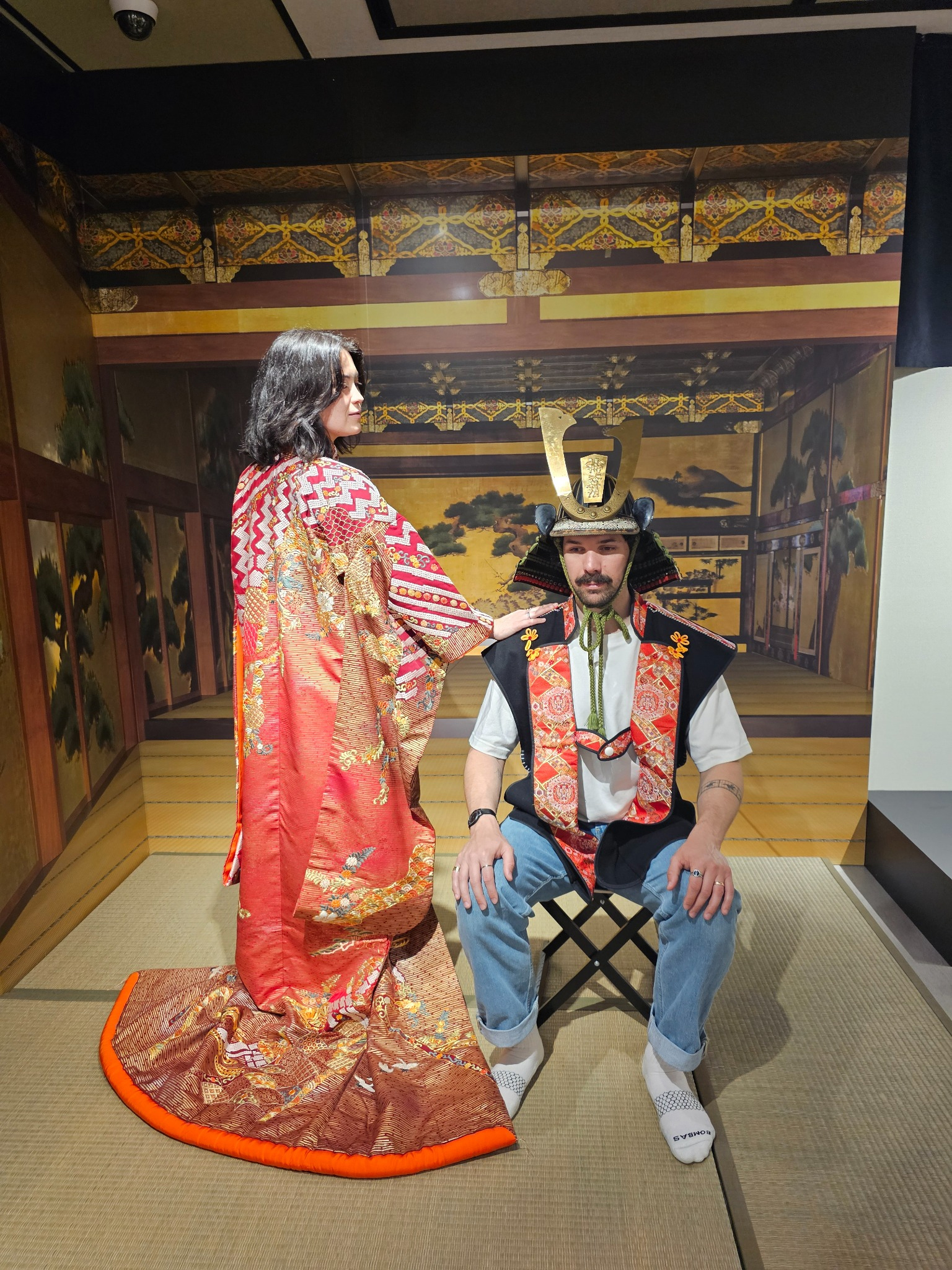
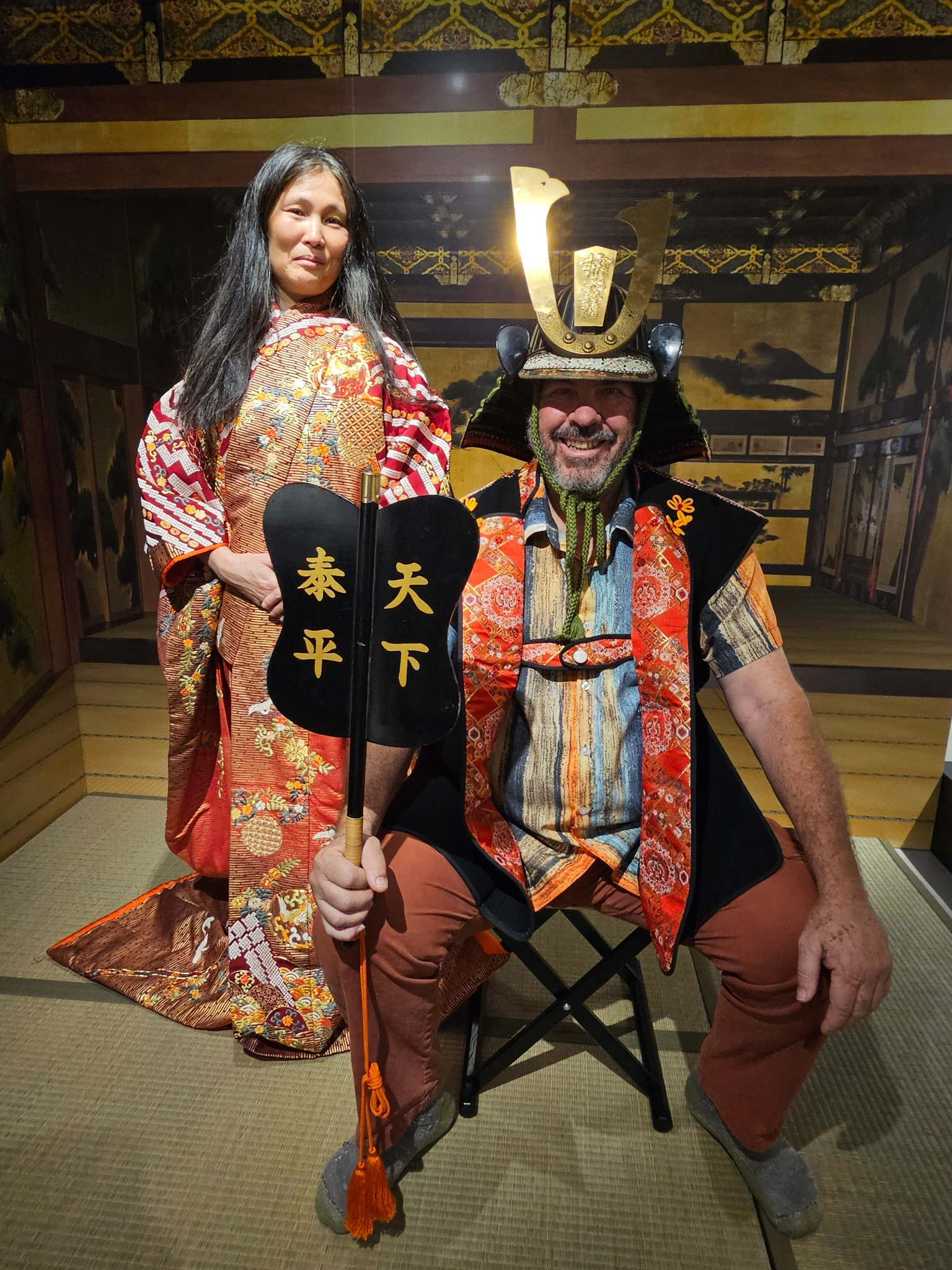
Couple in historical pose with red kimono.
Performance becomes another way the room asks the body to change measure.
Tomoko and Brad in historical costume.
Surface does not replace memory here; it gives memory one more route inward.

Neon, Passage, and the Night Street

The chosen rooms of nightlife depend on the spaces between them: the neon lane, the passageway, the entrance, the small dog statue, the sign by the door, the narrow night route between one atmosphere and another. These passages matter because nightlife is never only interior. It is also anticipation in the street.

Kyoto keeps even its nighttime passages carefully scaled. The city does not stop being composed after dark.
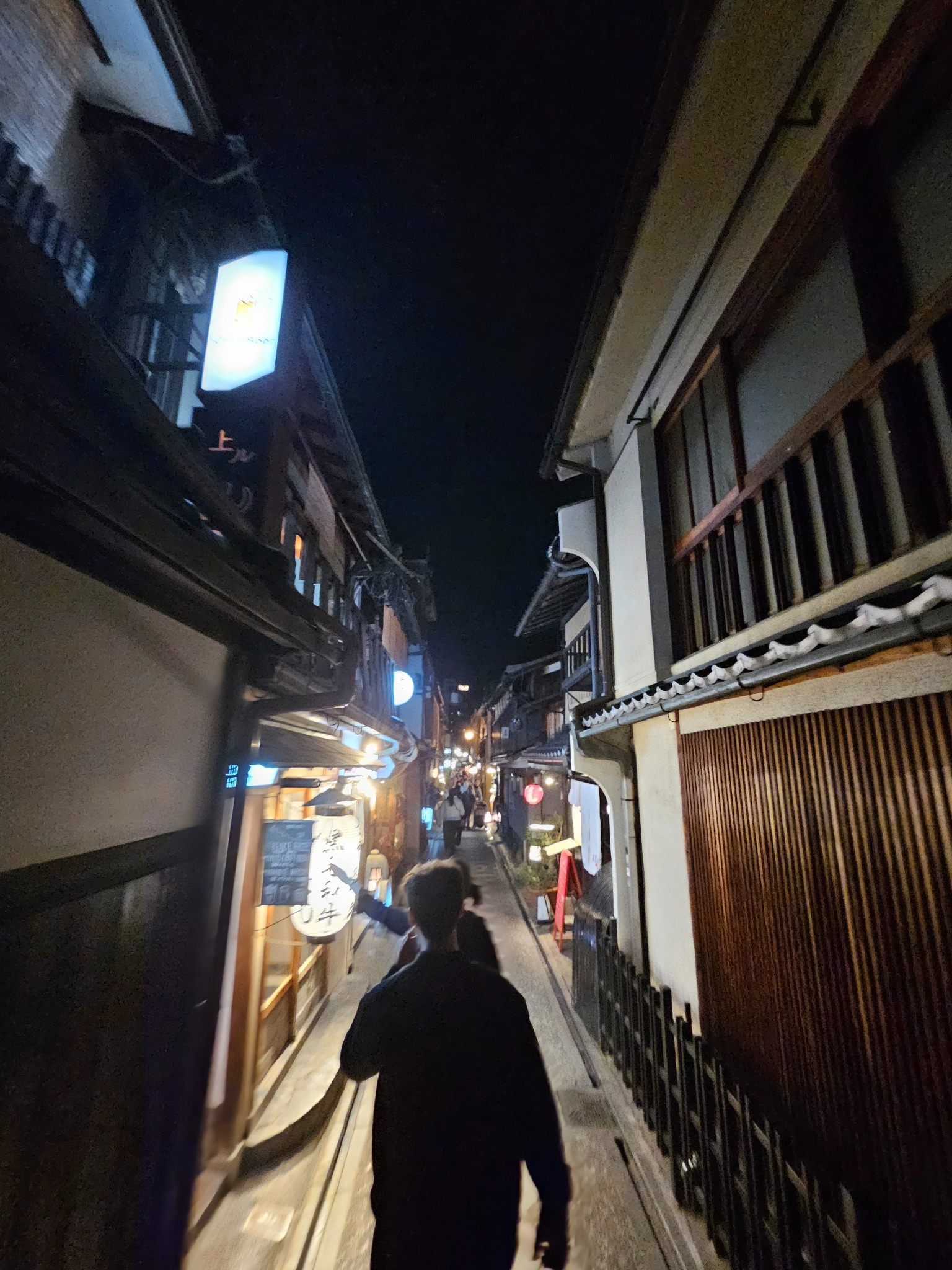
Gion lane night walk in Kyoto.
The lane carries mood before the room does.
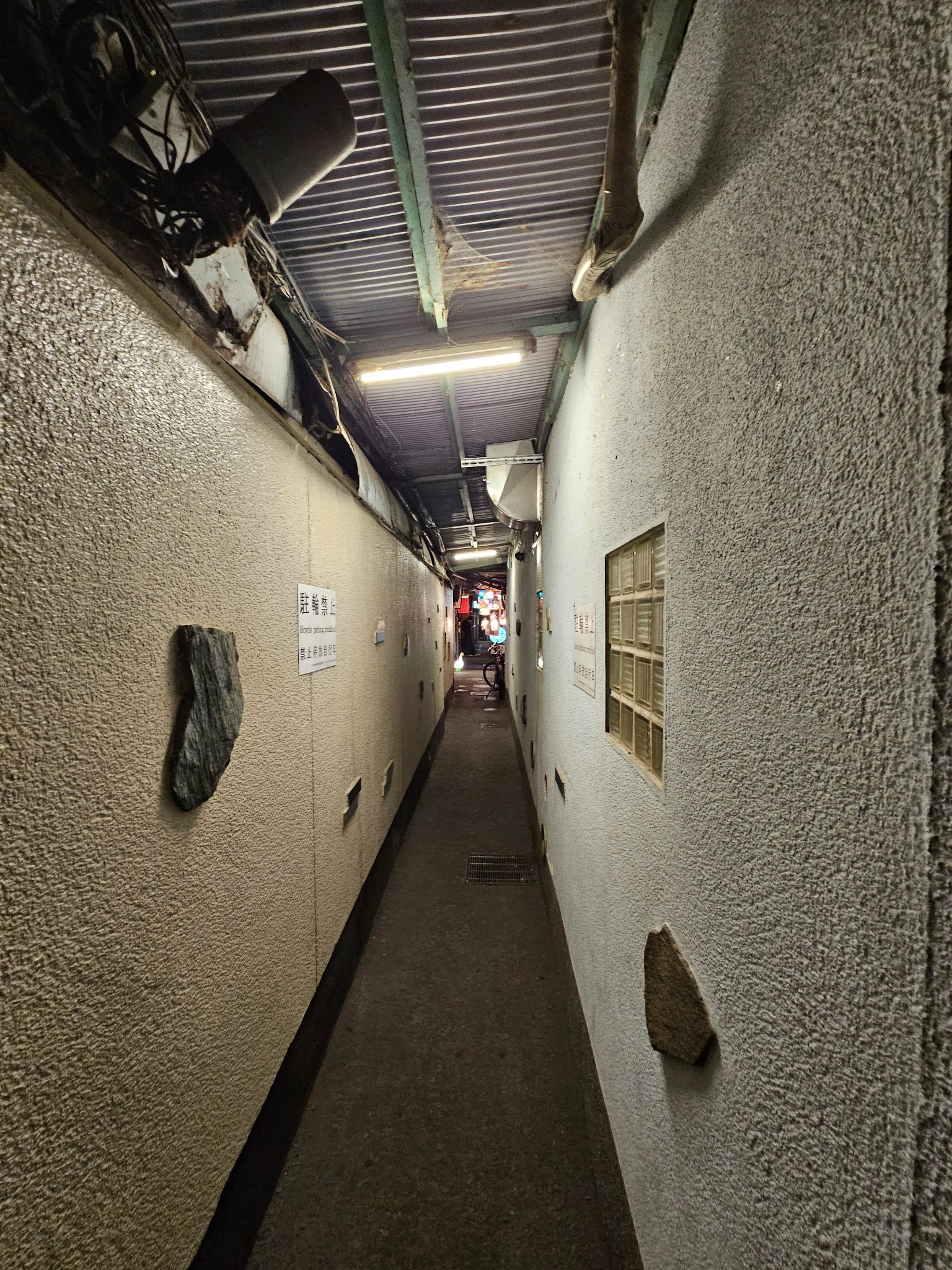
Narrow night passageway in Kyoto.
Passage itself becomes a chosen room once light and compression agree.
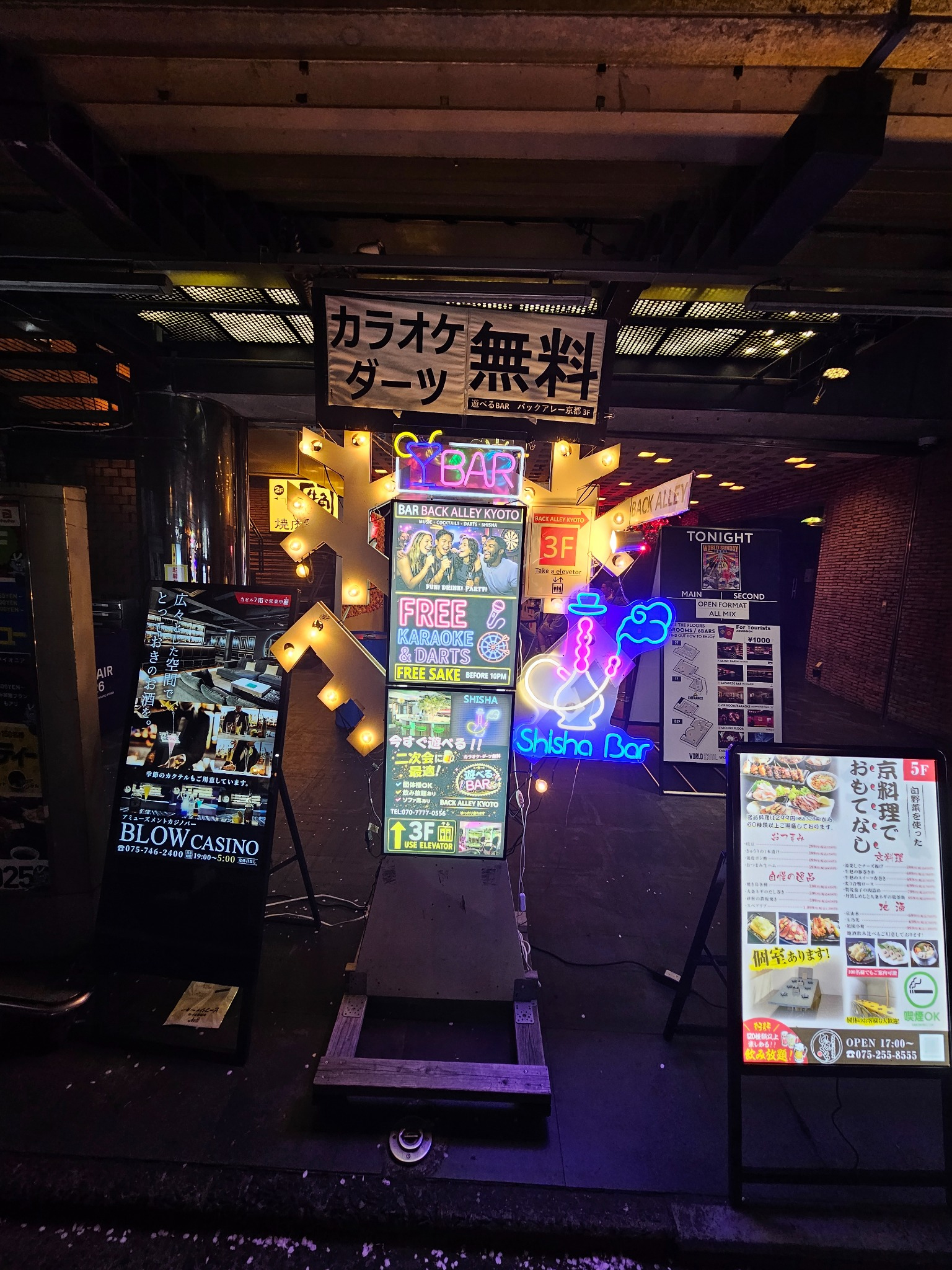
Kyoto nightlife neon with karaoke and darts.
Neon does not erase seriousness. It restages it for the night.
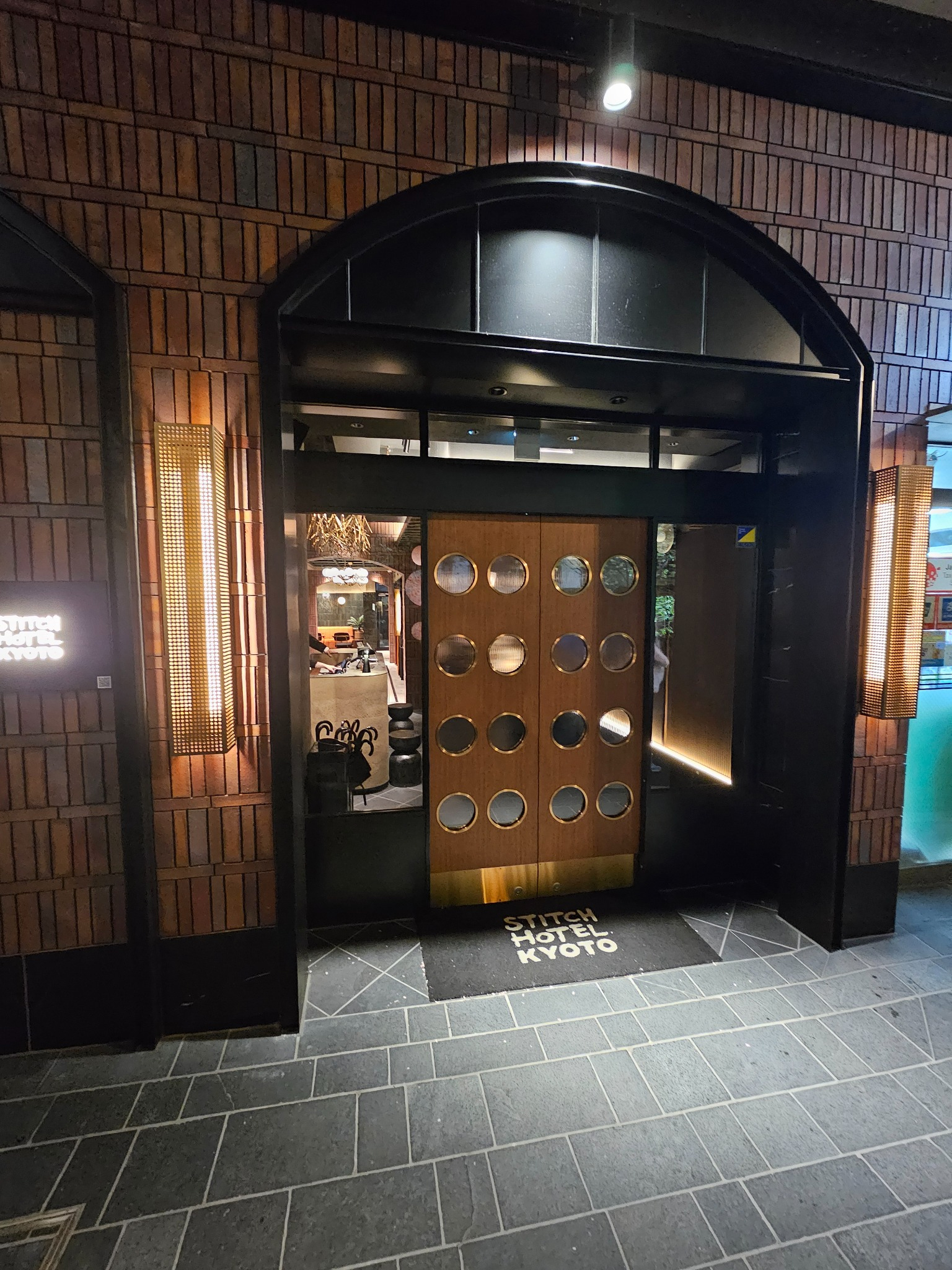
Stitch Hotel Kyoto night entrance.
Even a hotel entrance can join the chosen-room grammar once night takes hold.
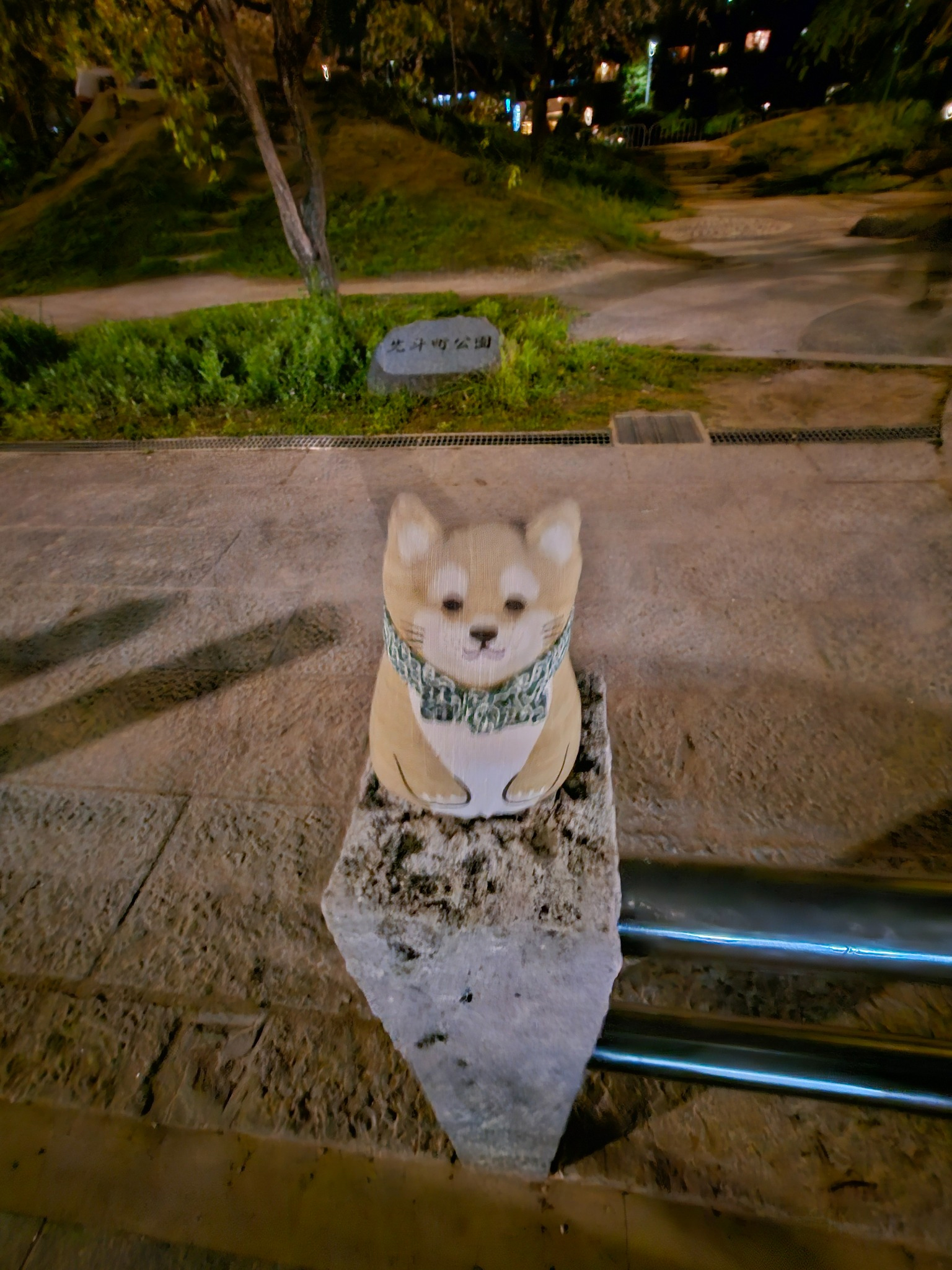
Small dog statue at night in Kyoto.
A tiny figure by a doorway can hold more welcome than a grand facade.
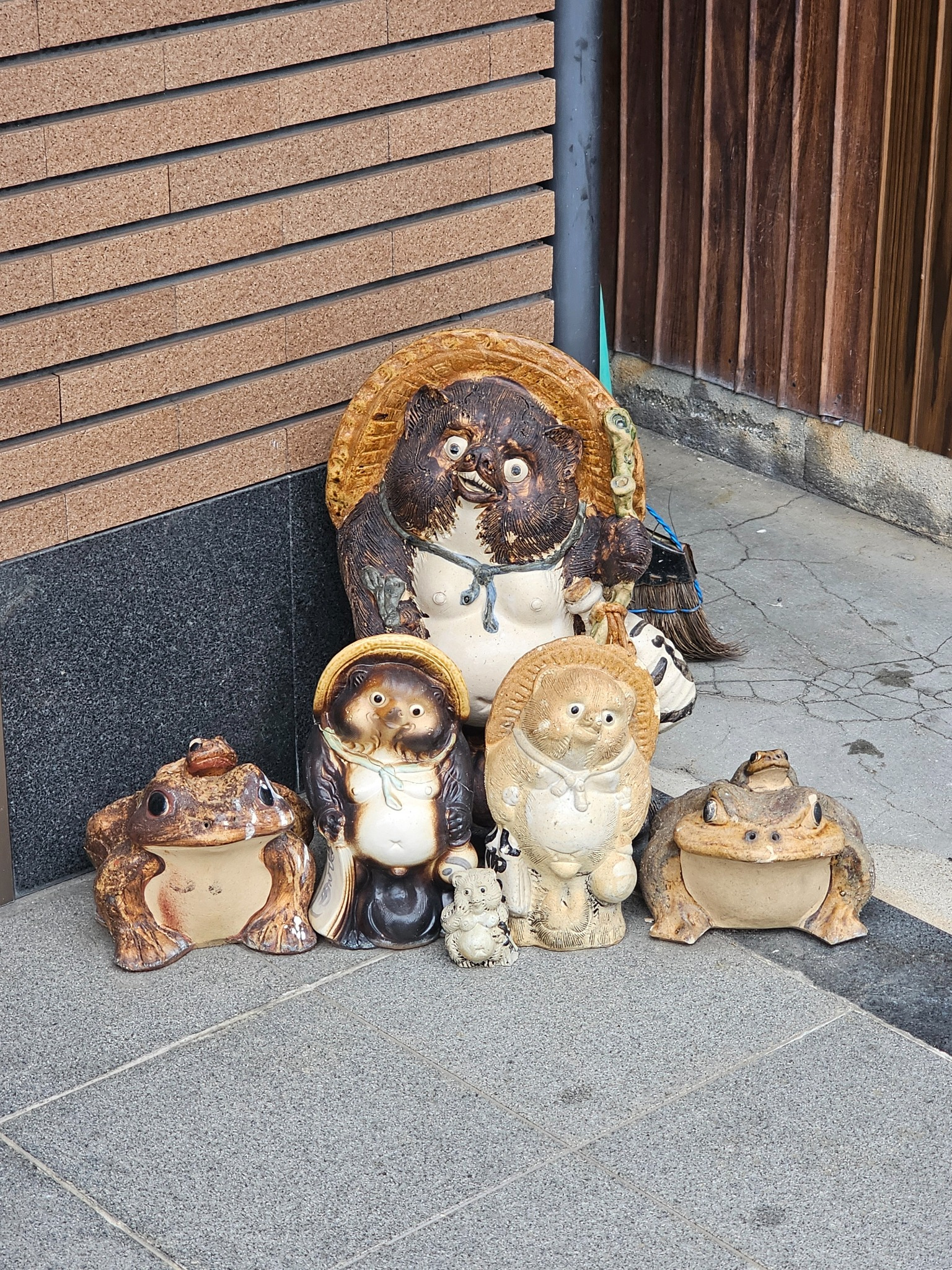
Tanuki and frog figures by a door in Kyoto.
Threshold guardians survive at comic scale too.

The bar held one kind of night. The workshop held another. The lane connected them both.

Kyoto after dark does not abandon form.
It gathers form into smaller, chosen rooms.