Time on the Shelves
Once the door opened, the house did not yield one grand answer all at once. It answered shelf by shelf, lid by lid, vessel by vessel. What had looked from outside like stored matter began to arrange itself into something more exact: not clutter, but household time waiting in orderly layers.
The family did not meet a museum. It met the remains of a lived domestic intelligence — boxes prepared for guests, sets kept together for proper use, practical beauty folded into ordinary life, and odd remnants that proved the house had never been noble all the way through.
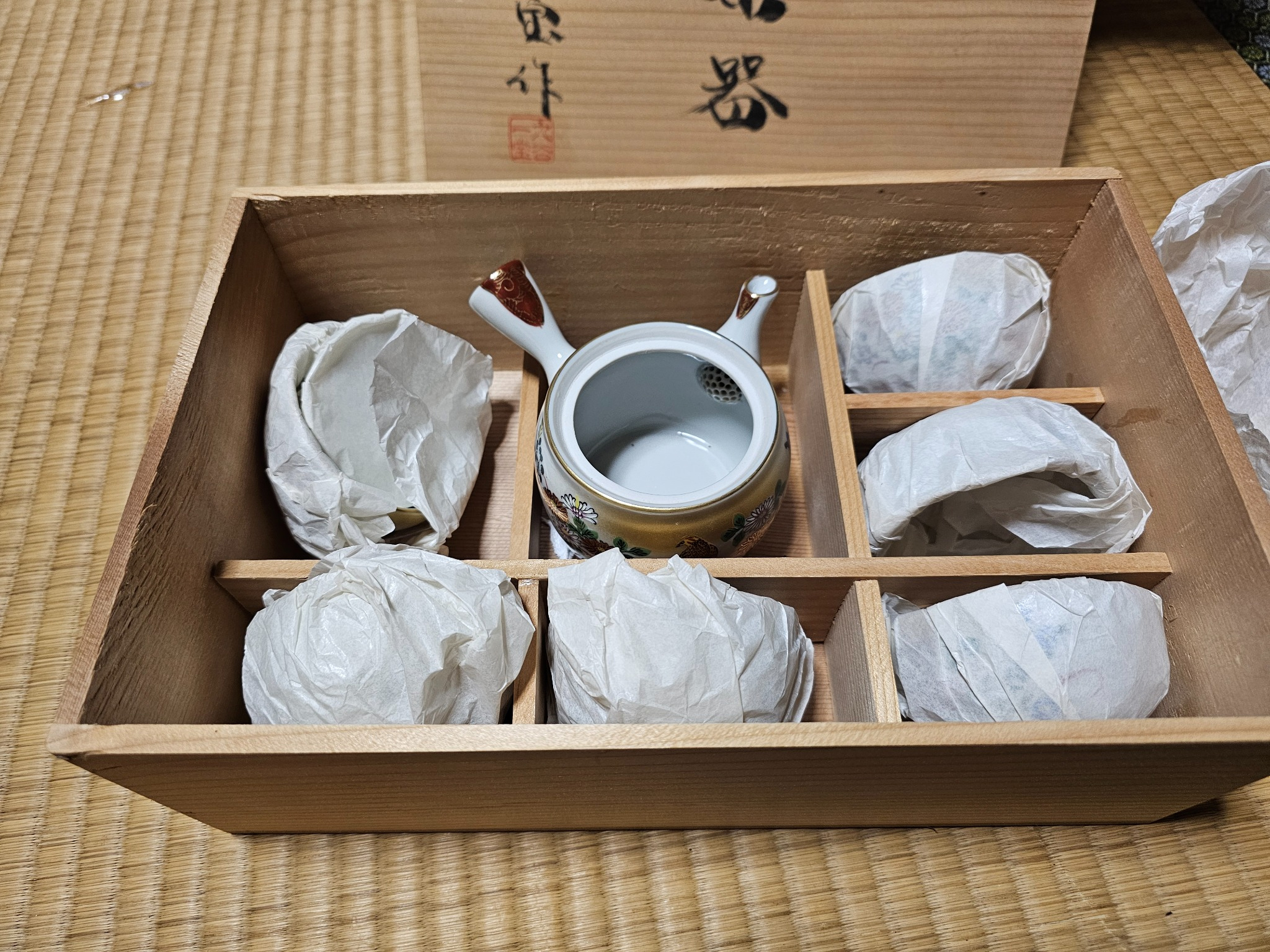
Shelves tell the truth differently from single objects. One fine thing can always be admired too quickly, sentimentalized, or mistaken for accident. Shelves resist that. They reveal recurrence. They show how a household graded its goods, how it distinguished between the everyday and the better day, how it stored readiness for guests, how it kept beauty near use without announcing beauty as philosophy. In Hanasaki, the shelves were the first sustained proof that the house had once known how to live well in small, repeated ways.
The family did not discover this through one masterpiece. They discovered it through accumulation that was not random: boxes labeled and closed with care, grouped bowls, wrapped sets, serving pieces, tea vessels, sake objects, burners, dolls, charms, lighters, vases, and practical things that had once belonged to hands rather than to categories. Shelf after shelf, the old verdict of “stored stuff” began failing. Too much of it belonged together. Too much of it had been kept with deliberate distinction. The house had remembered more of its manners than anyone had expected.
The shelf is where storage becomes language.
The object is where patience becomes evidence.
Lids had been closed for years. Yet the moment they lifted, the room filled with an older order.
Gift Culture
Gift culture announced itself first through the box. Before the object could be admired, the lid had to be lifted. That order mattered. A box does not merely protect. It delays, frames, and dignifies. It says that what is inside is not for casual grabbing. It says someone once knew the difference between keeping and merely putting away.
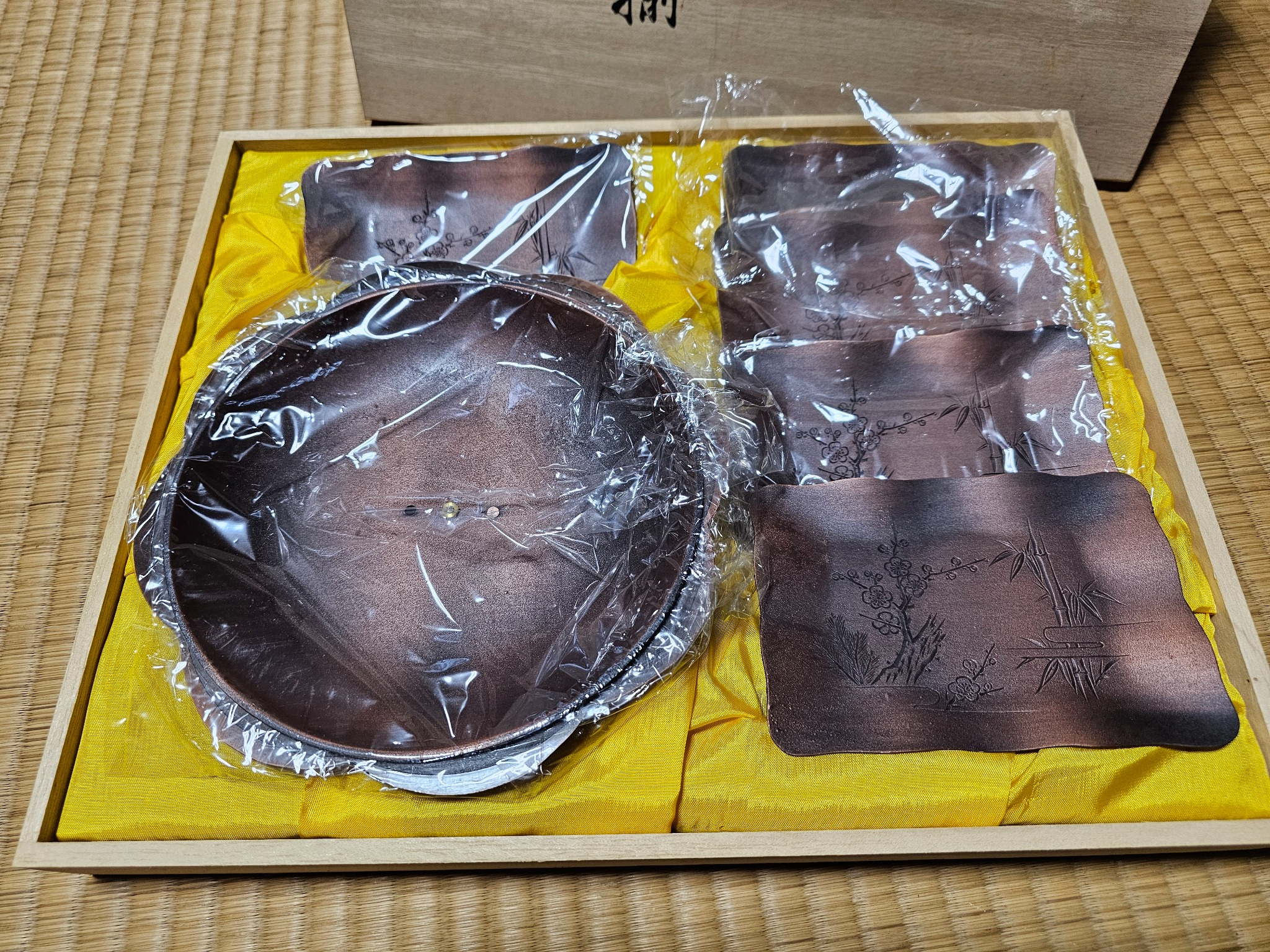
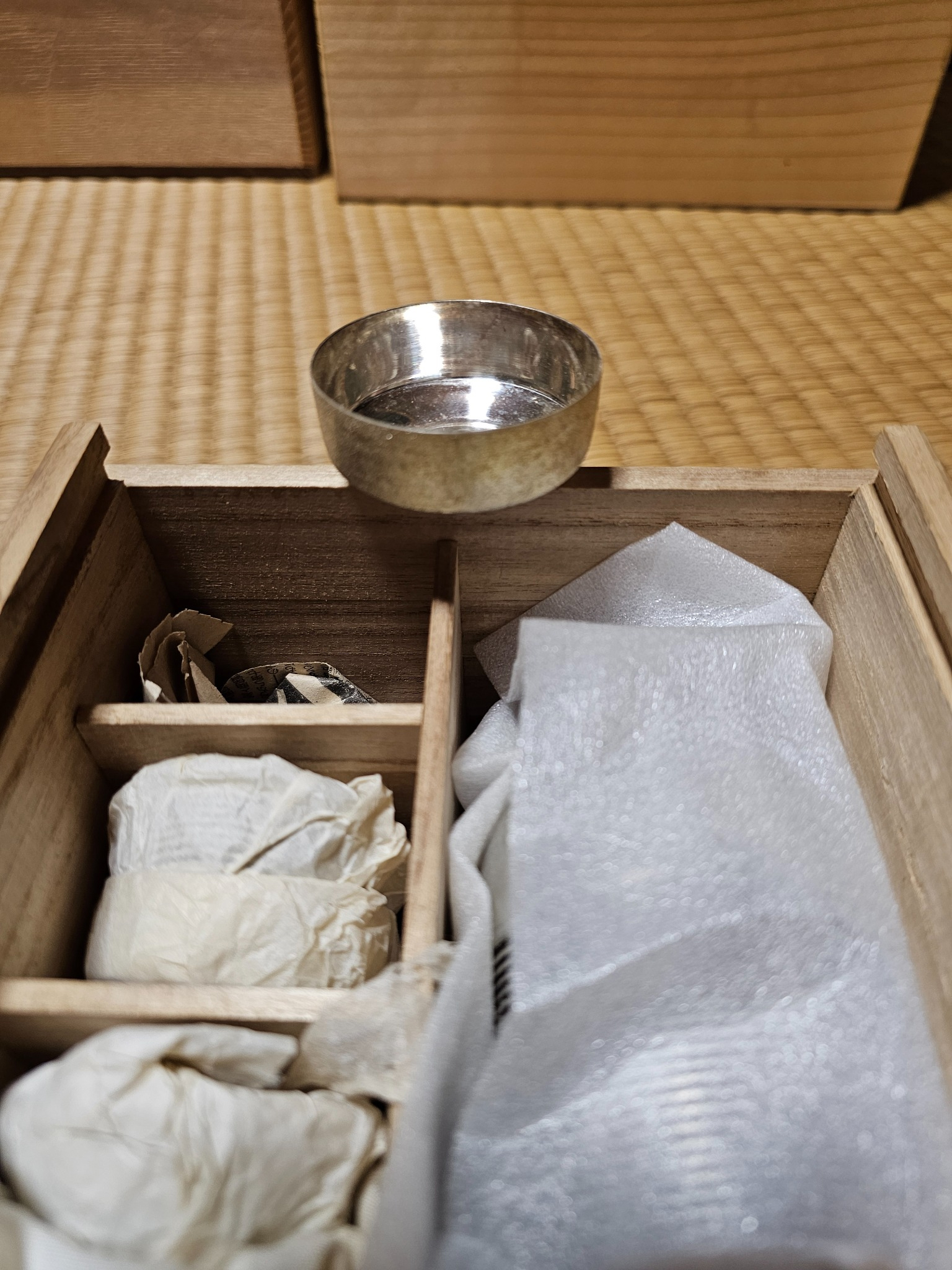
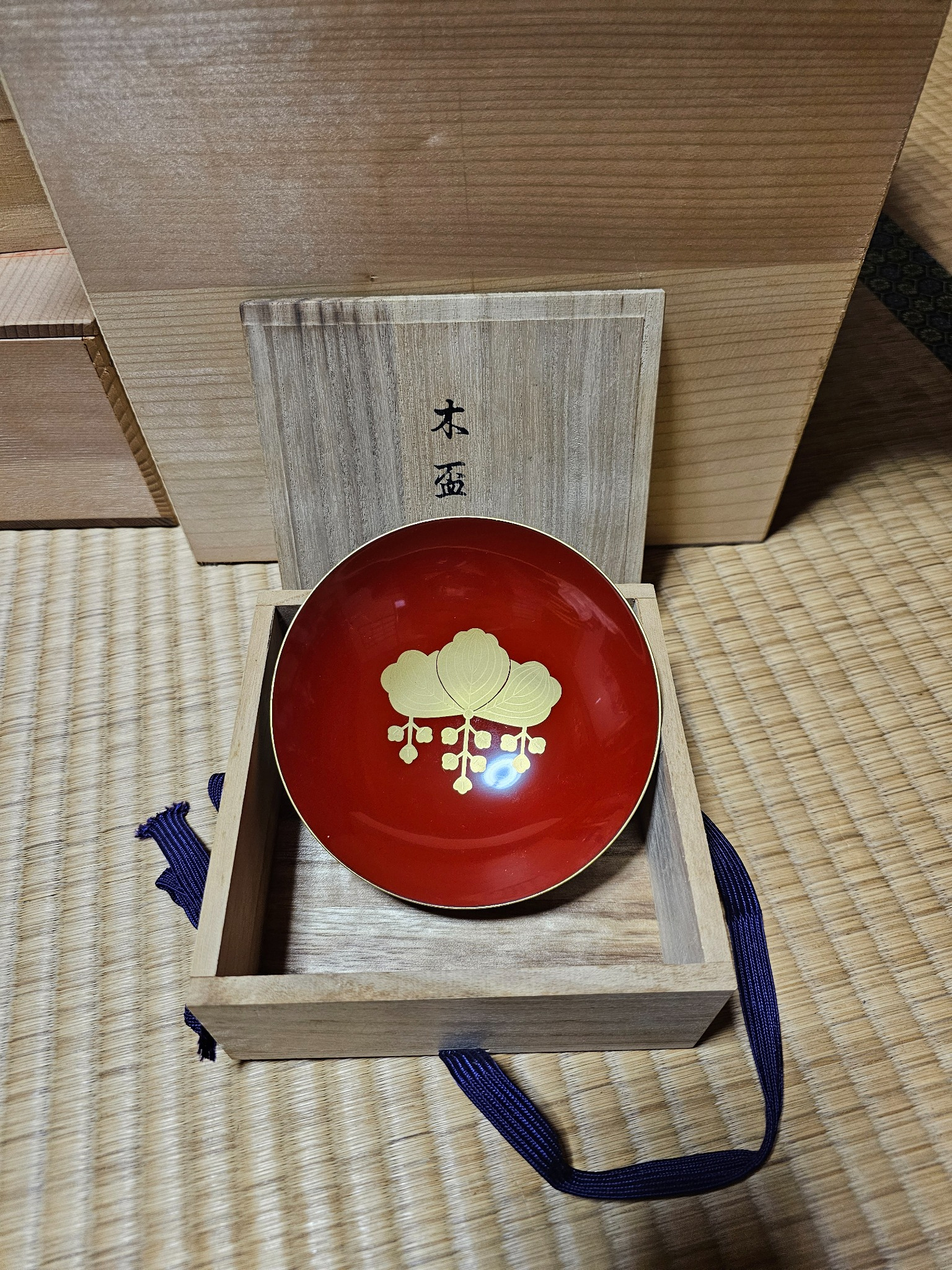
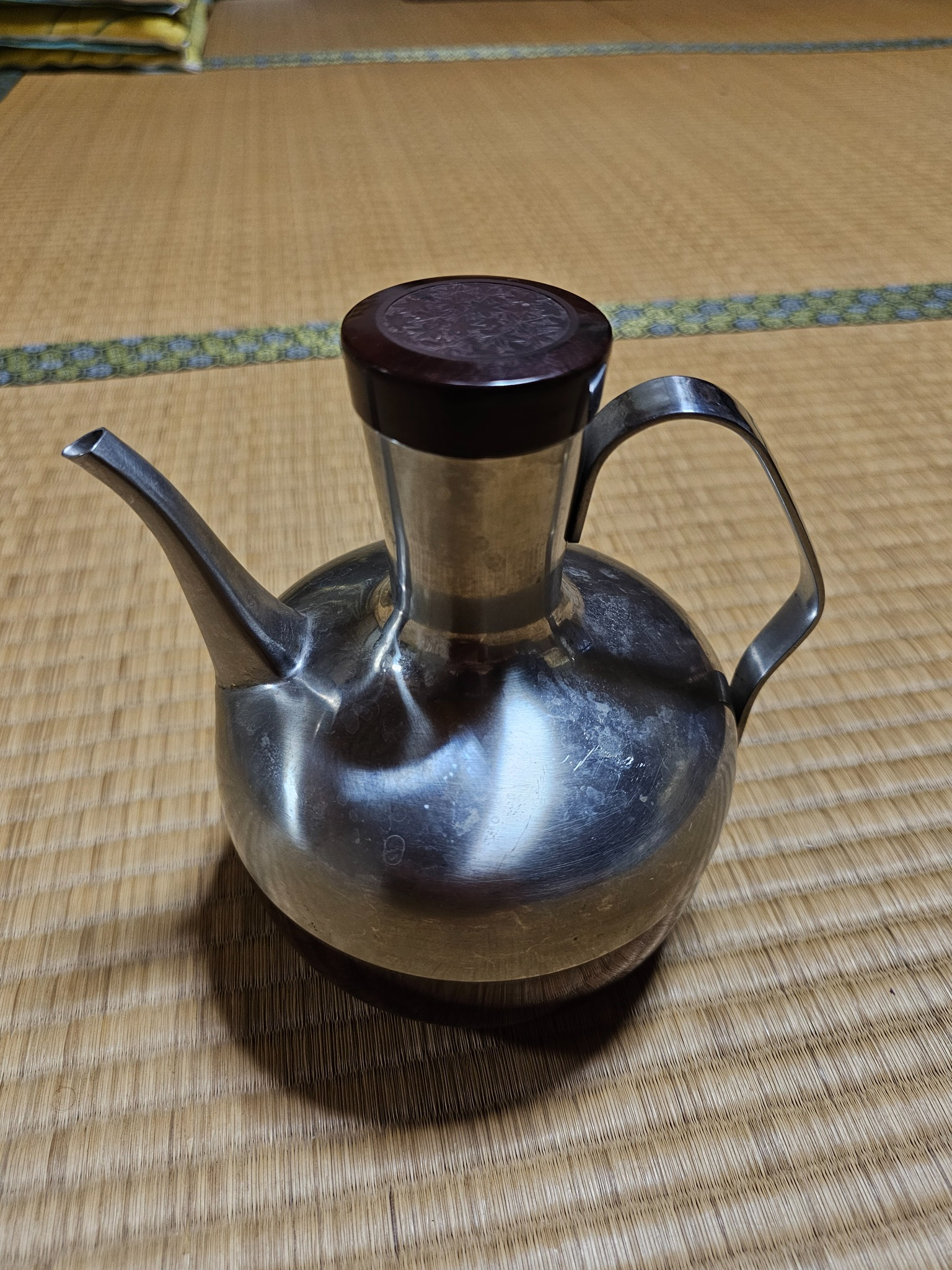
The sweets serving set, the sencha tea set, the ceremonial sake cup, the boxed vase, the carefully nested silver pieces — all of them suggested a house that prepared for occasions before the occasion arrived. Someone believed guests would come. Someone believed a family gathering, seasonal visit, or more formal moment deserved a different quality of object than the ordinary day. The box kept that readiness intact long after the gatherings themselves had thinned.
And that was what made the boxes feel large. They did not hold only objects. They held postponed reception. They held the old household confidence that there would again be a right day, a right tray, a right set, a right hour to bring something better forward.
Stored Hospitality
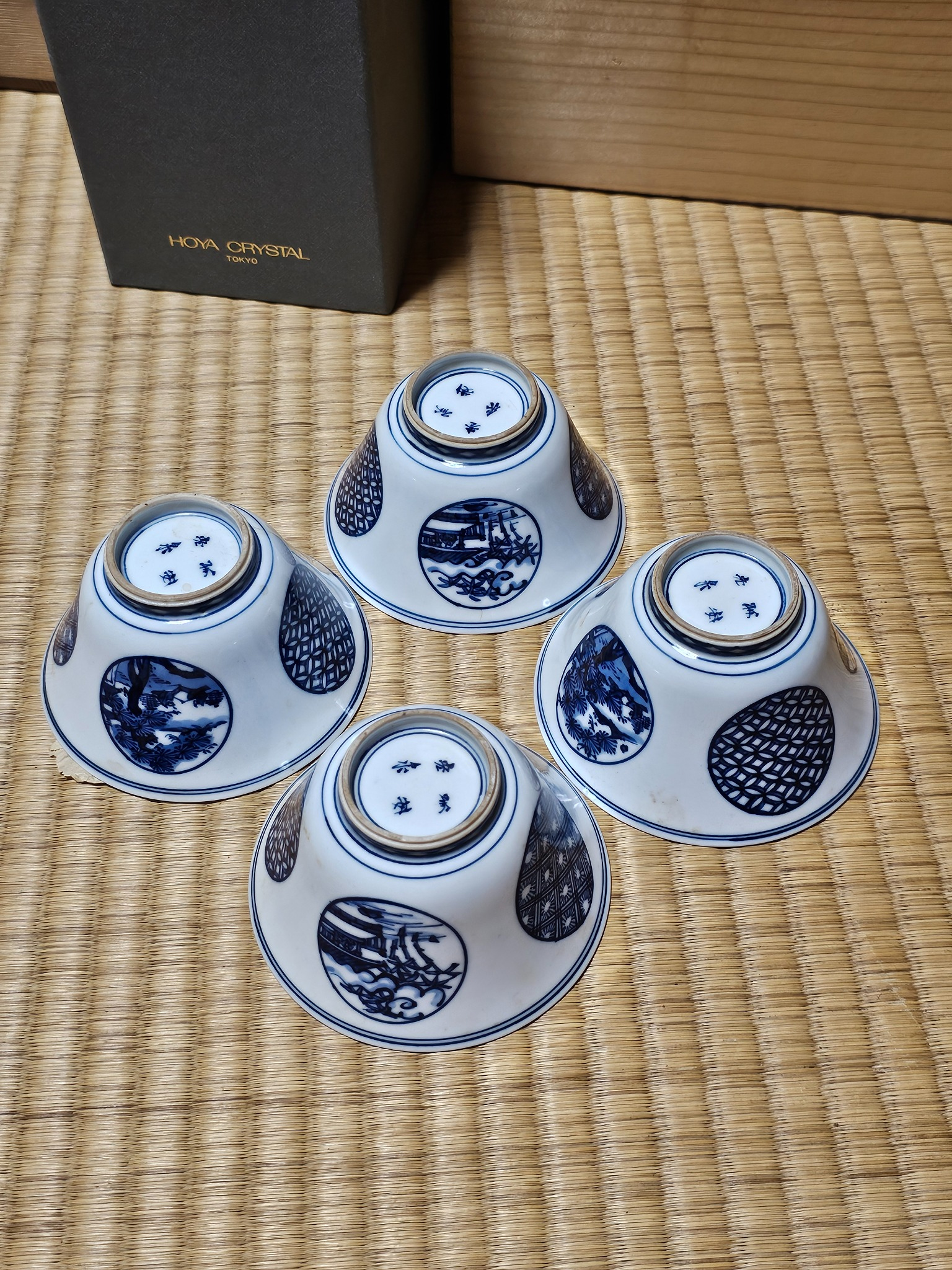
Hospitality leaves a different trace from display. Display wants admiration. Hospitality wants readiness. The shelves in Hanasaki held evidence of a household that had once been prepared to welcome, serve, and distinguish. Bowls existed in numbers, not isolation. Tea pieces waited together. Sake service implied sequence. A warmer implied comfort that should arrive properly rather than by improvisation.
Once enough of these objects stood together, the room changed temperature. The family was no longer looking at possessions in the flat modern sense. It was looking at hosted time. Someone had once known which box to open, which set to bring forward, which pieces belonged to ordinary use and which belonged to a better hour. The house had not been living by accident. It had been living by gradation.
The objects were quiet, but the standards behind them were not. They kept insisting that the old house had once operated by courtesy, sequence, and small forms of distinction too regular to have needed explanation while they were still alive.
Practical Beauty
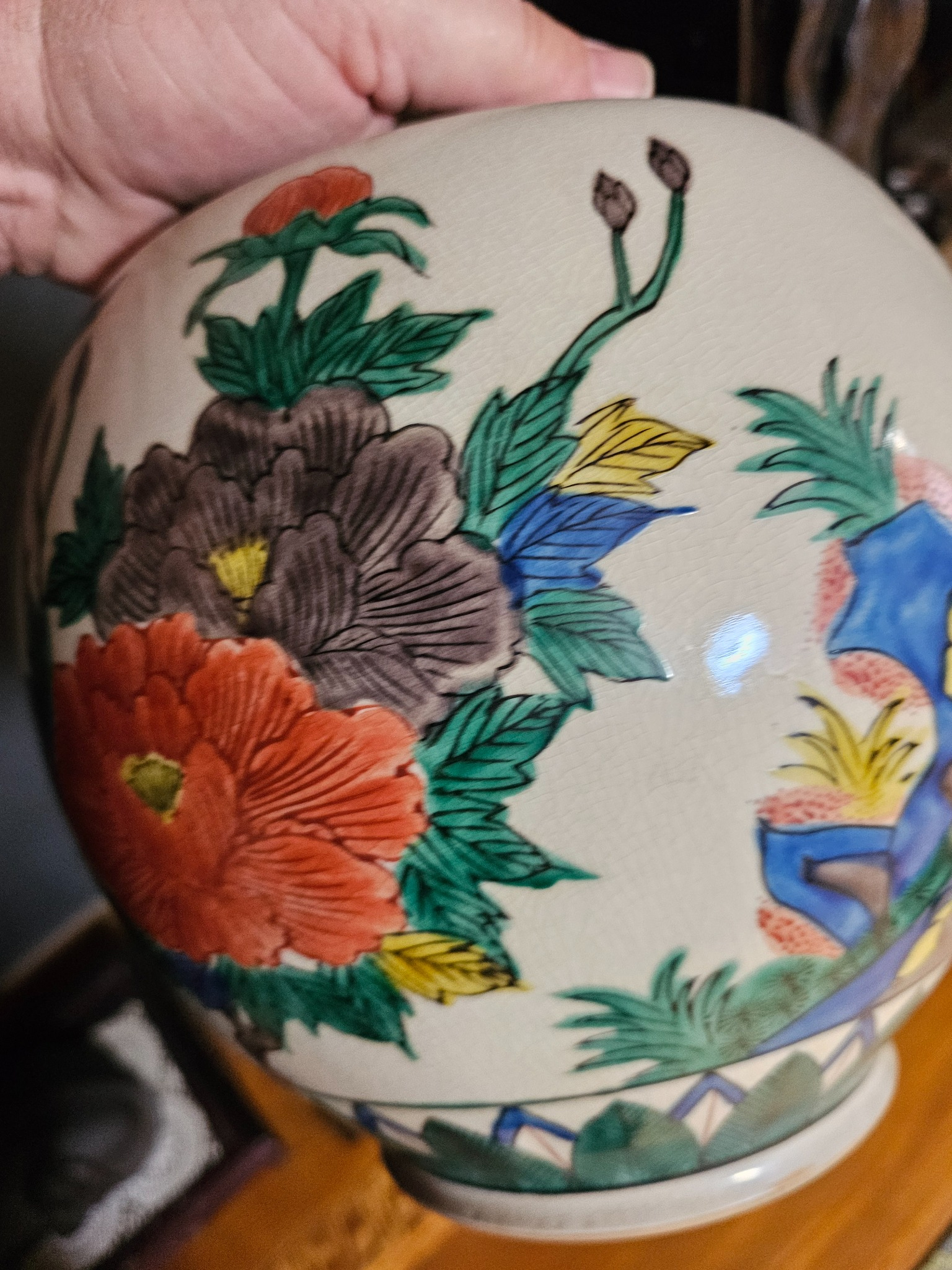
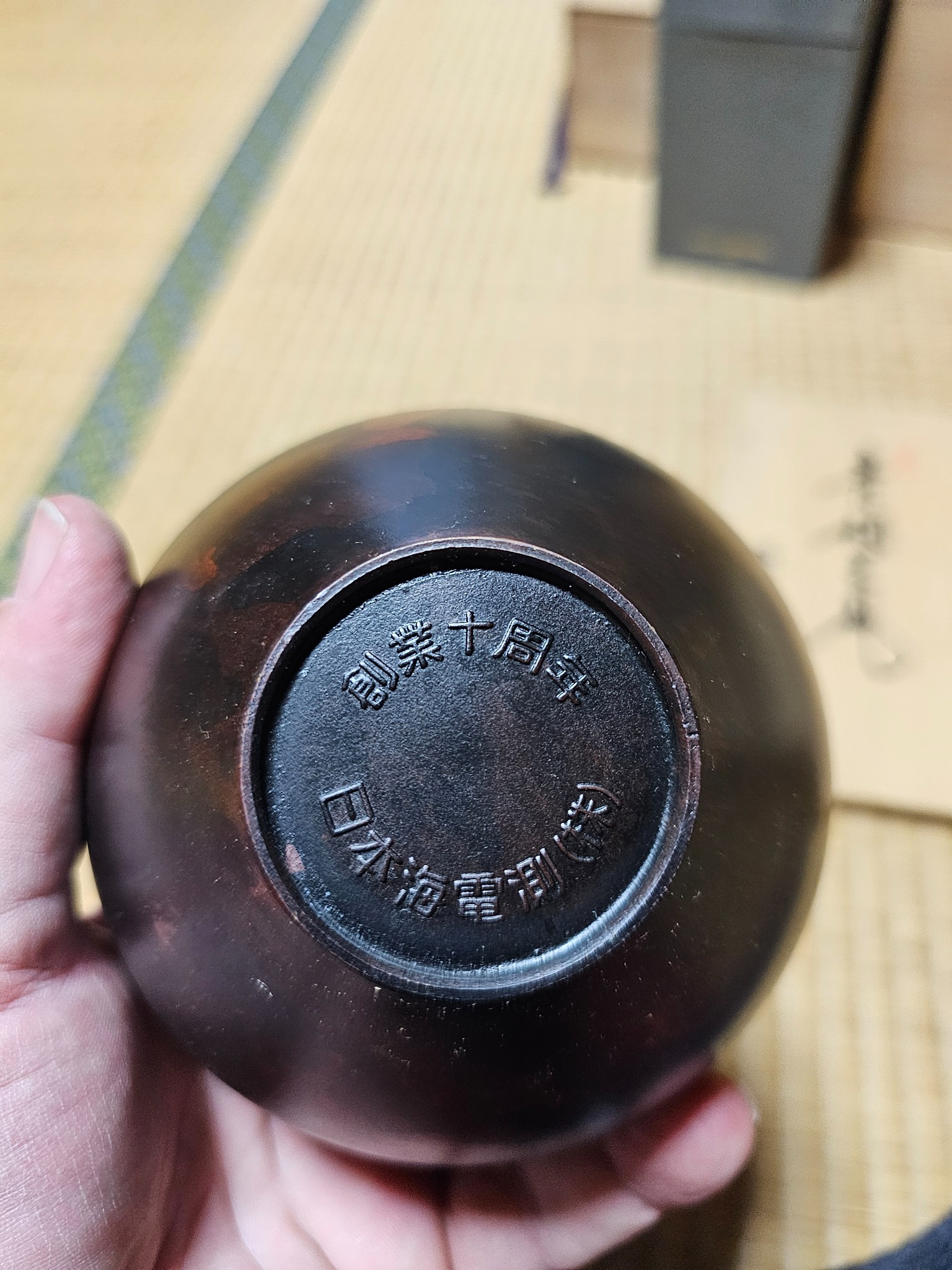
Beauty in Hanasaki had not been kept at ceremonial distance from use. It had been folded into the life of the house. Kutani flower-and-bird work, Takaoka metal vases, grouped blue-and-white bowls, silver pieces, pottery, incense burners, and small vessels all suggested refinement that expected to be handled, opened, placed, poured from, and returned.
This was not the grandeur of a collector’s room. It was the smaller and more intimate beauty of a house that knew the difference between ordinary handling and better handling. A finer bowl did not need to be on permanent display in order to matter. It only needed to be kept correctly until the right use returned.
Enough of those distinctions remained on the shelves that the family could feel them, even without naming every maker or every object history. The house had once expected not only to function, but to do so with grace.
Odd Remnants
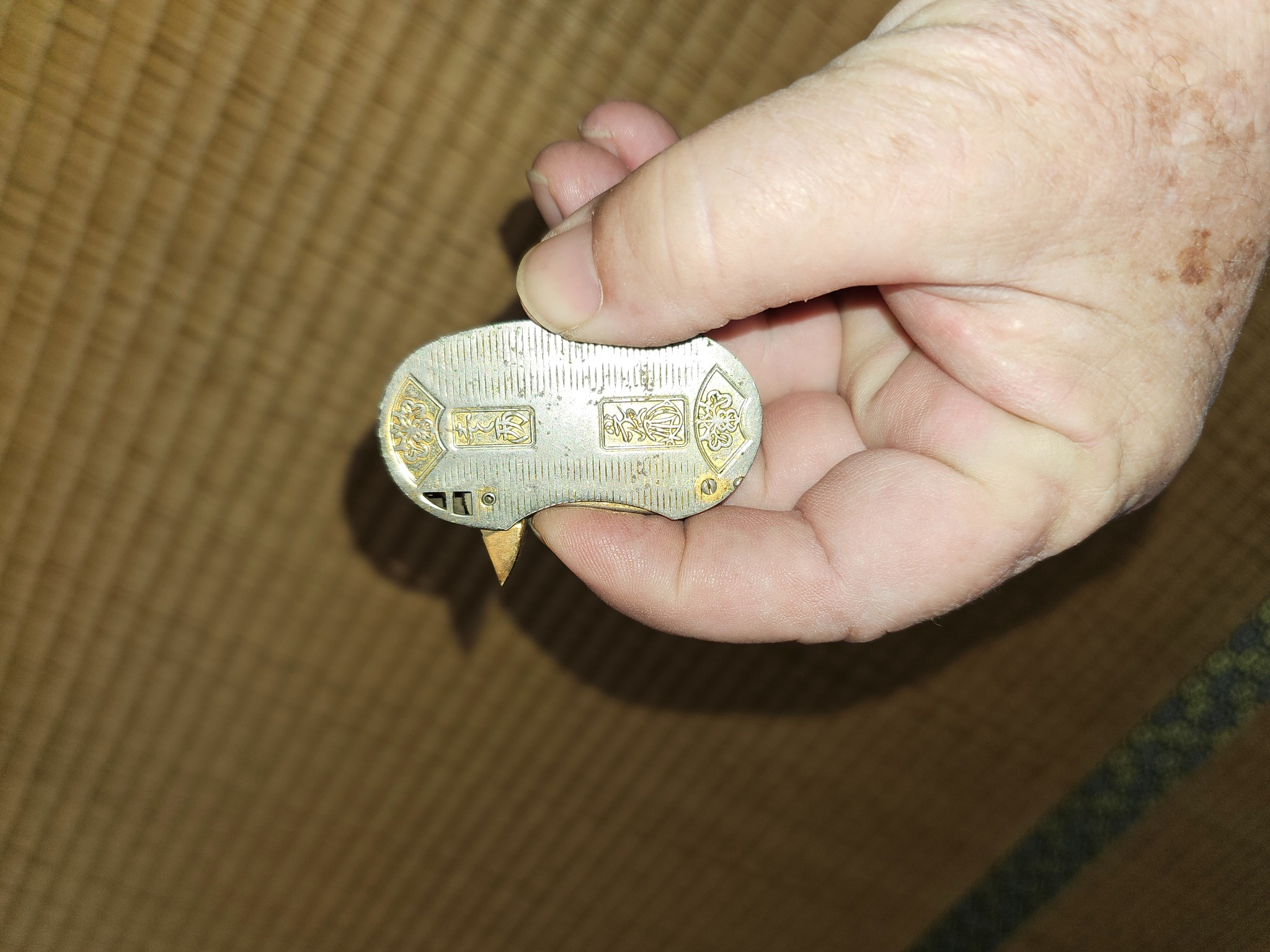
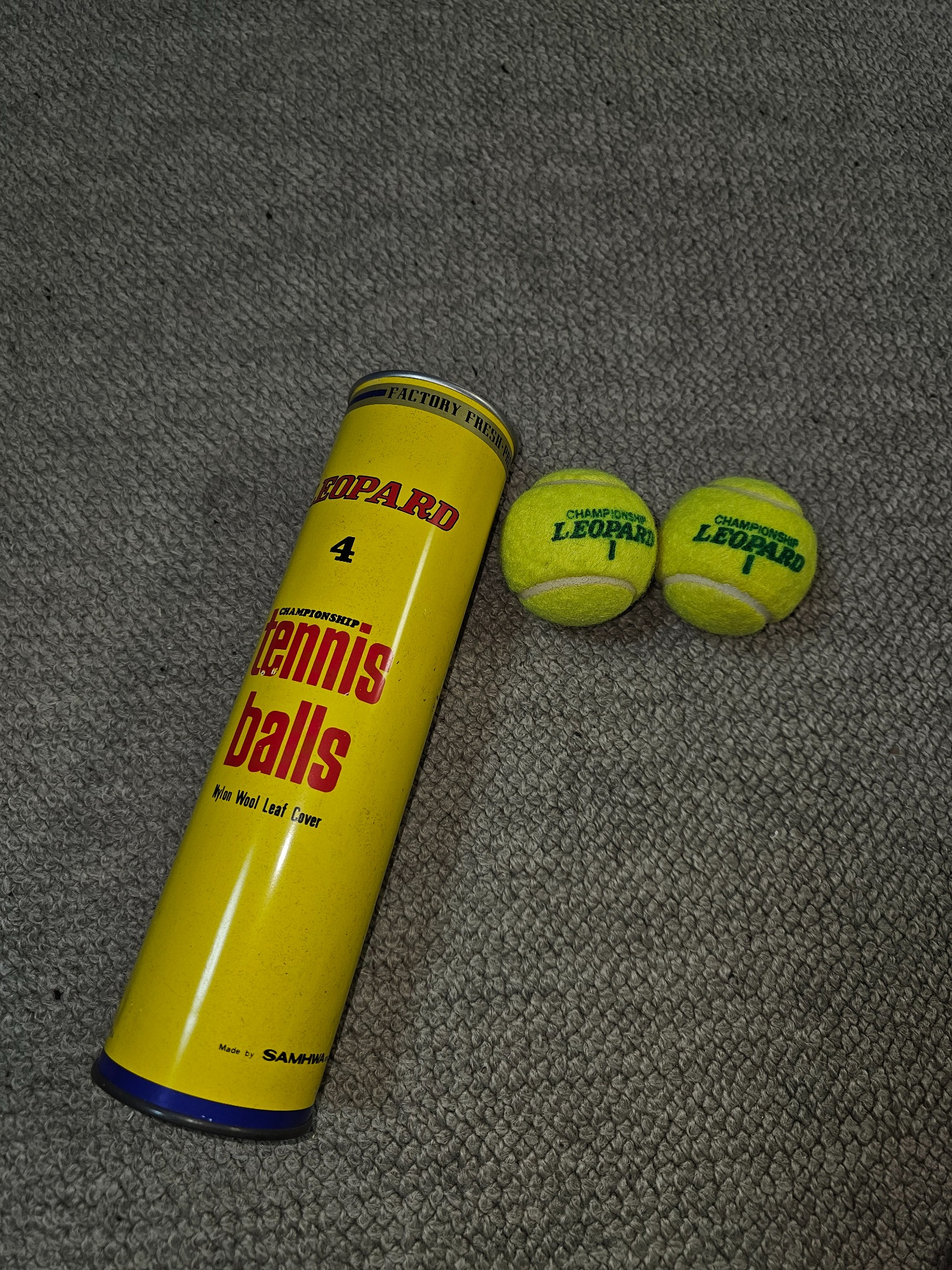
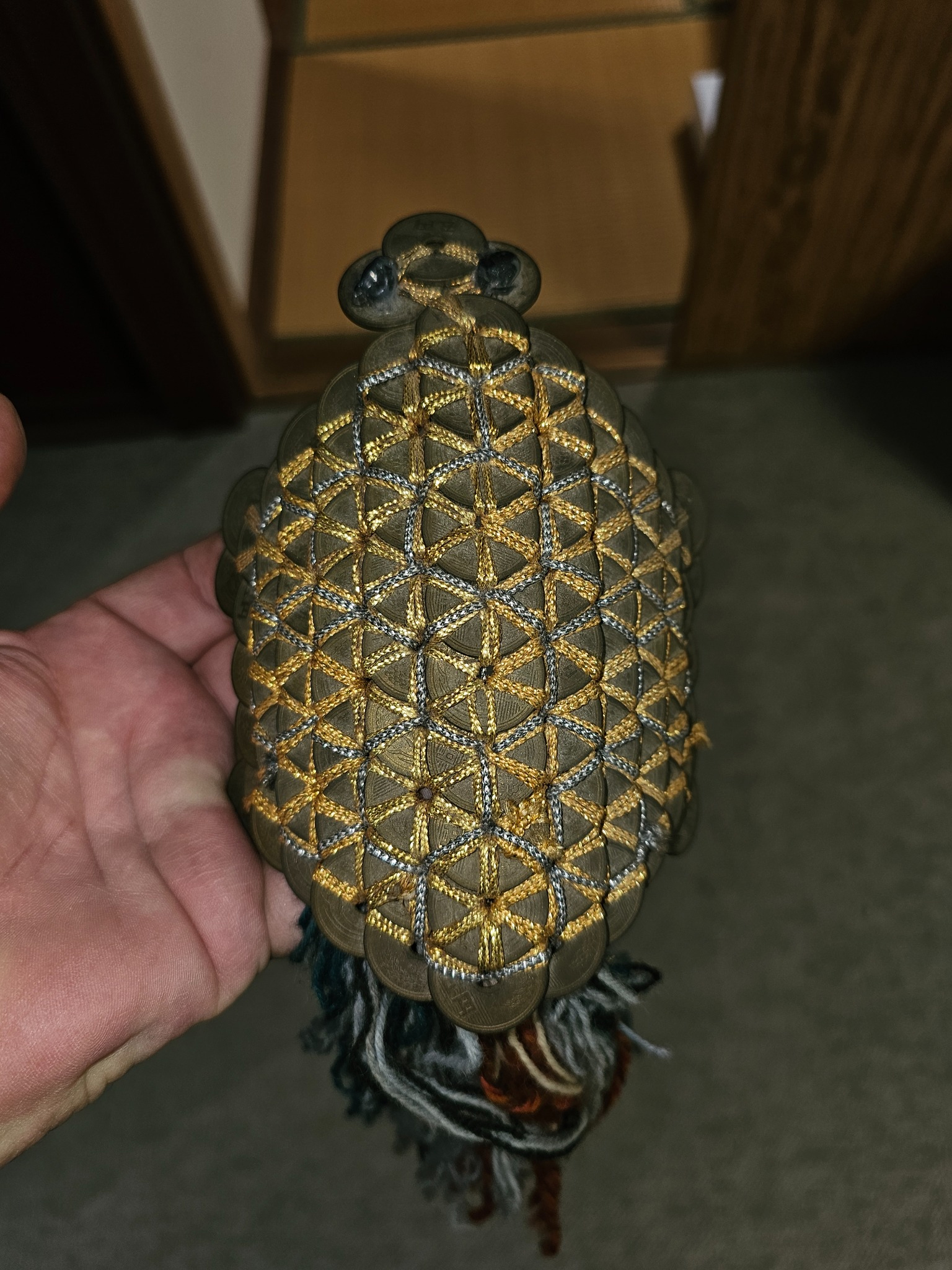
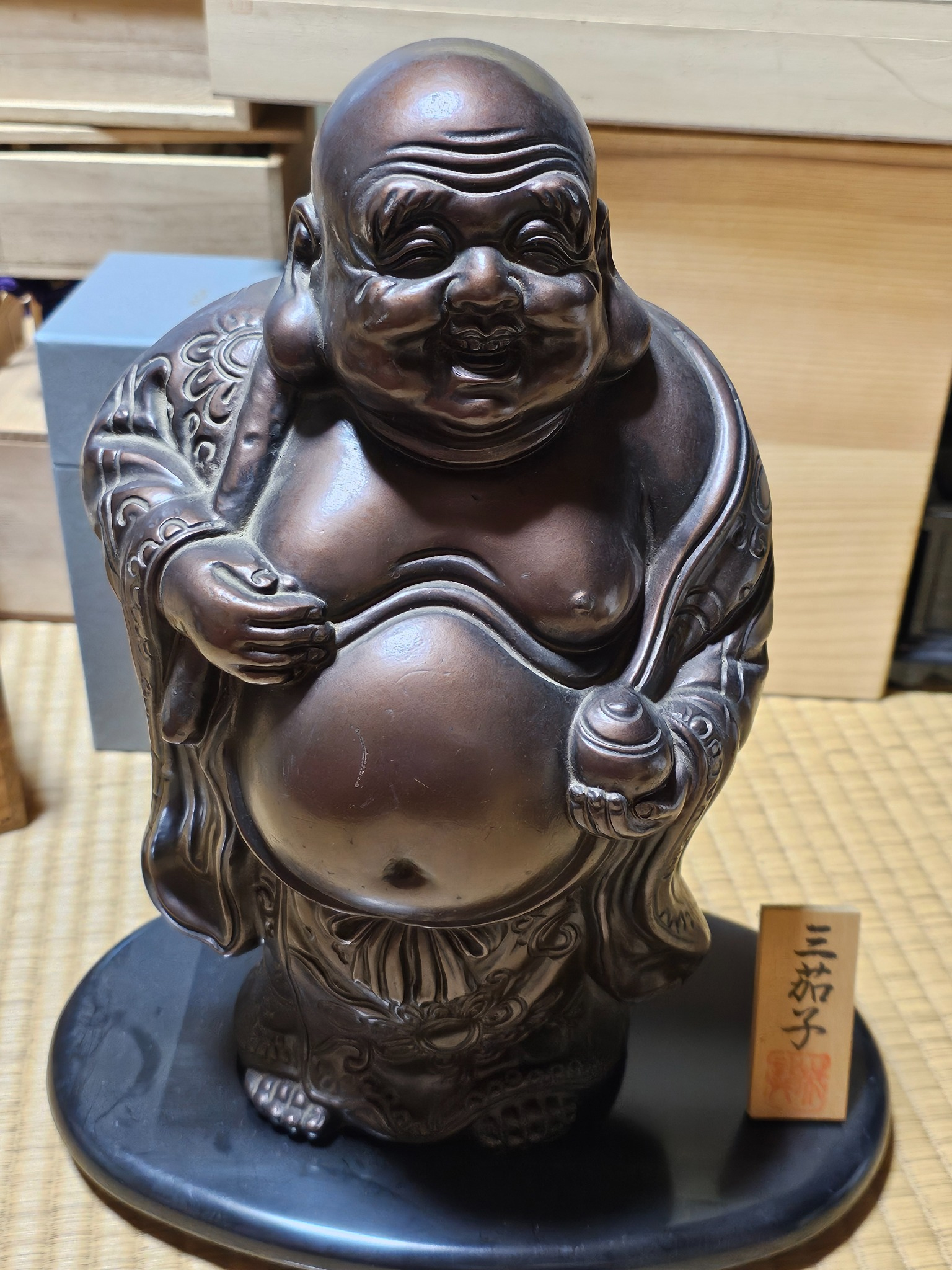
Then the shelves loosened their formality and became more human. A gas lighter. A pocket lighter in leather case. A leopard tennis-ball can. A woven coin charm. A laughing Hotei. A resting ox. Theatrical dolls. A beast-shaped incense burner. A small pouring vessel. A fish meant to carry luck or auspiciousness. These things did not line up politely under one category. They broke the spell of purity, which is exactly what they needed to do.
A family house is never only ceremony. It is whim, convenience, private attachment, sudden taste, gifts that never fully entered daily use, things someone liked too much to throw away, and objects whose first reason for staying may now be partly lost. Odd remnants return breath to the archive. They keep it from becoming too noble.
The tennis can may not have had the formal dignity of the boxed tea set, but it carried something no less valuable: ordinary life. The lighter implied a pocket, a hand, a table, a pause. The doll implied someone’s taste for presence or drama. The charm implied luck, money, protection, or memory. Shelf by shelf, the house stopped becoming a general idea and started becoming a lived one.
When Clutter Becomes Evidence
Families call old houses cluttered when they no longer know how to read what has been kept. The word is not always wrong, but it is usually incomplete. Time does not curate itself neatly. Objects accumulate. Boxes survive after their first use has faded. Some things outlive their category. But the shelves in Hanasaki refused pure clutter because they kept revealing pattern beneath accumulation.
A shelf says someone once knew where things belonged. A box says someone once knew what deserved waiting. A set says someone once expected others to be present. A finer object beside a practical one says the house once worked by gradation, not by crude necessity alone. The farther the family moved along the shelves, the less authority the word clutter had.
What remained in the room was not perfection. It was legibility. The family could now see that what had survived on the shelves was not random residue from a vanished life. It was evidence of domestic intelligence: standards of use, courtesy, timing, readiness, beauty, whim, and care. The old house had kept more than things. It had kept a way of being a house.
By then, the shelves had already said enough. The house had once known how to live.
On the shelves, time had not gone blank. It had been boxed, stacked, wrapped, grouped, and left waiting for hands willing to read it again.