The Ranma Appears
After the shelves, the eye begins rising. It stops looking only at what can be boxed, grouped, lifted, or carried in the hand. It moves upward, toward the line where one part of the room yields to another, and there the house speaks again. Not in bowls. Not in service. Not in storage. In carving. In interval. In the quiet belief that daily life deserved beauty above it.
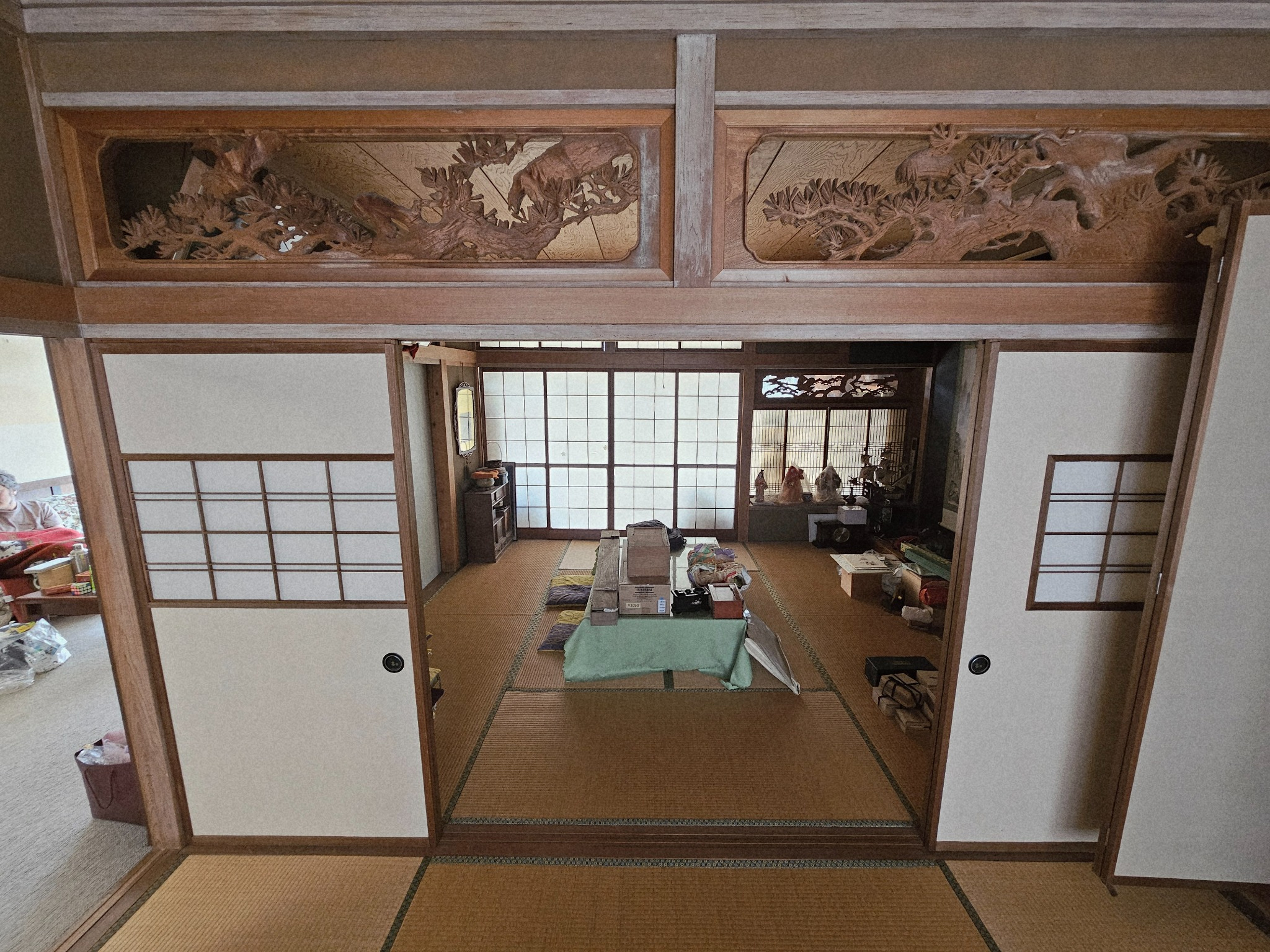
The shelves had already corrected the family once. They had taken the house away from the blunt vocabulary of burden and returned it to habit, courtesy, readiness, and stored domestic intelligence. But the shelves were still working at the level of household life. The ranma belonged to another register. It did not say that the house had been orderly. It said that the house had once expected order to pass beneath refinement.
That is why the room changed when the eye adjusted upward. Until then, the family had been reading the house close to the hand: lids, bowls, cups, burners, wrapped sets, grouped objects, things that had once been lifted, poured from, opened for guests, or returned to shelves after use. The ranma entered above that scale. It had not been waiting in a box. It had been waiting in the room itself, where it had always been, crossing the upper air between spaces and quietly deciding how those spaces would feel.
The shelves proved that the house had kept things.
The ranma proved that the house had once spoken beautifully.
Nothing about that beauty was loud. It did not arrive like spectacle. It arrived like recognition. A line in wood. A carved interruption. A room that no longer ended bluntly where the eye expected it to. The house had already been keeping its own upper grammar intact.
Above the Everyday Line
A ranma lives where ordinary handling stops. No one carries it to the table. No one wraps food in it. No one places it on a tray for a guest. It belongs to the part of the room that shapes movement without being touched by it. People pass beneath it, talk beneath it, kneel beneath it, enter and leave beneath it. It is part of everyday life without ever being reduced to everyday use.
That strange position is part of its force. A bowl proves that the house once knew how to serve. A box proves that the house once knew how to keep. The ranma proves that the house once believed daily life should move under crafted thought. Someone had decided that between one space and another there should be more than timber and partition. There should be form. There should be relief. There should be a little more grace than function strictly required.
Once the family saw that clearly, the house could no longer remain merely competent in memory. Competence had built the structure. Courtesy had arranged the shelves. The ranma introduced something finer: the old confidence that usefulness and beauty did not need to live far apart.
The Paired Panels
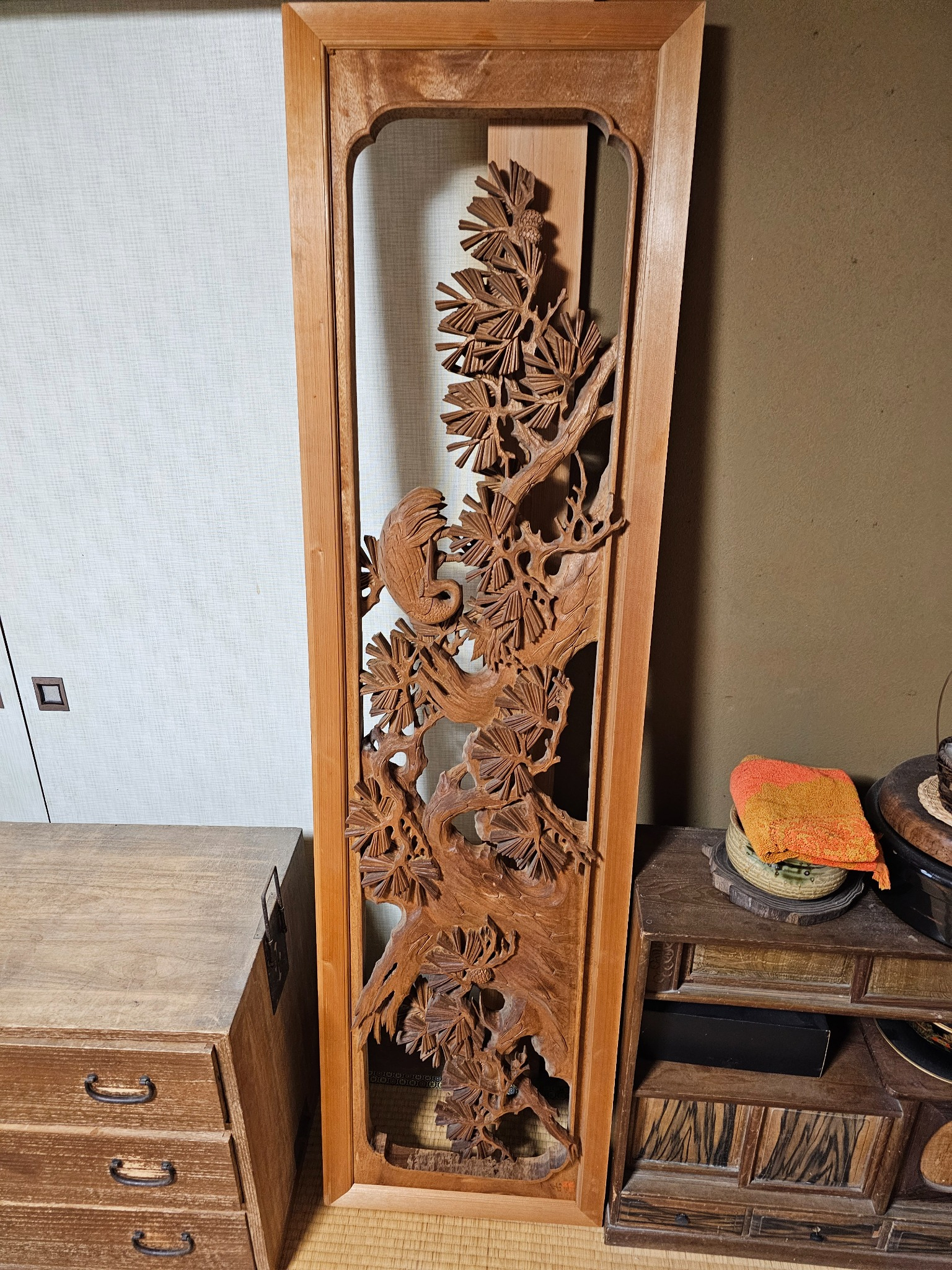
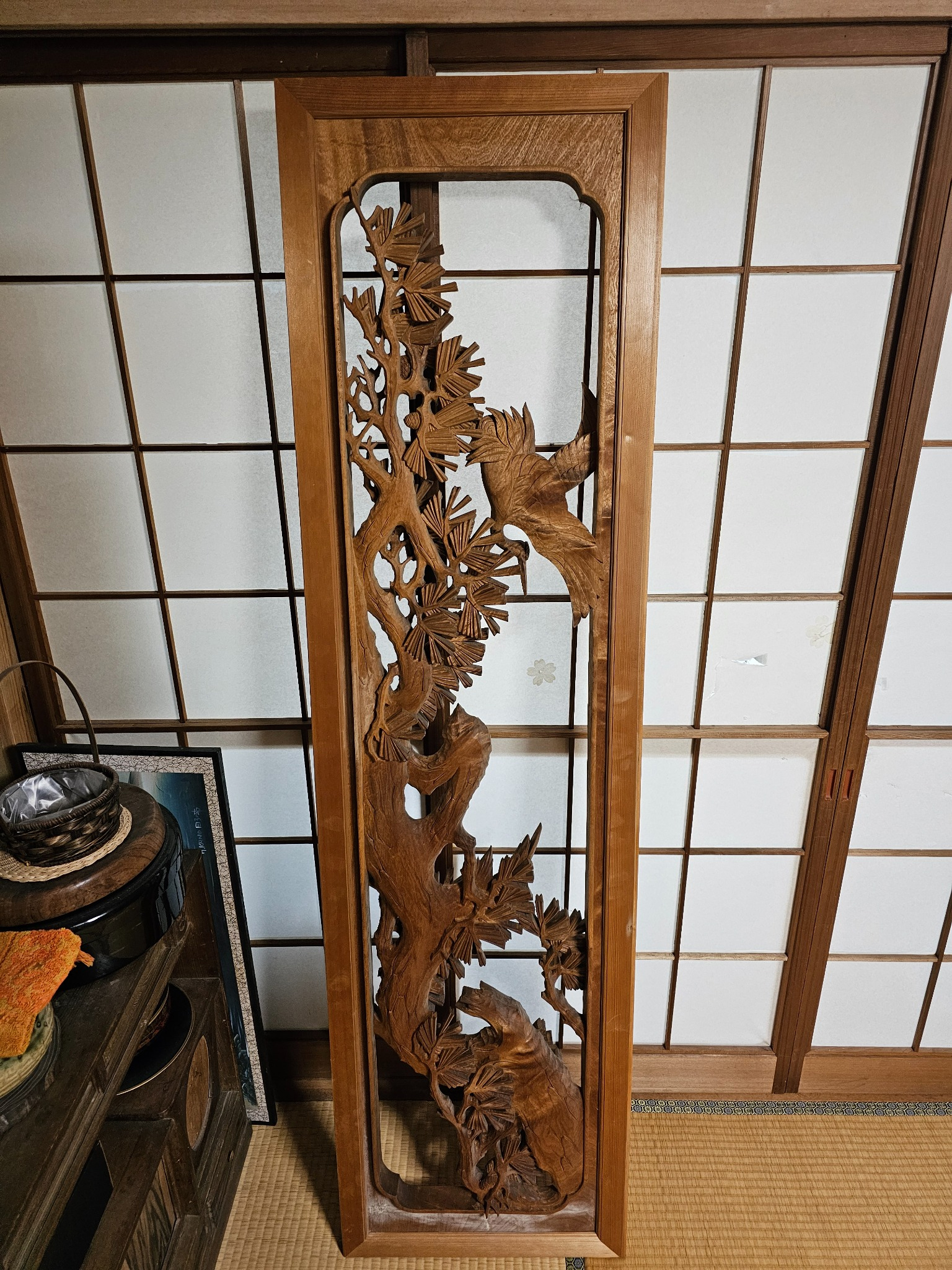
The paired fronts matter because they refuse the laziness of treating the ranma as a charming fragment. Once both sides come into view, the family is no longer facing “some old carving.” It is facing a deliberate piece of room-making. The pair belongs to relation, not novelty. One panel leans against the memory of the other. One line completes a rhythm the other began. The house had once been composed with enough confidence to assume that such care belonged overhead, where people would live beneath it for years without turning it into a speech.
That confidence survives in the panels even after the household that passed beneath them has thinned. Wood keeps decision differently from memory. Memory softens, blurs, argues, fades. Decision in carved wood can remain visible long after the names of the hands that commissioned or admired it have gone quiet.
Carved Patience
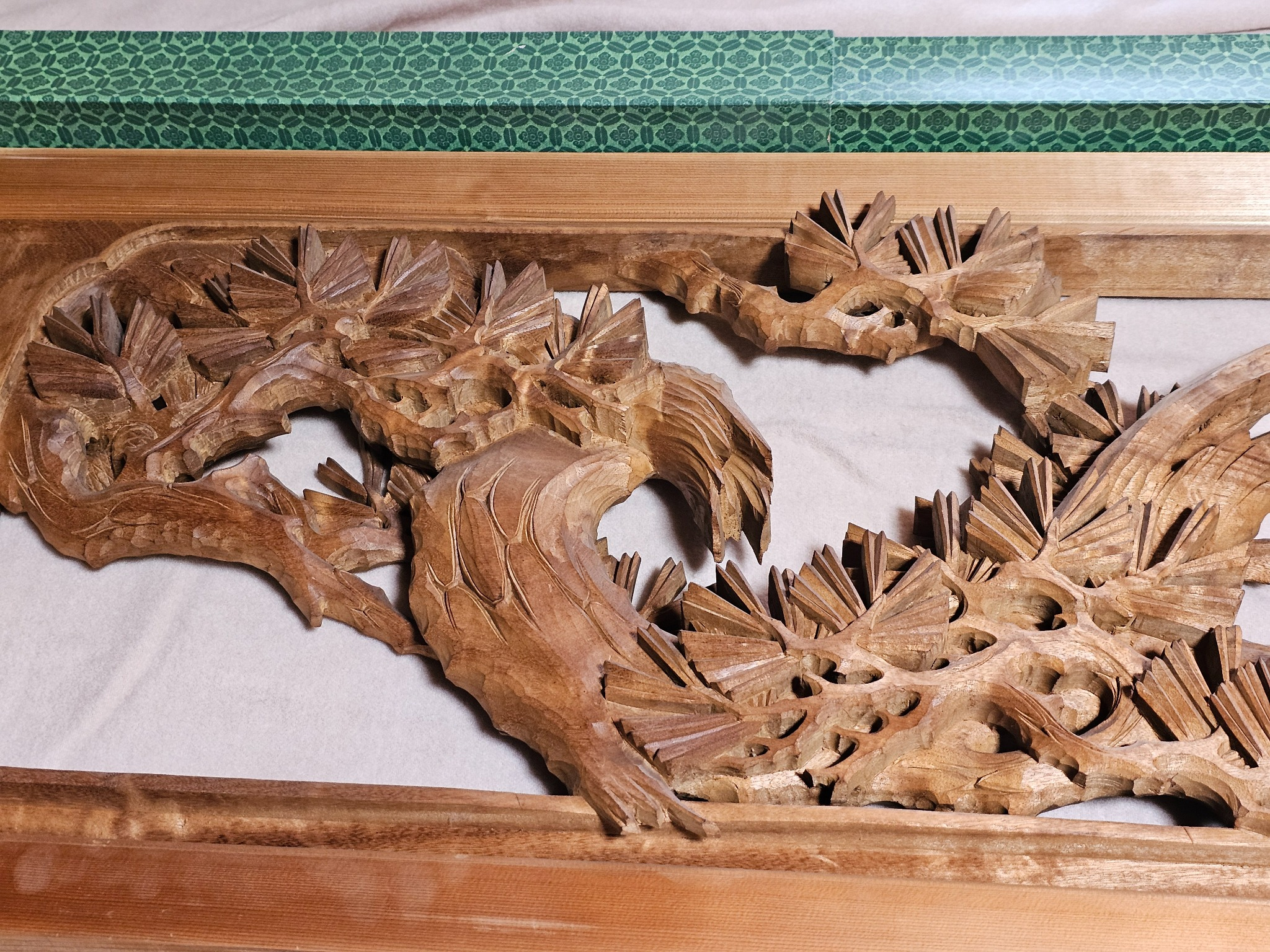
Carving slows time twice. First in the making, then in the seeing. Someone had to decide where line should thicken, where air should open, where the pattern should hold back and where it should carry forward. That kind of work cannot be rushed without announcing the rush forever afterward. The ranma kept no trace of hurry. What remained in the wood was steadiness.
Years later, the family had to slow in answer. Quick looking was useless here. Detail did not shout. It emerged. One cut answered another. Negative space gave shape to what remained. The maker’s hand was no longer present as a person, but it remained present as decision: firm enough to survive the years, quiet enough that the room could continue living beneath it without turning every day into reverence.
The family had already been learning how to slow down under the house’s instruction. The ranma asked for another degree of the same discipline. It could not be sorted the way shelves were sorted. It could only be looked at until looking itself changed tempo.
The House Raises Its Voice
The ranma did not cancel the family’s earlier readings of the house. Grass, fatigue, delay, resentment, distance, and practical burden remained true. But they could no longer remain sufficient. Once carved refinement had emerged this clearly, the house became harder to reduce to its most painful surface. The visible edge had spoken honestly, but not exhaustively.
The room had now supplied another register. Someone once believed that thresholds deserved art. Someone once believed that the upper air between one room and another could carry more than structure. It could carry pattern. It could carry atmosphere. It could carry the kind of care that does not announce itself every day and yet shapes every day all the same.
After that, the house was no longer only being recovered. It was being re-heard.
Inspection
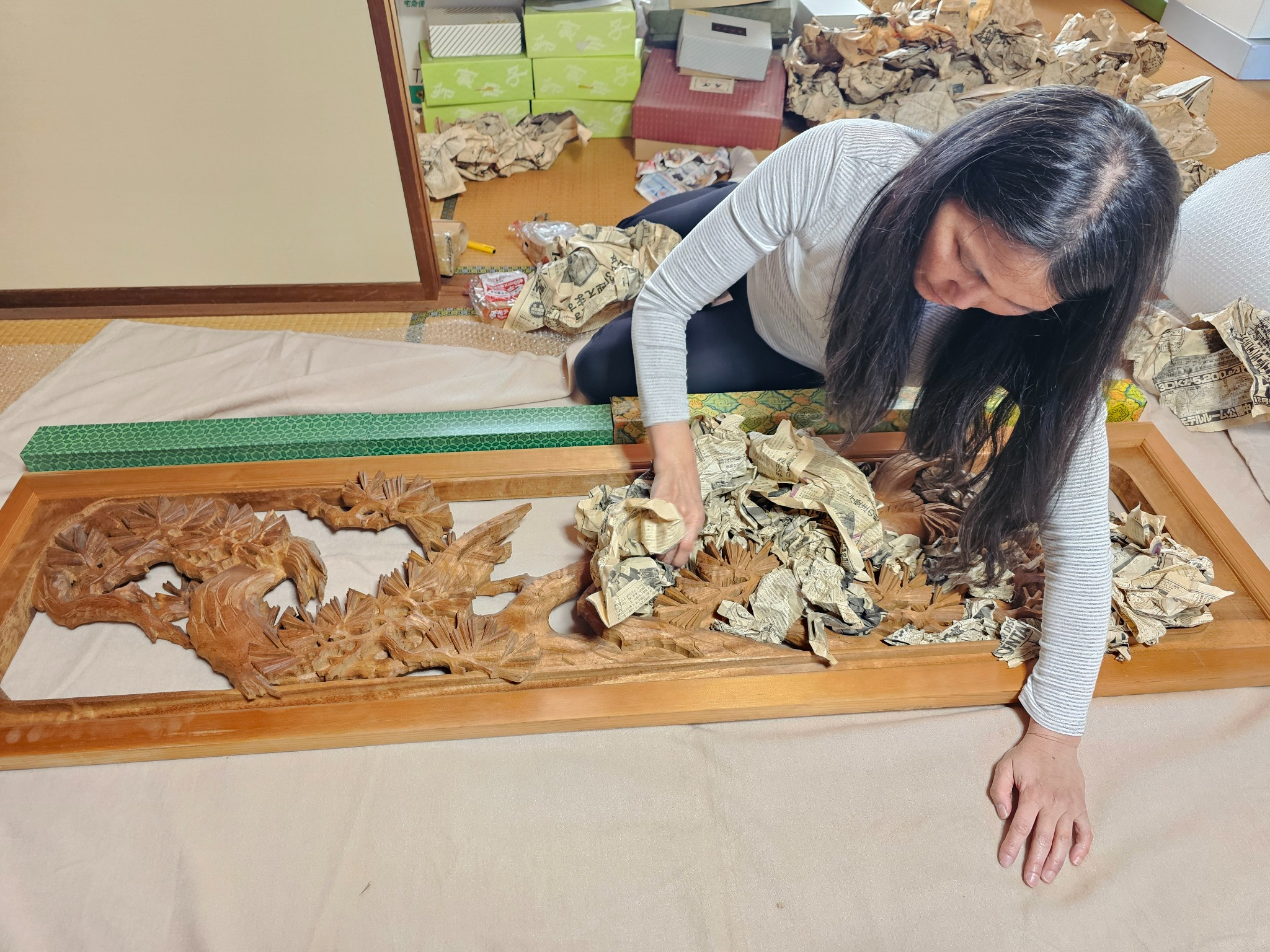
Discovery changes once the eye moves closer. At first the ranma arrives as room-scale revelation. Then it narrows into edge, cut, surface, condition, fragility, and the question time always asks of wood: how much remains, and how carefully must it now be handled? Reverence is no longer enough at this distance. The family has to exchange wonder for attention.
This is where feeling takes on hands. The first response is recognition: this matters. The next response is more difficult: how do we keep it safe, how do we move it, how do we protect what has already outlived the years in which we were present to care for it properly? The object is beautiful, yes. It is also vulnerable. Vulnerability has a way of clarifying value faster than admiration can.
Wrapping for Preservation
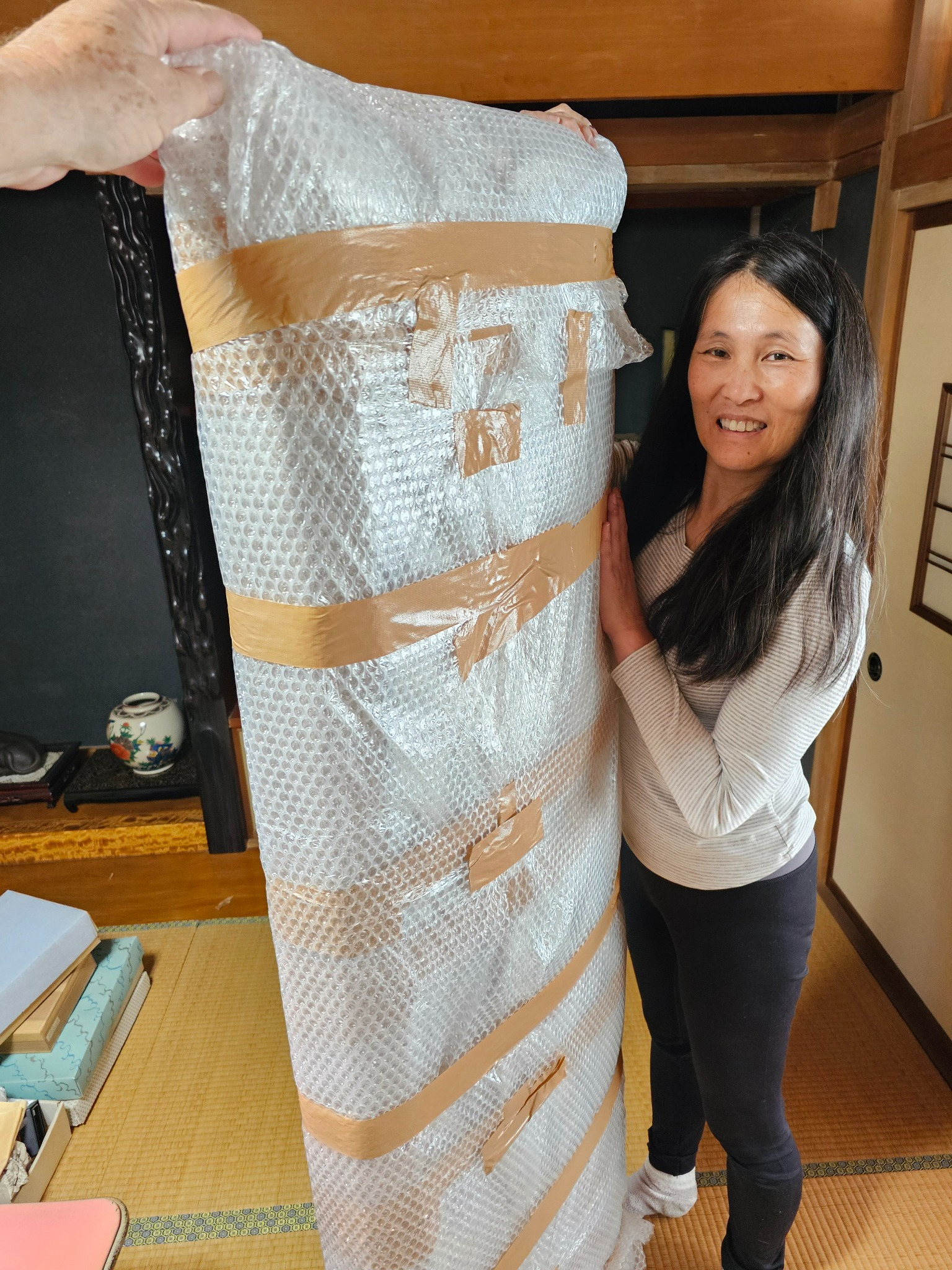
There is tenderness in wrapping something correctly. It is one of the least theatrical forms of care. No speech is required. Only padding, sequence, patience, and the willingness to let protection take precedence over display. The ranma, once part of the room’s upper language, now entered another phase of the story: survival through descendant hands.
The family could not return to the older life that once passed beneath the carved panel without thinking. That world had already thinned into memory. But the family could still answer it. Wrapping the ranma did not diminish the carving. It proved that the house had finally been heard at the level where burden gives way to guardianship.
The carving had once shaped the room’s upper air. Now it asked for another kind of human work: not the maker’s carving, but the descendant’s care.
The shelves taught the family to read the house patiently. The ranma taught them that the house had once spoken in craft, not only in use. After that, even the next room of objects would have to be heard differently.