Screens, Scrolls, and the Tiger
After the ranma, the house continues speaking through image. Scrolls, screens, seals, and the tiger reveal that the old home did not only keep objects. It kept a visual imagination. It kept ways of seeing.
Once the shelves have taught the family how to see objects as evidence, and once the ranma has revealed that refinement once lived naturally in the architecture of the house, another layer of the old household begins to emerge. The house did not only keep useful things. It kept images. It kept writing. It kept scenes of weather and return, seals pressed into paper, brush energy carried through calligraphy, and the concentrated force of animals, boats, landscapes, and screens. In other words, it kept an education of the eye.
This matters enormously. A household is shaped not only by what it uses, but by what it chooses to look at. The images that remain in a house reveal something subtler than inventory. They reveal taste, aspiration, memory, mood, and a relation to culture that enters daily life not through lectures, but through walls, alcoves, folding screens, hanging scrolls, and the disciplined habit of living with images that continue to unfold over time.
The old home in Hanasaki therefore becomes deeper again in this chapter. It no longer appears only as a place that stored practical beauty. It becomes a place that trained perception. A calligraphy scroll is not only writing. A tiger scroll is not only animal imagery. A returning boat in misty rain is not only atmosphere. A six-panel screen is not only decoration. These are all ways a house teaches the eye what kind of world it belongs to.
The house did not only keep objects.
It kept ways of seeing.
This is the visual imagination chapter because it restores one of the household’s highest forms of intelligence: not merely preservation, but selection. Someone chose these things. Someone once stood in front of them long enough to decide that they belonged inside the house.
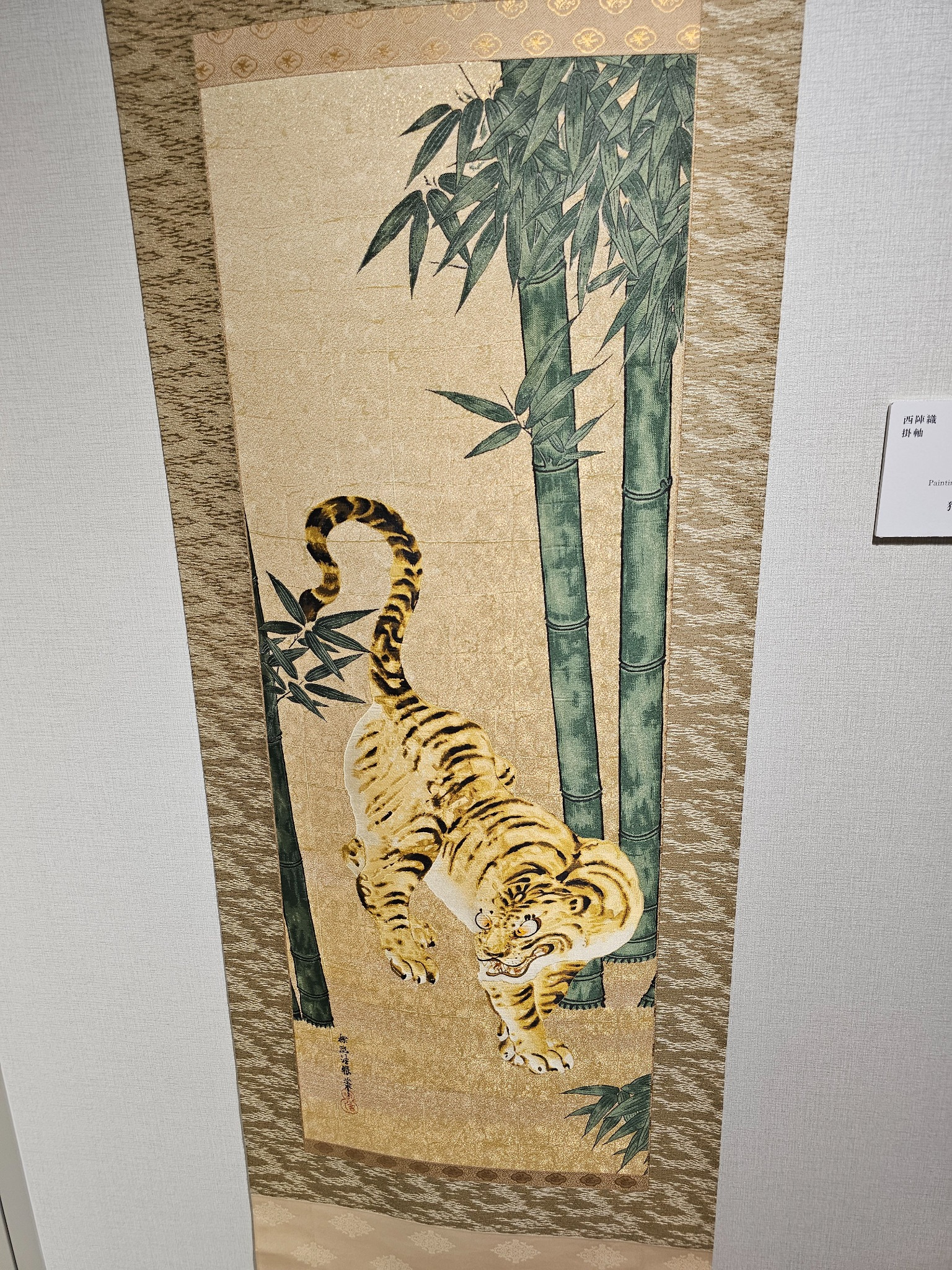
The Tiger
The tiger arrives first because it is impossible to ignore. Even in scroll form, it carries force. Brushwork, posture, gaze, stripe, muscle, and implied movement all create a pressure that differs from the quieter lessons of bowls and boxes. The tiger is not domestic in the same way the tea set is domestic. It does not soothe by utility. It instructs by presence.
That presence tells us something about the house. A household that keeps a tiger scroll is willing to live with an image of concentrated power. The tiger may symbolize courage, vigilance, rank, ferocity, disciplined energy, or simply the old visual pleasure of an animal rendered with confidence and force. Whatever the exact historical layer, the emotional effect is clear: the house admitted strong images into its daily atmosphere.
This matters because refinement is not always soft. The ranma showed grace in wood. The tiger shows a different register of cultivated attention — one that embraces vitality, danger, and command. Together, these discoveries prevent the old home from becoming too delicate in our imagination. It had beauty, yes, but not only gentleness. It also had appetite for forceful image-making.
Calligraphy as Household Atmosphere
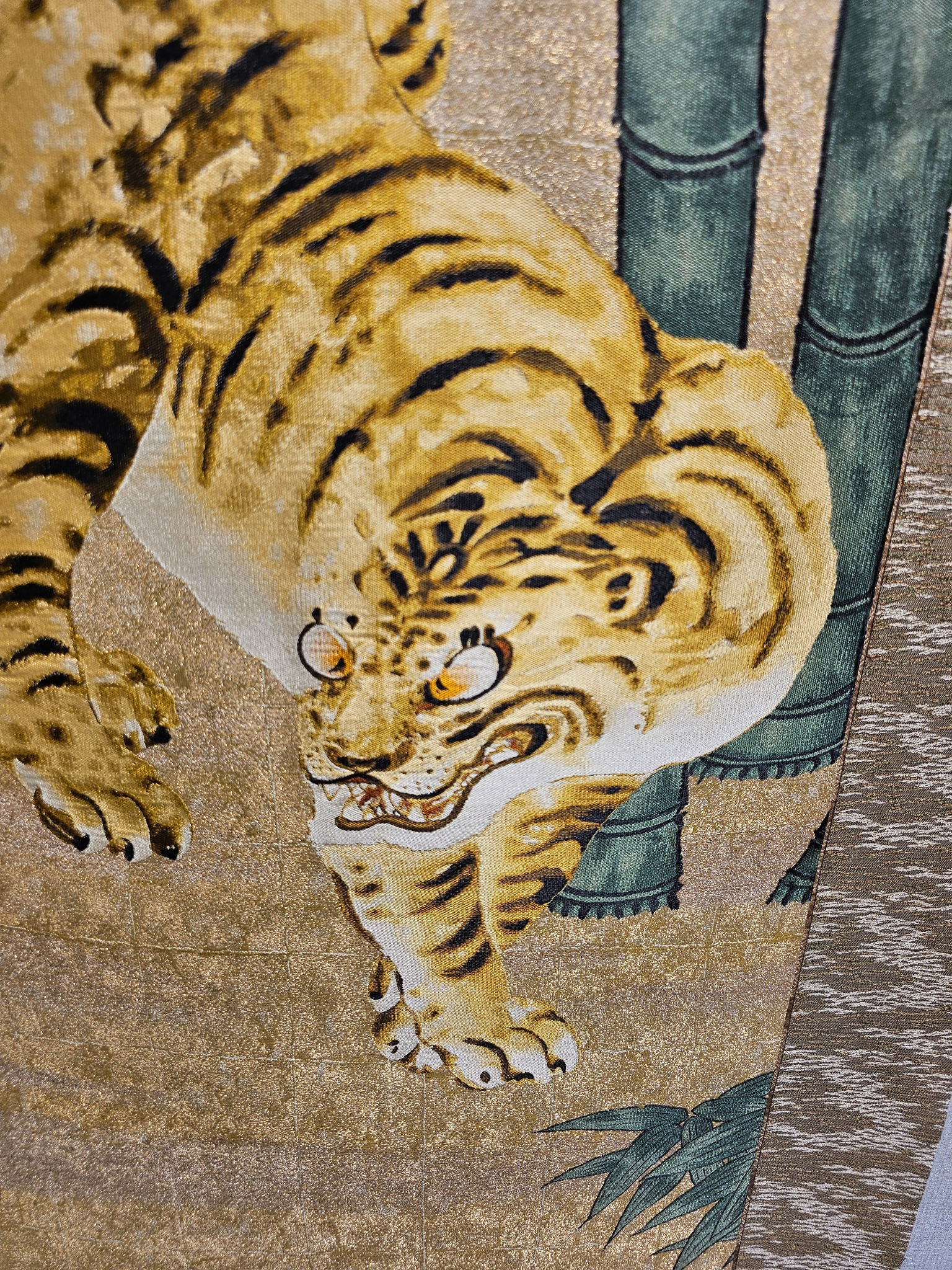
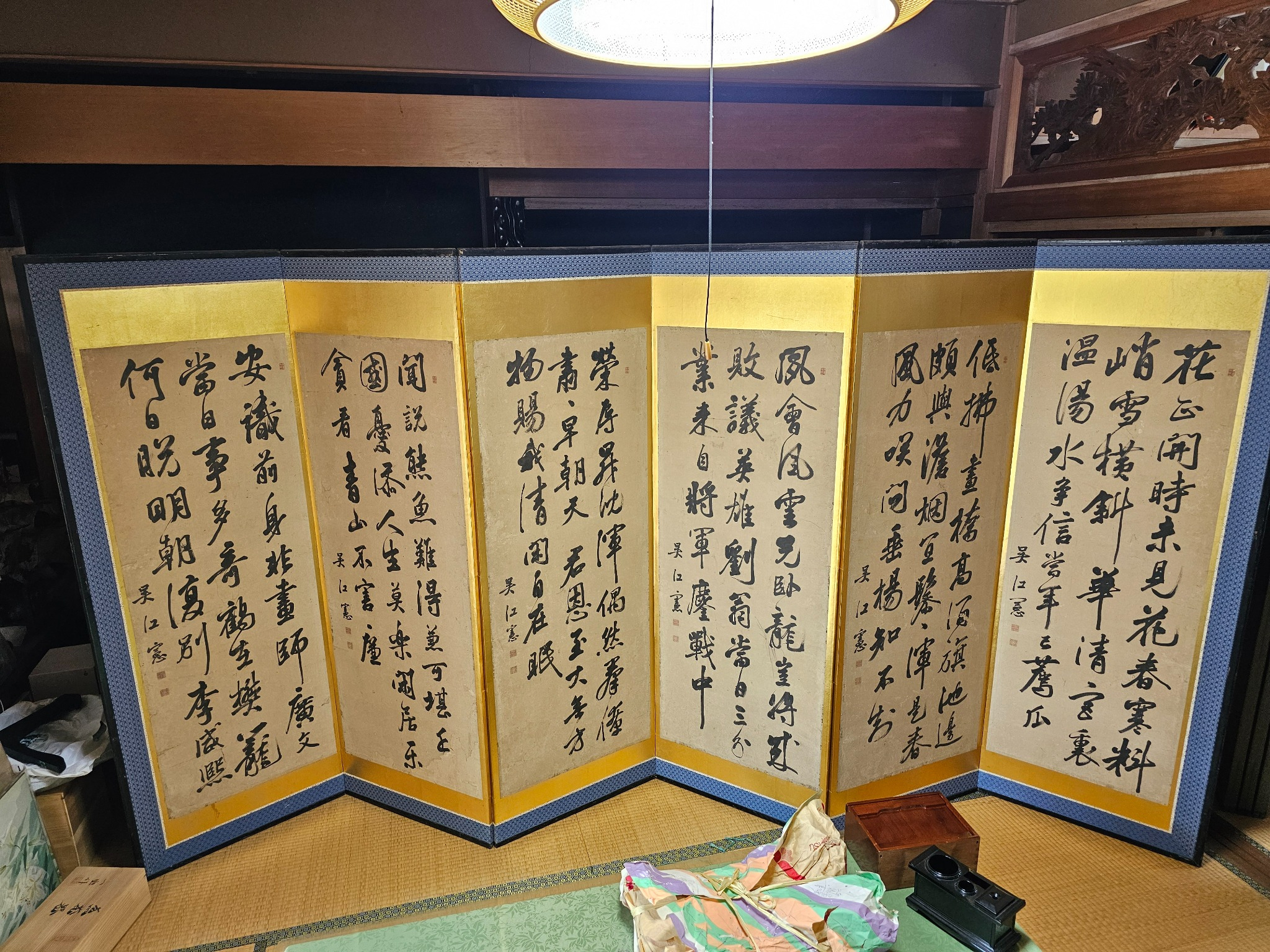
A calligraphy scroll changes a room not only by what it says, but by how it occupies space. Writing on a hanging scroll is visual thought. The brushstroke is meaning before paraphrase. Even when later generations cannot read every character immediately, the force of hand, spacing, rhythm, and vertical descent remains active. Calligraphy creates seriousness in a room simply by insisting that language itself can be looked at.
This is one reason large calligraphy scrolls matter so much in an old house. They show that the household did not treat walls only as surfaces to fill. It treated them as places where writing, mood, and cultivated attention could gather. The presence of calligraphy says that the family was willing to live in relation to text as image and image as moral weather.
Calligraphy also sharpens time. The brush belongs to a body long gone, but the stroke remains immediate. That is one of the hidden miracles of the scroll: gesture survives. The living stand before a line made by another hand in another season, and the room is suddenly shared across time. In a story like Uchi, where so much depends on the survival of household meaning through distance and delay, that matters profoundly.
The house becomes not only a keeper of goods, but a keeper of gesture.
Returning Boat in Misty Rain
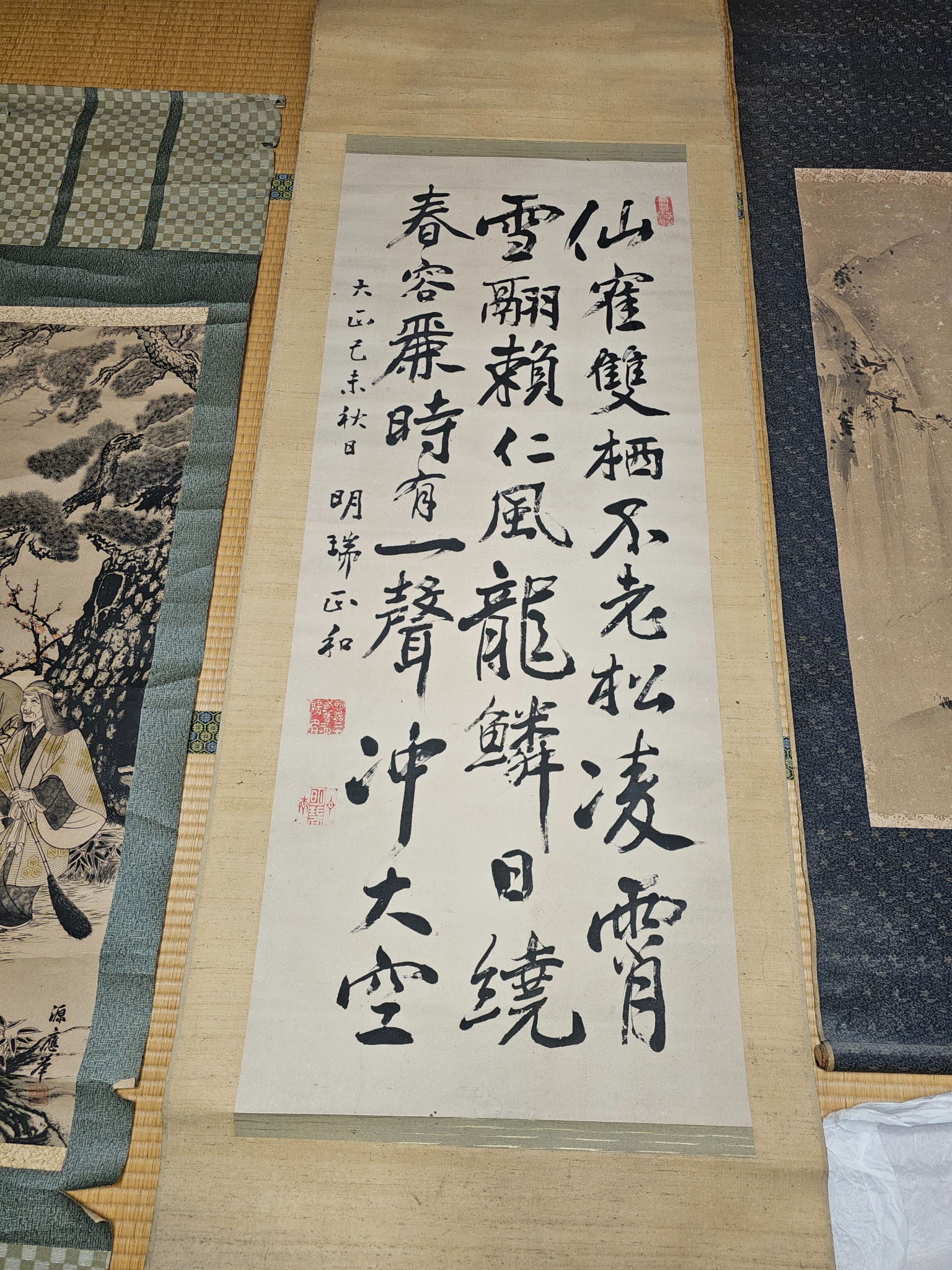
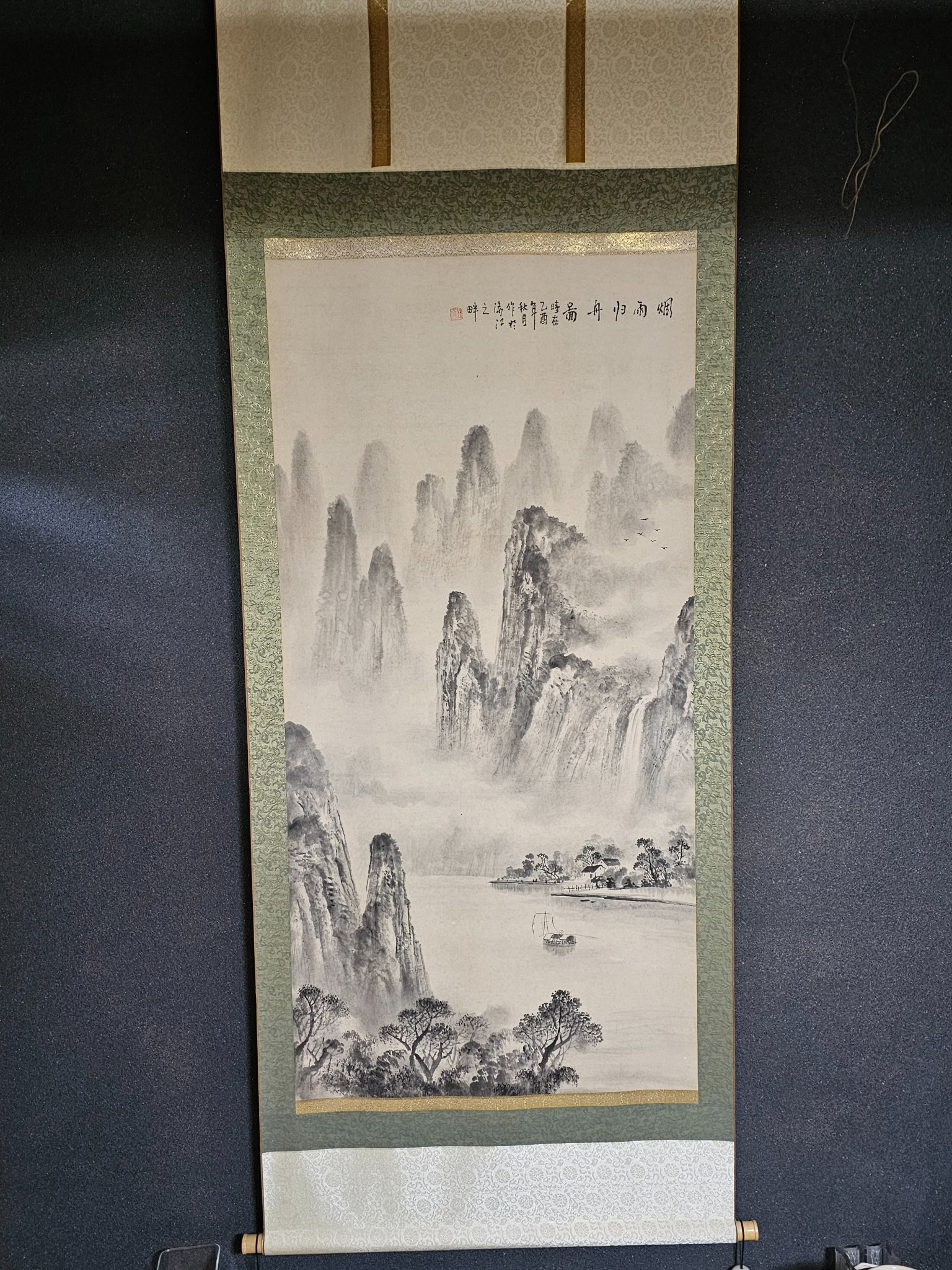
Of all the images that could have survived in the house, a returning boat in misty rain feels almost too perfect for the larger emotional architecture of Uchi. Return, weather, partial visibility, distance crossed slowly, arrival not as triumph but as atmosphere — these are not only pictorial values. They are structural values in the whole project.
Yet the scroll must not be reduced to metaphor alone. It has its own visual dignity. The mist, the softened line, the measured scene, the sense of motion carried within stillness — all of this reveals a household able to live with images that do not announce themselves loudly. This is cultivated patience of another kind. The image rewards slow looking. It belongs to a house that did not require all meaning to be immediate.
In that sense, the returning boat scroll is almost a visual counterpart to the kura itself. Both hold something in partial concealment. Both ask the observer to accept delayed clarity. Both are patient forms. That they survived in the same family world deepens the sense that the old home once understood time in a much calmer register than the modern family’s argument had recently allowed.
The house did not merely endure time. It once knew how to contemplate it.
Screens and the Discipline of Looking
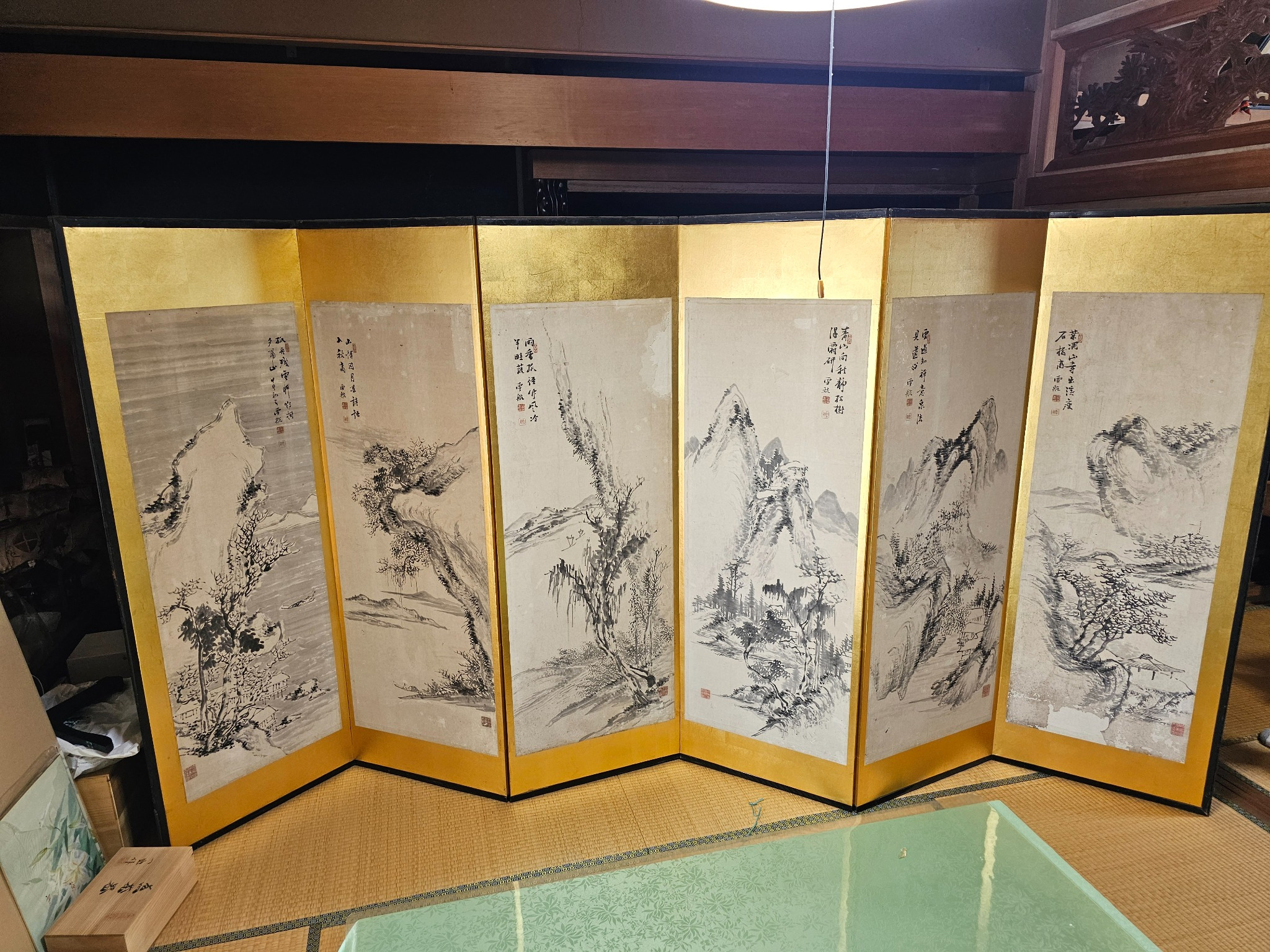
Folding screens teach a different kind of vision from scrolls. A scroll concentrates attention vertically or through a framed hanging field. A screen unfolds laterally. It asks the eye to move across panels, to compare balance and variation, to feel continuity built from intervals. This is not a small skill. A house that keeps screens keeps a more architectural form of looking.
The six-panel calligraphy screen and the landscape screen both reveal this. They belong to rooms not only as image, but as structure. They shape the space around them. They create zones of attention. Their details, seals, and panel divisions remind the viewer that household culture once included the ability to live with images that unfold in sequence rather than strike all at once.
This is one of the chapter’s deepest insights: the old home was educating the eye through arrangement. It was not merely storing art. It was preserving a mode of attention. The family in the present, standing before these surviving screens and fragments, begins to realize that the house once lived by standards of perception as well as standards of storage and hospitality.
That realization changes the meaning of inheritance again. The family is inheriting not just objects, but trained ways of noticing.
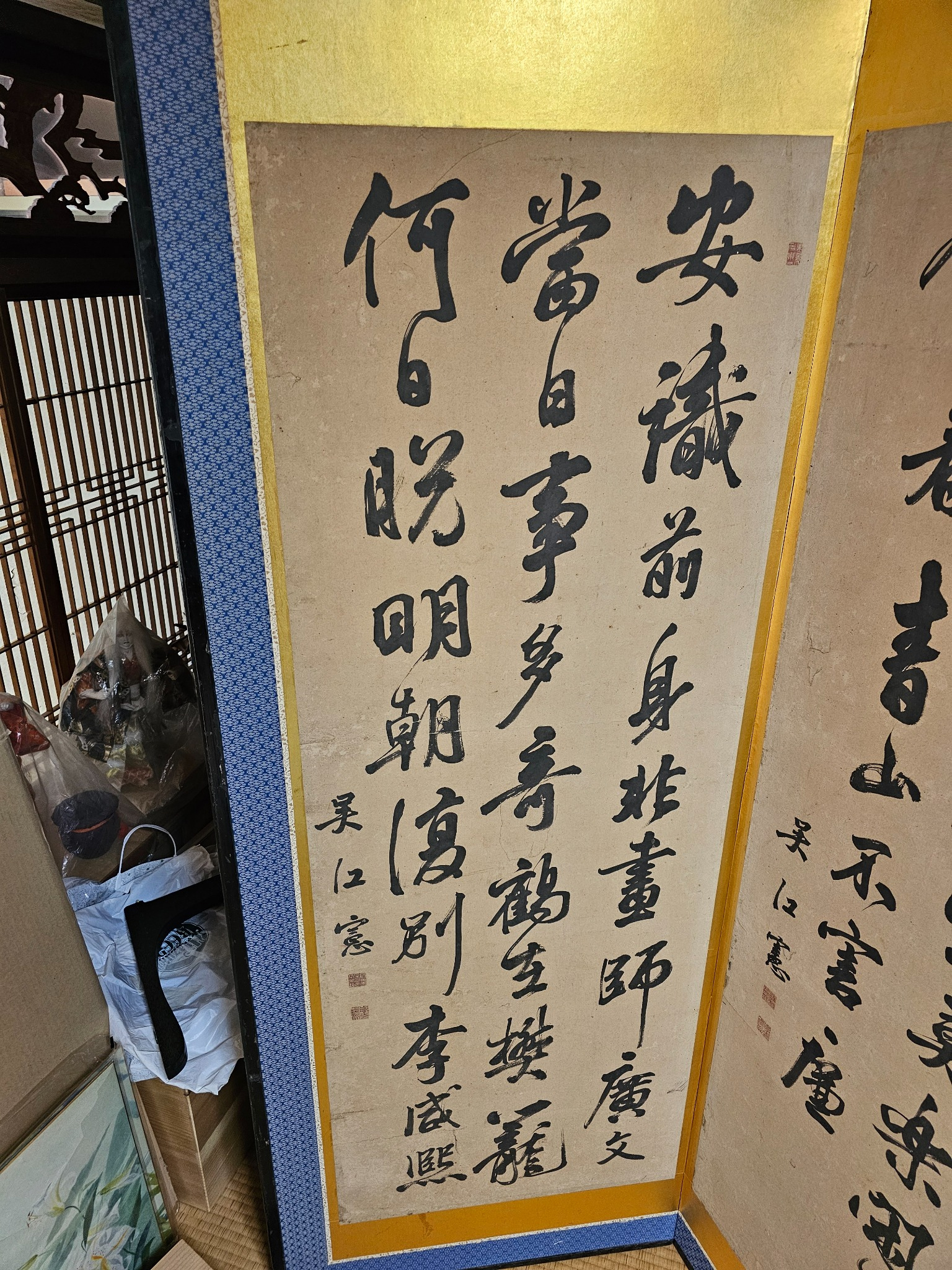
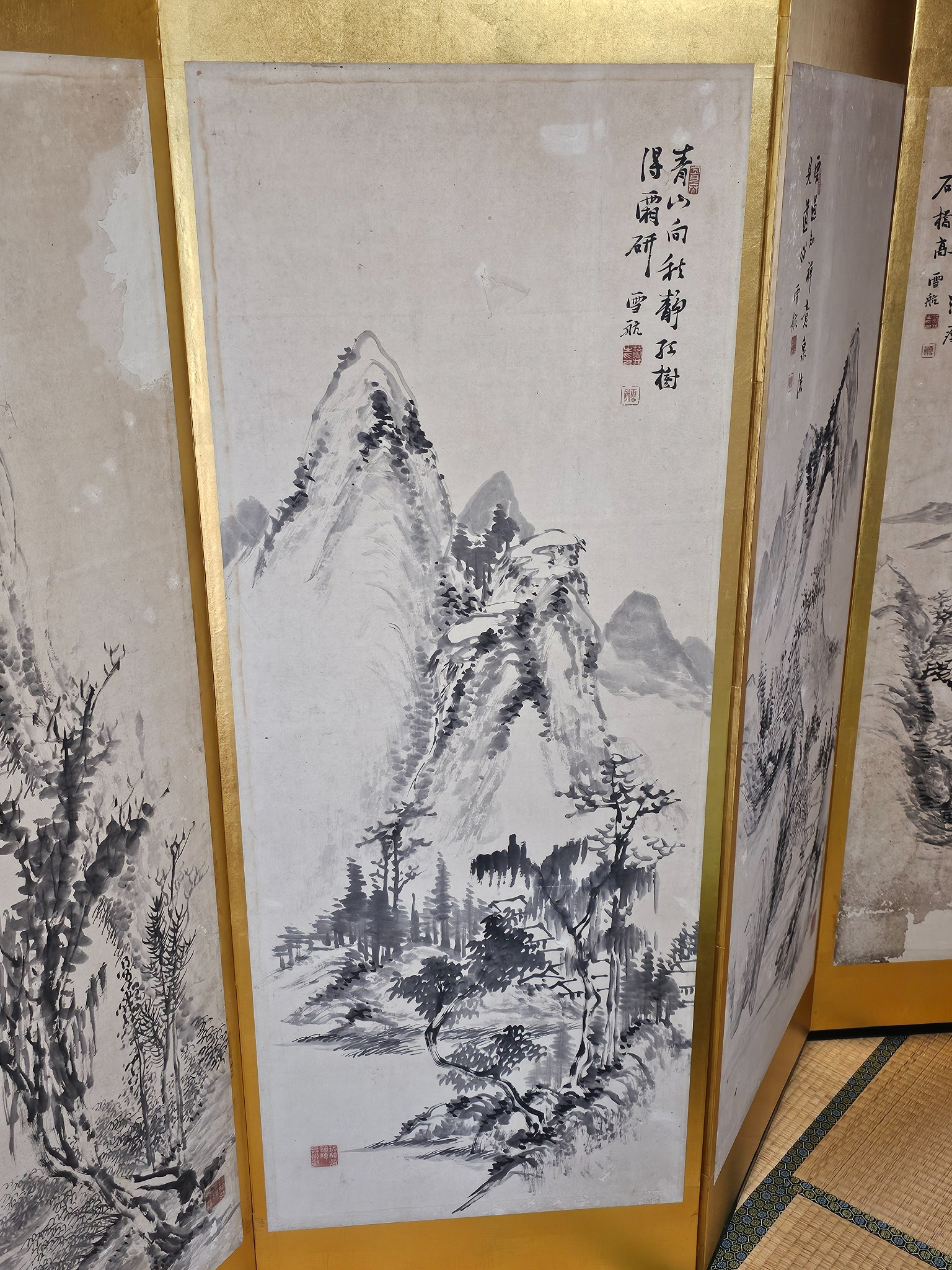

Seal Closeups and the House of Signatures
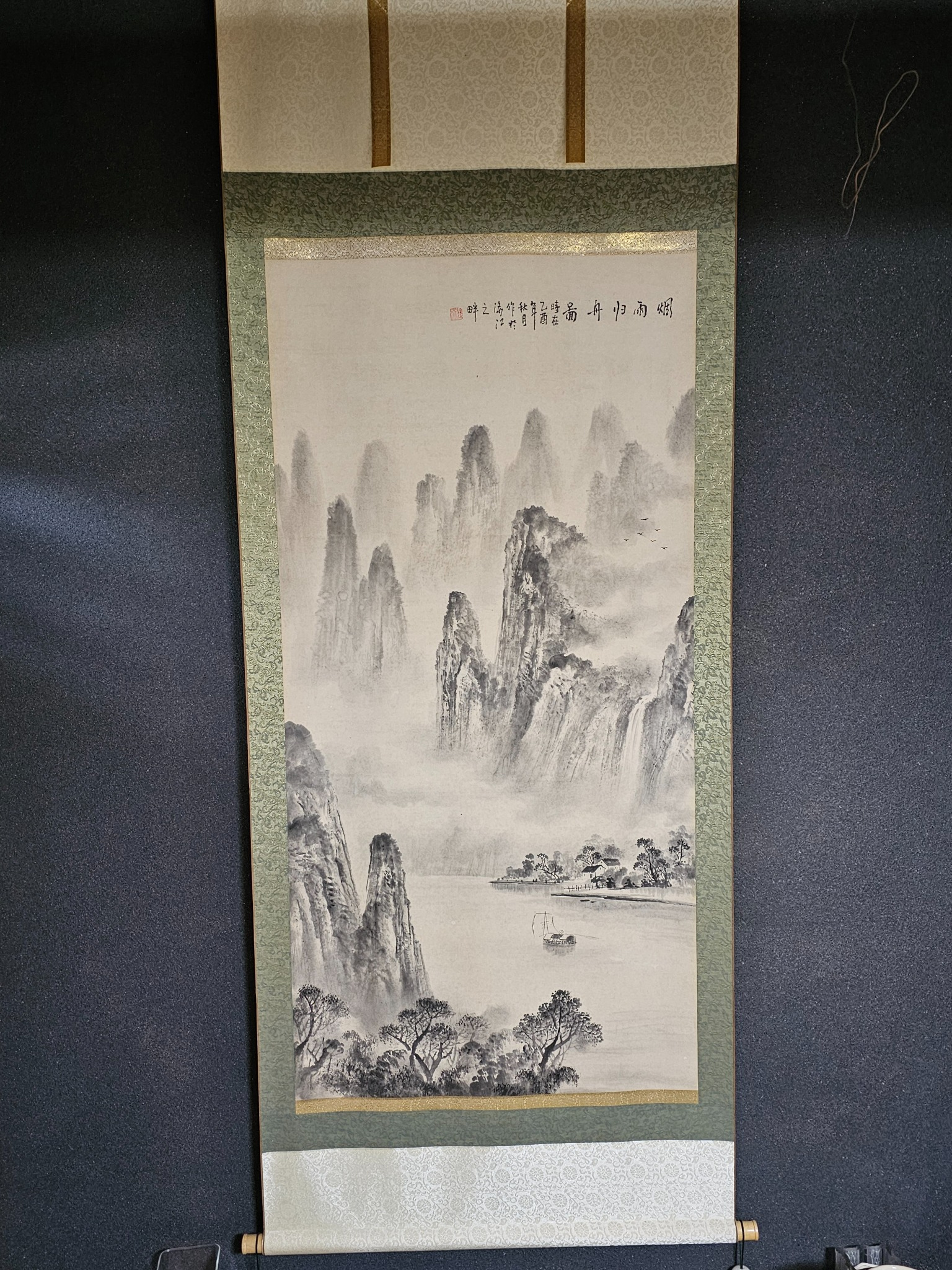
Closeups of seals matter because they bring the household’s visual imagination back down to the level of mark and hand. A seal is a compressed signature, a small zone where identity, authority, style, and tradition meet. In the context of the house, seals remind the family that images were not anonymous mood. They were made things, signed things, chosen things. They entered the house with authorship attached.
This matters because one of the risks of inherited beauty is vagueness. “Old screen,” “old scroll,” “old painting” — such phrases keep everything at a polite distance. The seal interrupts that vagueness. It says that this object belonged to a maker’s world, and then to a household’s world. It preserves not only image, but relation between hand, work, and home.
The close detail, whether in a brush line or a seal, therefore deepens responsibility. The family is no longer only looking at aesthetic atmosphere. It is standing before authored culture that once lived inside the house as part of ordinary visual life.
Household Culture, Education of the Eye
This is the emotional role of the chapter, and it is worth naming cleanly. The house had household culture. The house educated the eye. That does not mean everyone living there became an art historian. It means the domestic world itself was structured by images, inscriptions, and visual forms that trained perception through repeated exposure.
A child growing up near such scrolls and screens learns, even without formal explanation, that a room may contain tiger energy, mist and return, calligraphic seriousness, seals of authorship, lateral unfolding across panels, and the expectation that some images are worth living with over years. This is education of the eye not as school, but as atmosphere. It is one of the oldest and most powerful forms of household culture.
Uchi needs this chapter because without it the old home would remain too material in one dimension and too burdensome in another. The shelves revealed order. The ranma revealed refinement. Screens, scrolls, and the tiger reveal cultivation. The house was not only preserving things. It was preserving a visual mind.
The next chapter will shift register again. After household culture and visual imagination, the story turns toward an object of more bodily and comic intimacy: usu and kine, the mortar and mallet, and the New Year’s mistake that keeps the old home from becoming too solemn. The house carried refinement, yes. It also carried human mishap.
The house preserved not only objects,
but a way of looking at the world through them.