Usu, Kine, and a New Year Mistake
After screens, scrolls, carved panels, and the house’s education of the eye, the story had to come back down into the body. The old home had not only known how to look. It had known how to pound, lift, time, catch, laugh, and go slightly wrong in front of other people. The usu and kine carried that older knowledge in blunt wood.
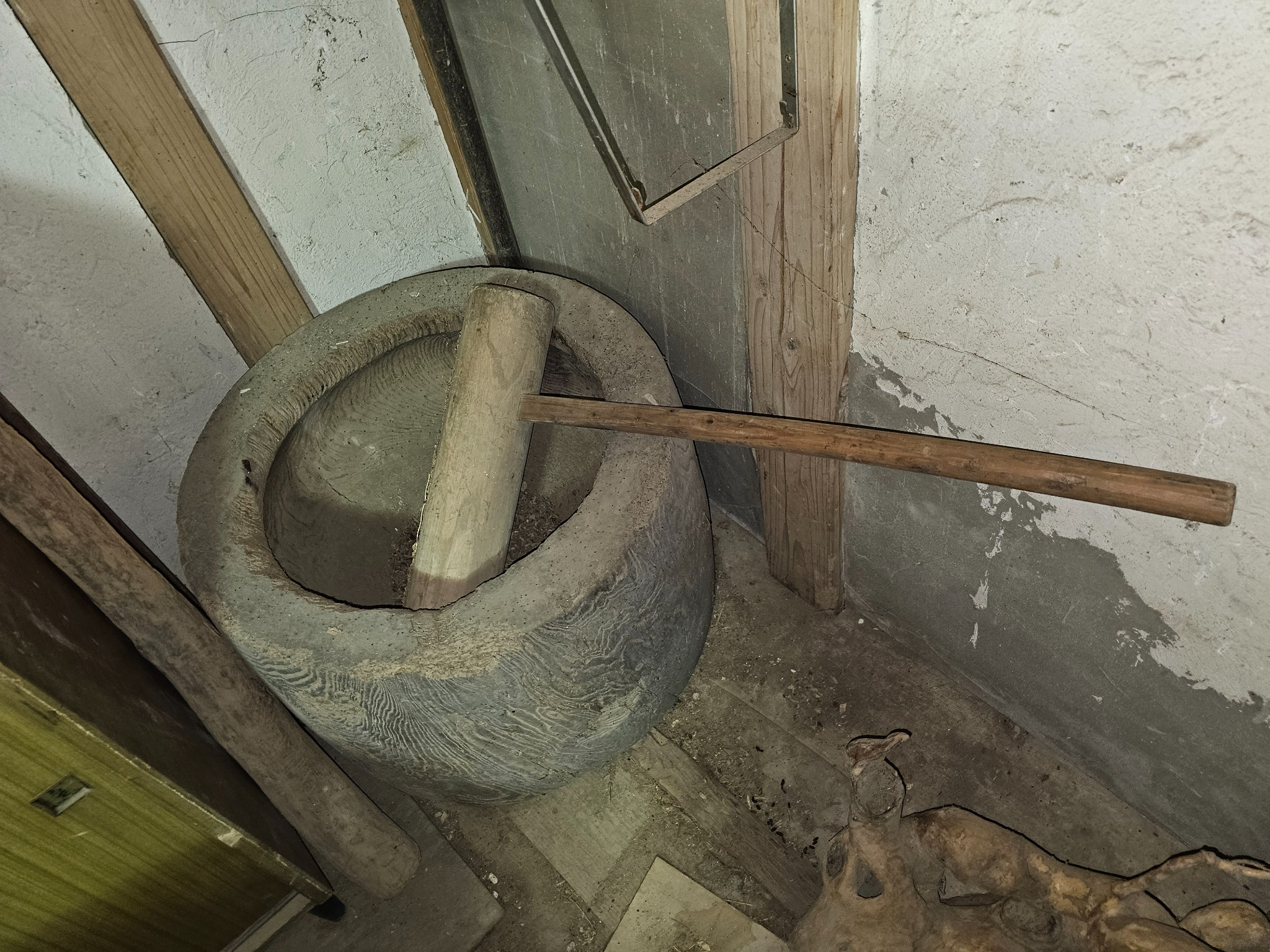
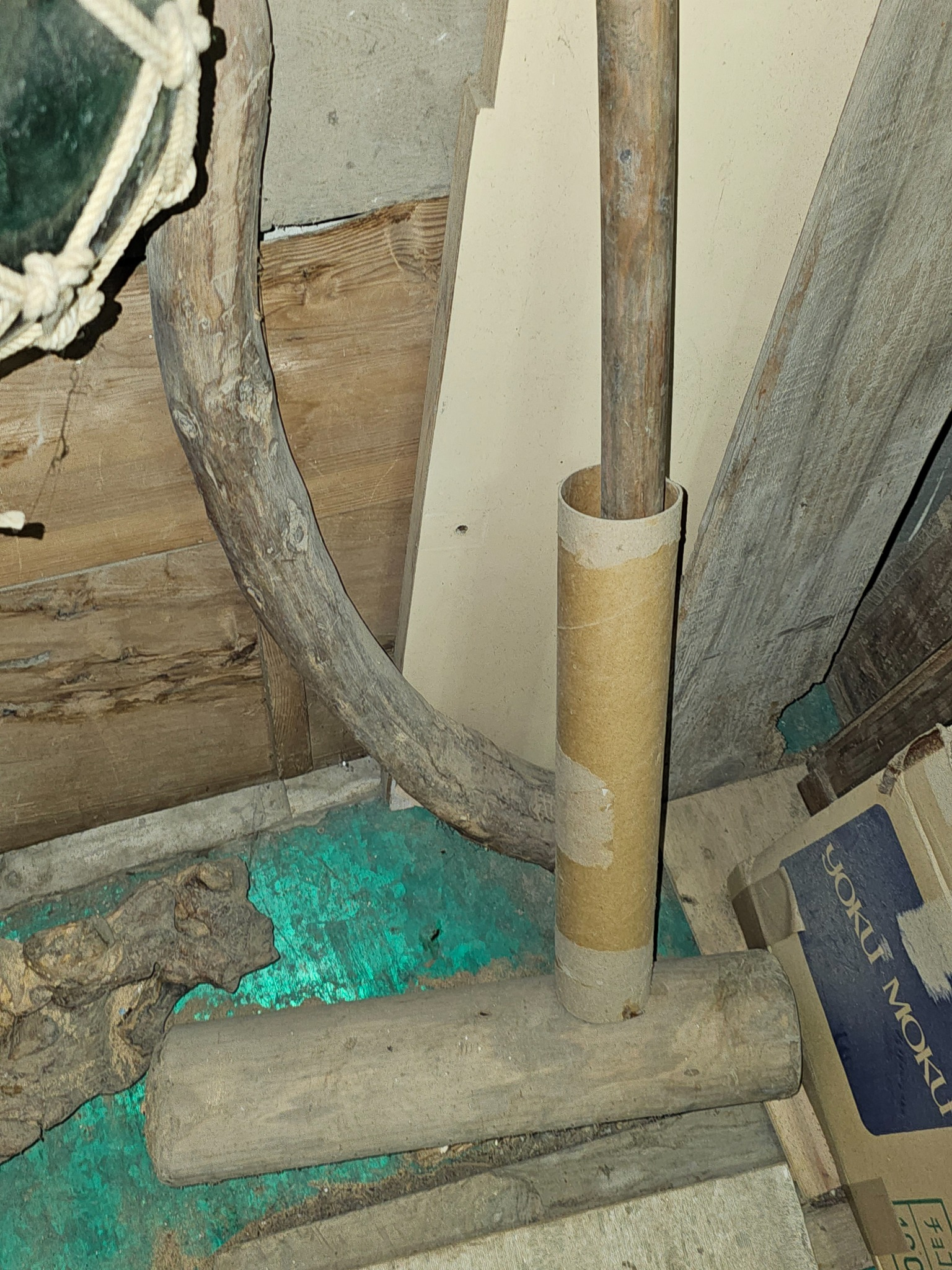
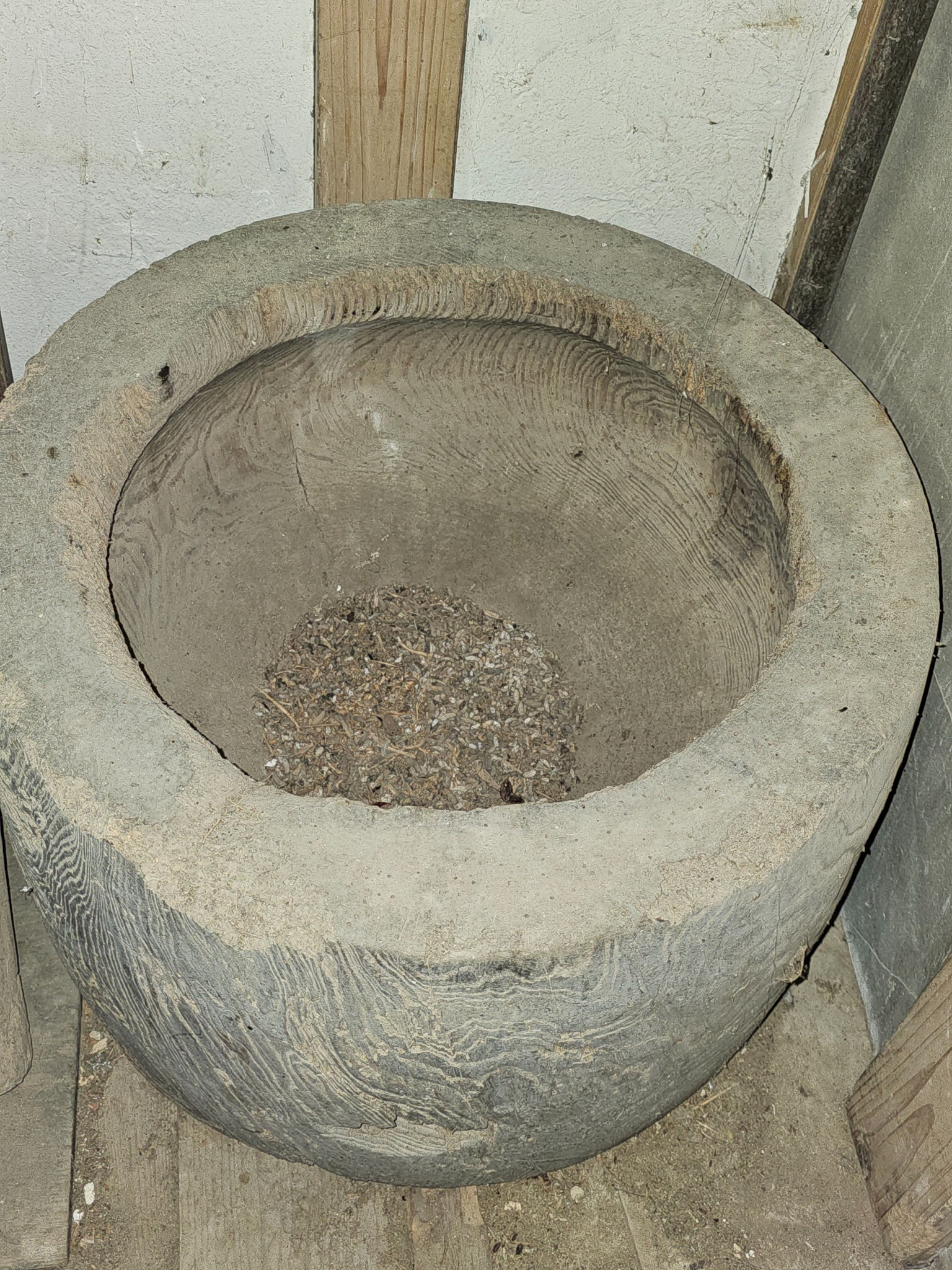
In the corner of the kura, the usu and kine waited without elegance. After lacquer, scrolls, carved transoms, and boxed vessels, their blunt presence could feel almost rude. That roughness was part of their truth. They belonged to a house that had not only cultivated looking, but also labor. They belonged to hands, timing, teamwork, and the old New Year confidence that food could be made through coordinated impact. No one could sentimentalize them for long. They were too heavy for that.
The usu is a body before it is a symbol. Hollowed wood, dense, grounded, unwilling to move easily. The kine is its answer from above: lift, descend, strike, lift again. Between them, rice stops being rice and becomes mochi only if people work in rhythm and trust one another enough not to break each other’s fingers. The tools keep that truth in their shape. They do not flatter. They remember.
The house did not only train the eye.
It also trained the hands — and forgave them when they missed the rhythm.
And there was something else in the corner too: loneliness. Time seemed to have settled into the usu. It no longer looked merely stored. It looked paused. Almost waiting. Almost asking to be brought back into use. That feeling made it harder to look away from. Of all the things the house kept, this was one of the objects easiest to love and hardest to move. It could be wanted deeply and still remain where it belonged.
The Tools in the Corner
Stored in the kura, the usu and kine did not look theatrical. They looked waiting. The wood had the kind of authority that comes from having once been used hard and then set aside without losing dignity. Nothing about them suggested decoration. They belonged to the category of things a household keeps because a certain day cannot be answered properly without them.
Tradition looks different in storage. In storage it loses brochure language. The mortar has weight. The mallet needs room. The rice must be right. The hands must trust the timing. The body has to commit. The usu and kine strip the ritual of vagueness and return it to labor.
Standing before them, the family was no longer dealing in symbols. These were tools from a world where celebration still required force, repetition, and other people close enough to make a mistake dangerous.
Mochi Is Not Abstract
Some family knowledge survives as manners. Some survives as images. Mochi survives as rhythm. It is hot work, timed work, trust-based work. Steam, stickiness, impact, turning, retreating fingers, the downward arc of the kine, the sudden demand that everyone be precise at once. To speak of mochi only as a New Year food is to miss what the body remembers about it. Mochi is cooperation under pressure.
That is why the memory remains vivid when it goes wrong. A mistake in mochi-making is never only culinary. It is public. Someone lifts too soon. Someone turns too slowly. Someone laughs at the wrong moment. Someone hesitates. Someone gets scolded. The rice resists. The rhythm breaks. The whole room feels it immediately. A household tradition that depends on timing cannot hide its failures gracefully.
The form survives because people do not. People wobble. Hands miss. Timing slips. Then someone resets their grip and the work goes on.
The New Year Mistake
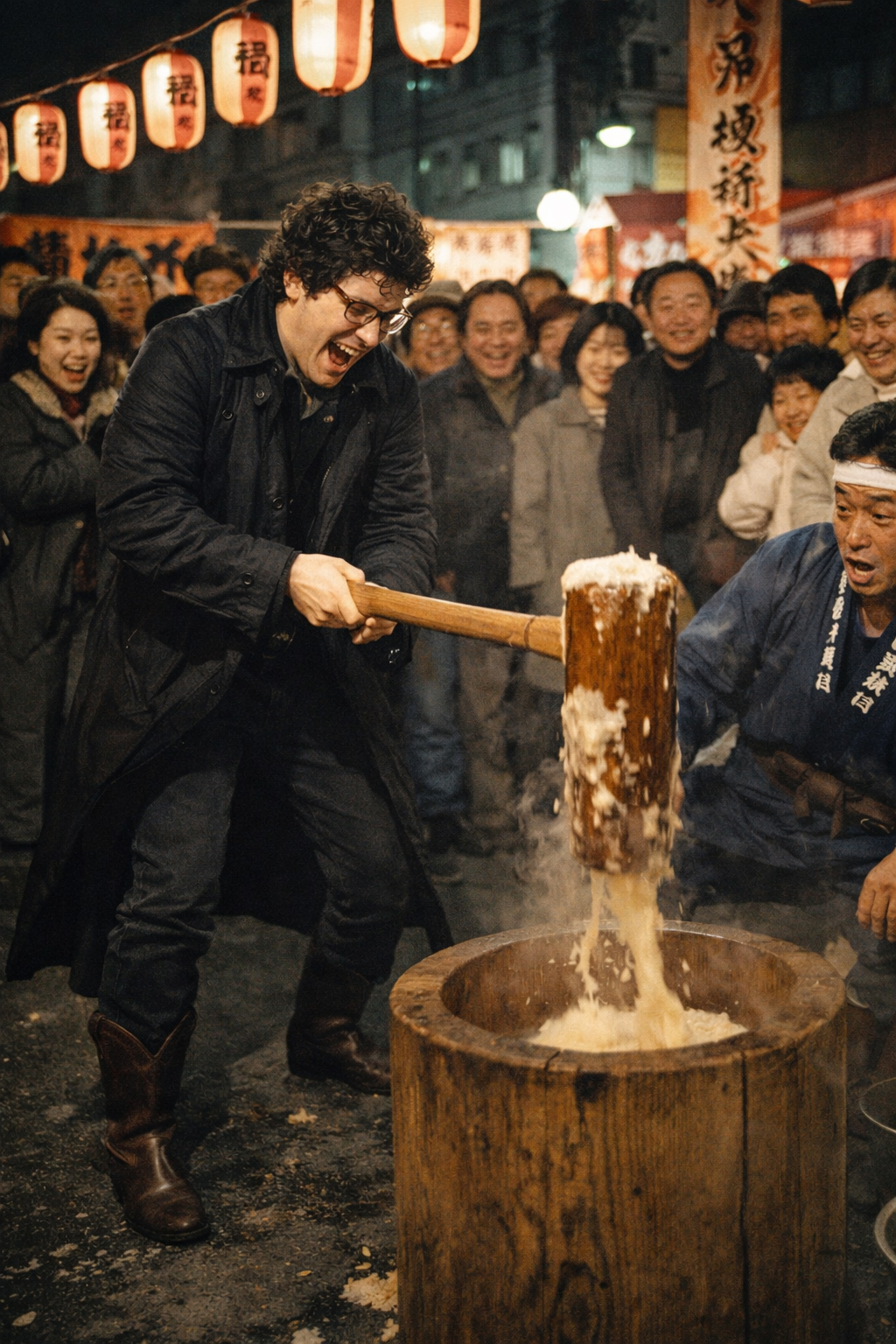
The remembered mistake belongs here because it restores noise to the house. By this point in Book One the family has already encountered discipline, order, craft, carved refinement, image, inscription, and the old training of the eye. Then the kine comes down with a little too much confidence, someone turns the mass at exactly the wrong moment, and the whole scene steps out of elegance and back into family life.
It is easy now to see it: steam rising, the usu ready, the rice hot, the mallet descending with more force than accuracy, the jolt when rhythm fails, the half-alarm and half-laughter that follows. The memory endures because it is funny only after it stops being dangerous.
Every family keeps such a scene. The old form remains intact, but the people inside it wobble. Without that wobble, the house would risk becoming admirable in a dead way. With it, the house stays warm.
Domestic Warmth
Warmth in a family house does not come only from affection. Sometimes it comes from shared physical knowledge. Who knows how to hold the bowl, when to lift the lid, how to wrap the object, where to place the tray, how to judge the weather, when to strike, when to pull back. Houses keep that knowledge in bodies first and in memory second. The usu and kine belong to this bodily archive.
The screens asked the eye to travel. The ranma asked the family to look up. The shelves asked them to notice grouping and standards. The usu and kine pull everything back down into stance, weight, caution, coordination, and heat. The house narrows from visual inheritance into action again.
And it does so without giving up refinement. The house once held both without contradiction. It could keep scrolls and still pound mochi. It could train the eye and still require the hand. It could preserve the beautiful and still make room for the comic mistake that every real household eventually commits.
After the Missed Rhythm
A family memory often becomes durable at the instant the intended form breaks slightly. Not shatters. Not fails beyond repair. Just breaks enough to reveal the people inside it. The missed rhythm in mochi-making does exactly that. It makes the tradition visible not as performance, but as human coordination vulnerable to error.
The form continues. The laughter returns. Someone resets their grip. The family tries again. That is why the mistake belongs here. The old home had already survived distance, delay, neglect, misreading, fatigue, and the long years in which no one fully understood what remained inside it. A missed beat in the New Year pounding fits naturally inside that larger mercy.
The usu and kine keep that mercy in storage as surely as they keep the labor. Their blunt weight says something the more beautiful objects cannot say as directly: culture is not only what a house displays well. It is also what a house allows people to attempt imperfectly without expelling them from belonging.
The house did not only preserve what was elegant. It preserved the rhythm, effort, and forgiveness that made elegance livable.