Sending Things Forward
Discovery had been tender. Carrying would not be. Once the room had yielded its meanings, the ranma had to be wrapped, lifted, turned sideways at the narrow point, walked through open air, carried past strangers, balanced in vestibules, taken onto the monorail, and brought into the hard procedural light of departure. Admiration ends where the route begins. The old house does not remain alive because it is praised. It remains alive because what matters can still survive the world outside the room.
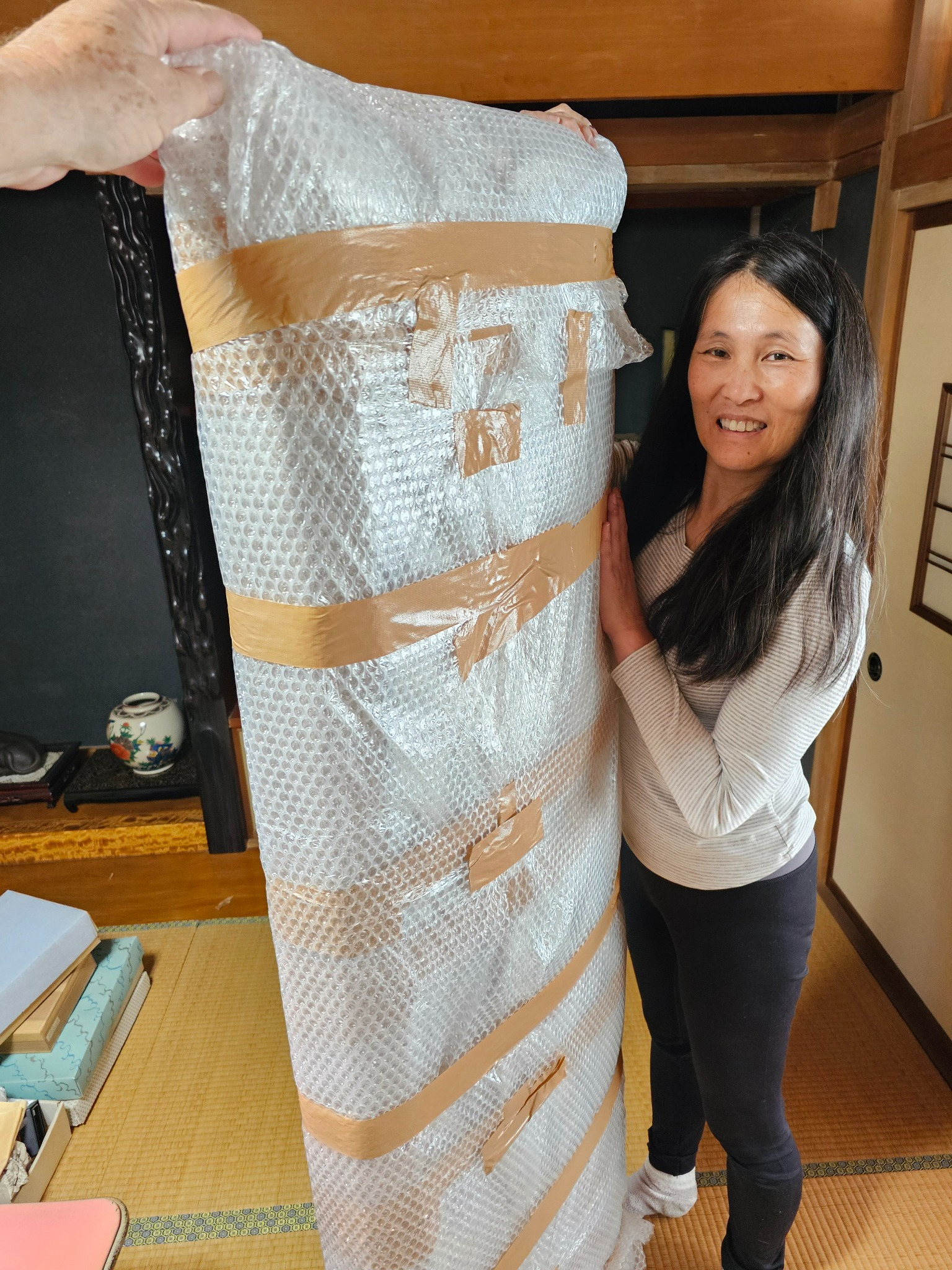
A family can still pretend, for one brief shining moment, that choosing a thing is the same as saving it. The panel appears. The dust comes off. Someone looks up fully at last. Someone says, we should keep this. In that instant beauty feels victorious. Then the second truth arrives. It must move. It must leave the room, clear the door, survive the corner, endure wrapping, accept labels, pass into hands, vehicles, platforms, schedules, and systems that have no memory of the doorway where it once turned an ordinary passage into grace. Love loses its innocence there. It stops being recognition and becomes labor.
The old house in Hanasaki is no longer being visited only as memory. It is being tested against the world beyond itself. Reverence must withstand cardboard, rope, awkward dimensions, public transit, indifference, delay, and the small humiliations of carrying something beautiful through places built for speed rather than care. The family is not merely deciding what the house meant. It is learning what that meaning weighs.
The house entered the present through discovery. It entered the future when the ranma had to survive the route.
The Takkyubin Counter
The takkyubin counter is where the house first leaves its own weather. Until then, the work has been intimate: opening, sorting, recognizing, remembering, wrapping. At the counter, intimacy yields to procedure. Weight. Handling. Destination. Fee. Receipt. The person behind the desk has not stood in the room where the ranma once lived. She does not know how long it waited there, or how many years passed before anyone looked up at it with enough seriousness to understand that it must not be left behind. Yet the object must pass through her world now if it is to continue.
Something almost severe happens there. A family thing leaves the realm of inward understanding and enters the blunt civility of process. The old house will not be preserved by being adored in place. What matters must survive counters, labels, routes, handoffs, and the ordinary bureaucracies by which the present moves objects from one life into another.
The Ranma in the Box
The box is not the point. The ranma is.
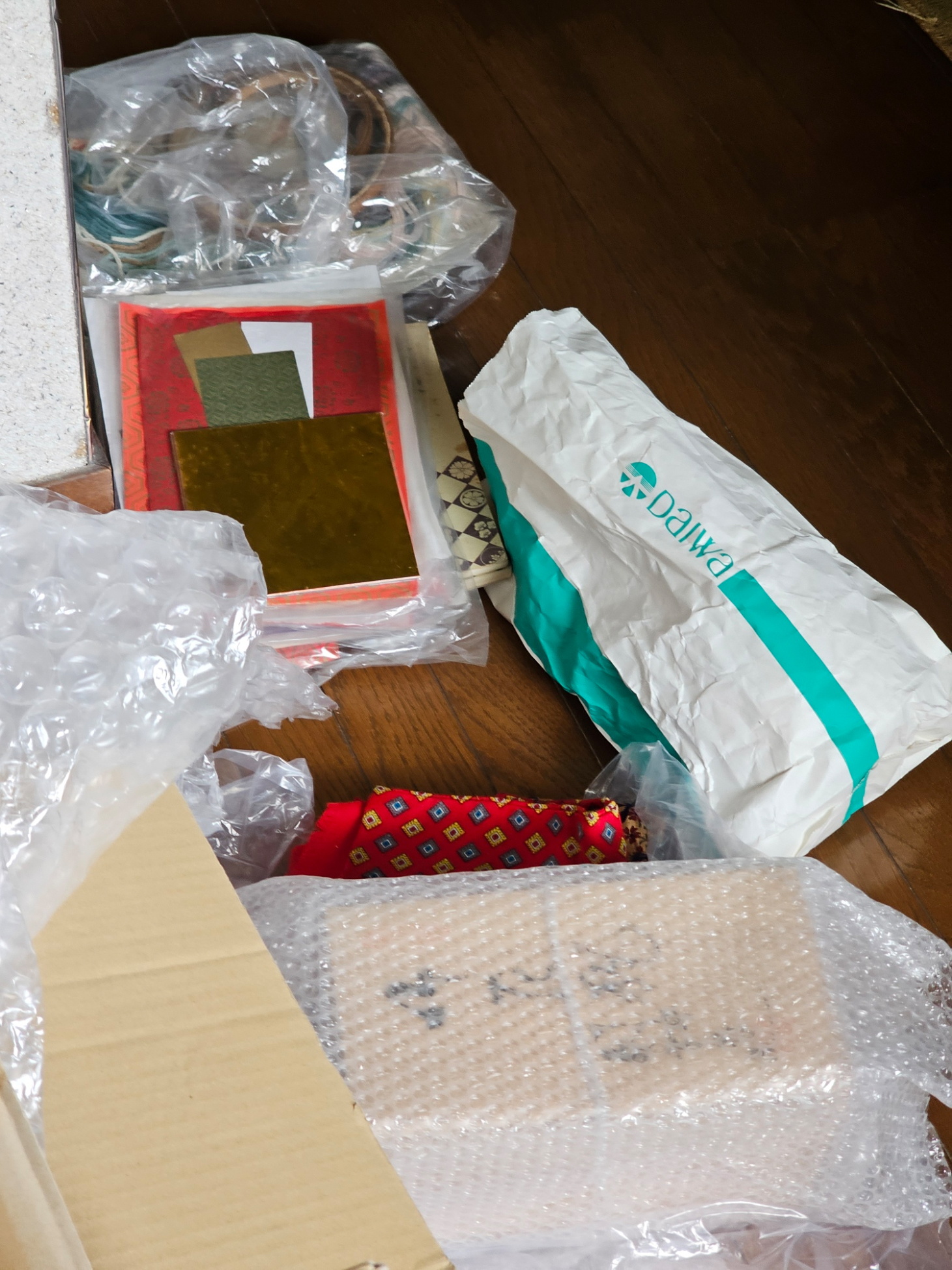
Packaging insults beauty by making it look generic. Once wrapped, a carved panel that once lifted an interior threshold into refinement begins to resemble mere freight: too long, too fragile, too inconvenient, too easy to bruise against a wall. But that false appearance is part of the trial. Inside the wrapping is not lumber. Inside it is one of the house’s old gestures of elegance, one of the proofs that passage through the home had once been given ceremony.
And because it is the ranma, the awkwardness matters. Someone must watch the leading edge. Someone must lift higher at the back. Someone must stop before the narrow turn and calculate the angle. Someone must endure the quiet public embarrassment of carrying a long wrapped thing through the ordinary world while strangers glance once and then look away. That discomfort is the cost of refusing to let beauty die where it was found.
A family willing to carry the ranma through sidewalks, stations, and transit systems has already crossed from admiration into action. It is no longer speaking well of the house. It is bearing the house forward.
The Sidewalk
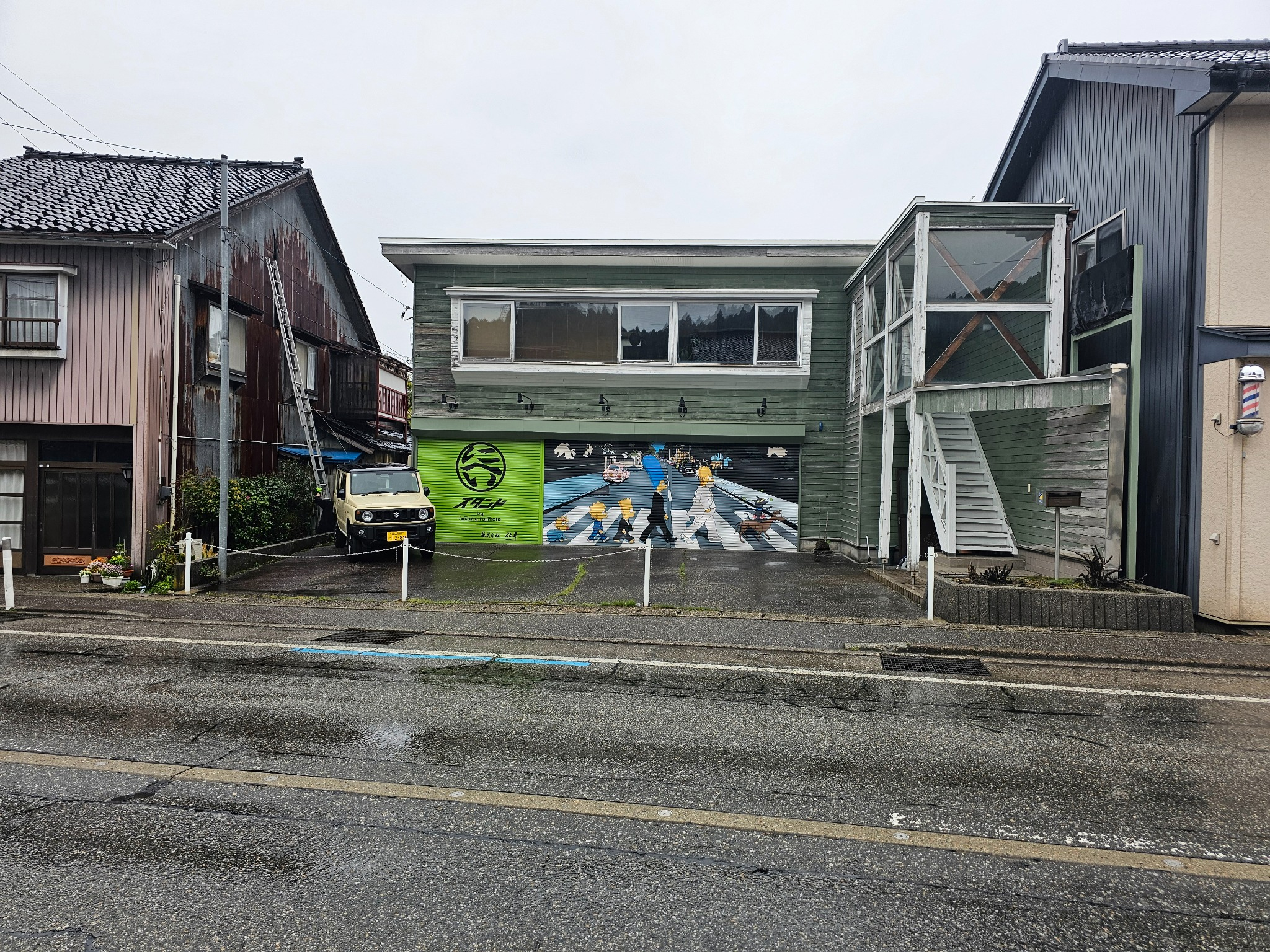
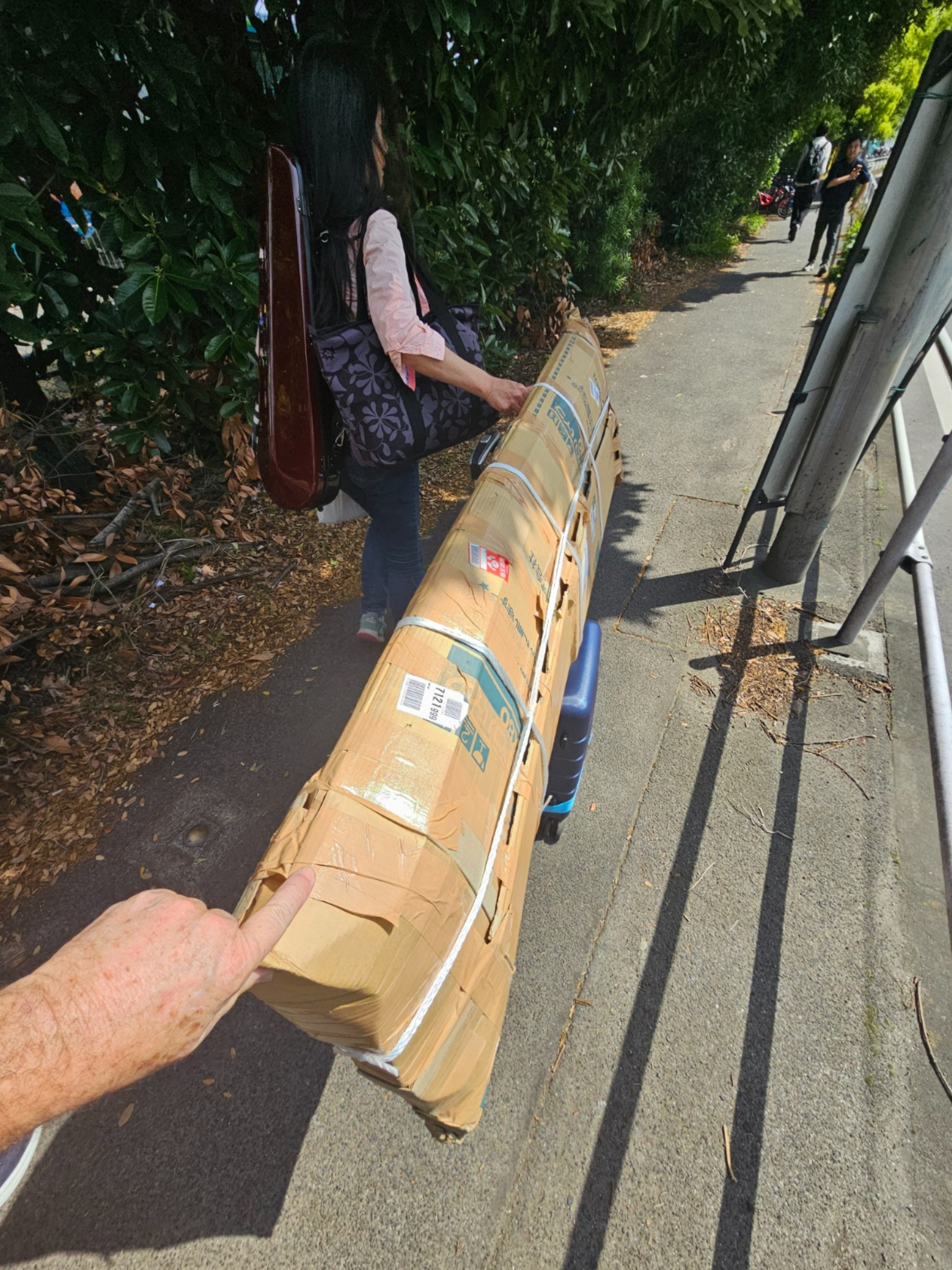
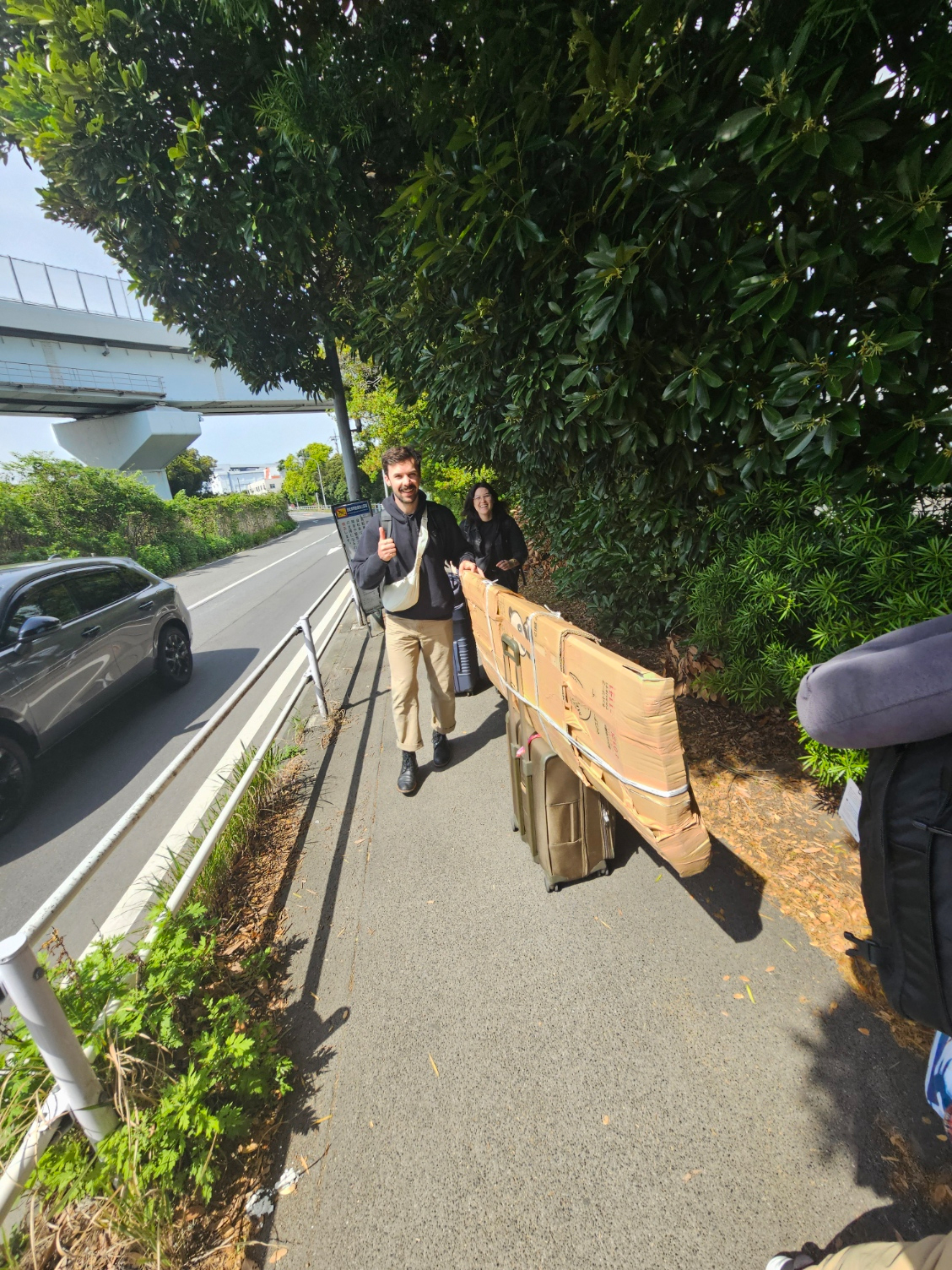
Outside, the burden changes character. Indoors there had still been walls of belonging around it, rooms that knew what it was. Outside, the pavement offers no such courtesy. The ranma becomes length, leverage, drag, negotiation. A curb becomes an event. A parked car becomes an obstacle. A few inches of misjudgment become danger. The body must now answer for what the heart has claimed.
This is where sentimentality burns off. Care becomes visible because it can fail. The wrapped panel could strike brick, catch edge, clip railing, slip at the wrong moment. Every cautious adjustment therefore acquires dignity. It is one thing to say the old house matters. It is another to carry that mattering in daylight past the indifferent surfaces of the world.
The Train Vestibule
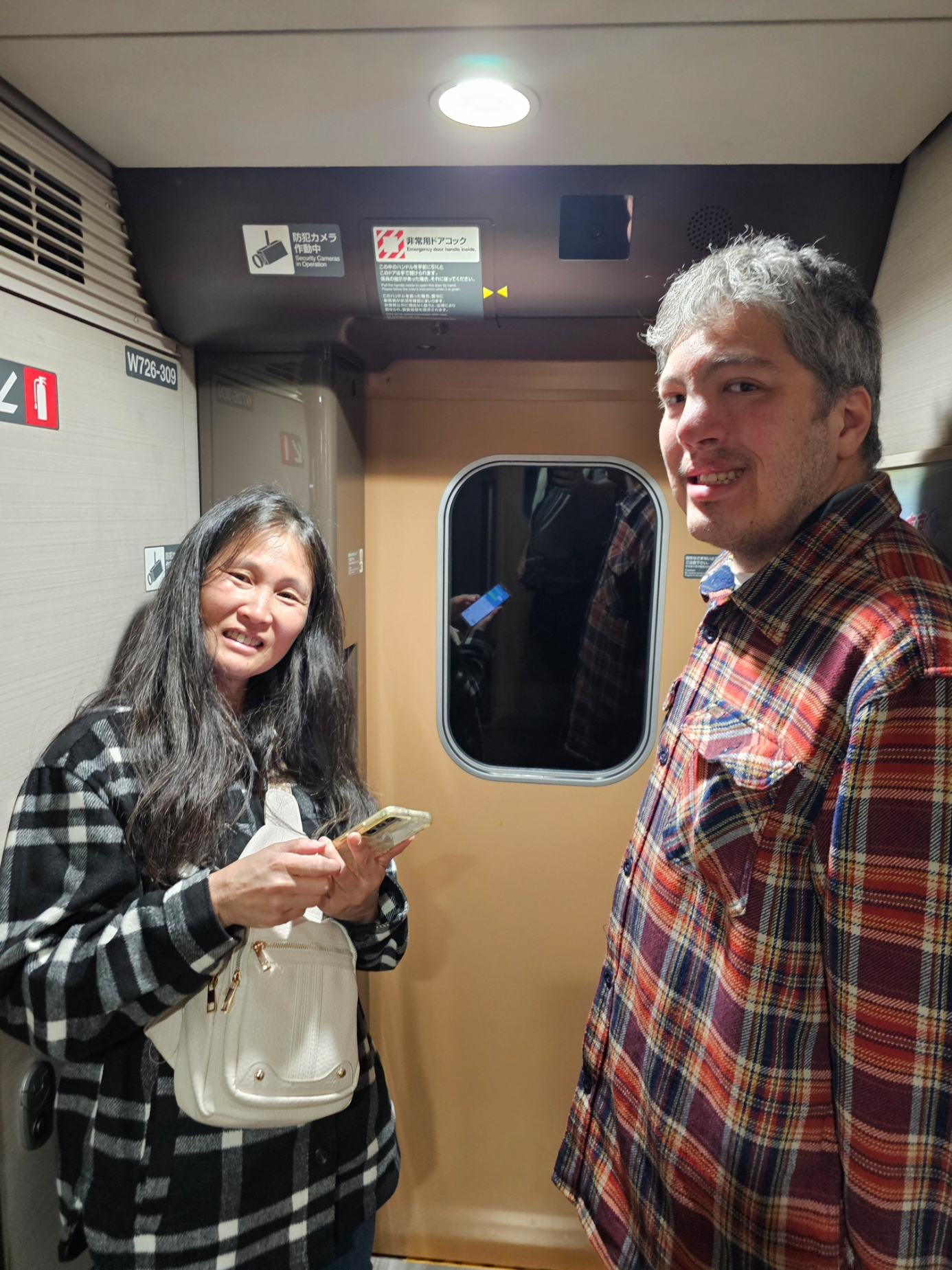
The vestibule is one of the truest spaces in the chapter because it is made entirely of between. Not home. Not arrival. Not rest. It is the narrow temporary chamber in which something old must endure the motion of something modern. Once removed from its first setting but not yet granted its next, the ranma exists in this suspended condition of carried belonging.
Doors, rooms, shelves, entries, labels, drawers, openings — the whole book has been teaching itself through thresholds. The vestibule is that same truth translated into transit. The object is still the ranma. The family is still the family. Only the surrounding architecture has changed, from kura and tatami to train door and steel floor.
The Monorail
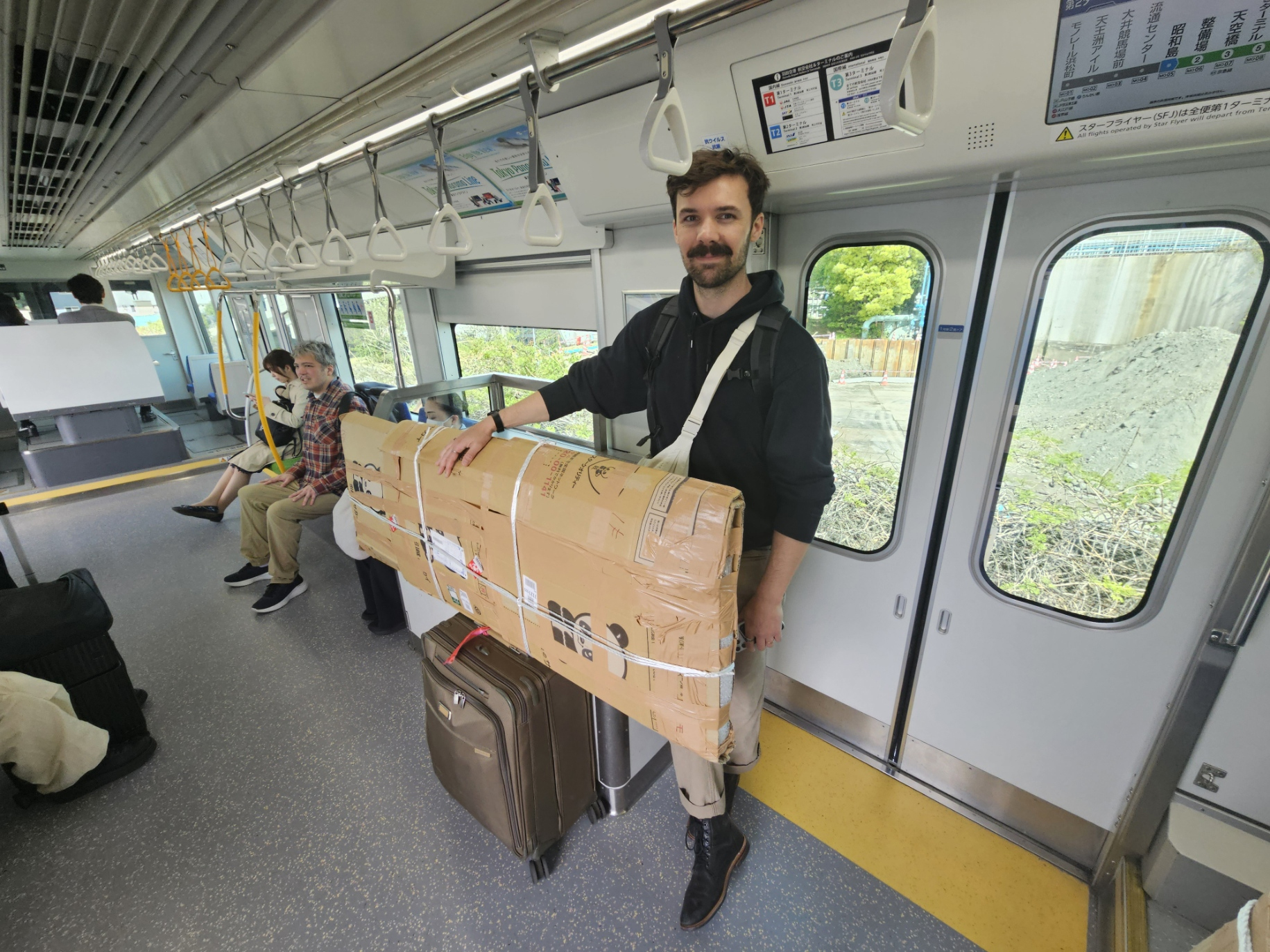
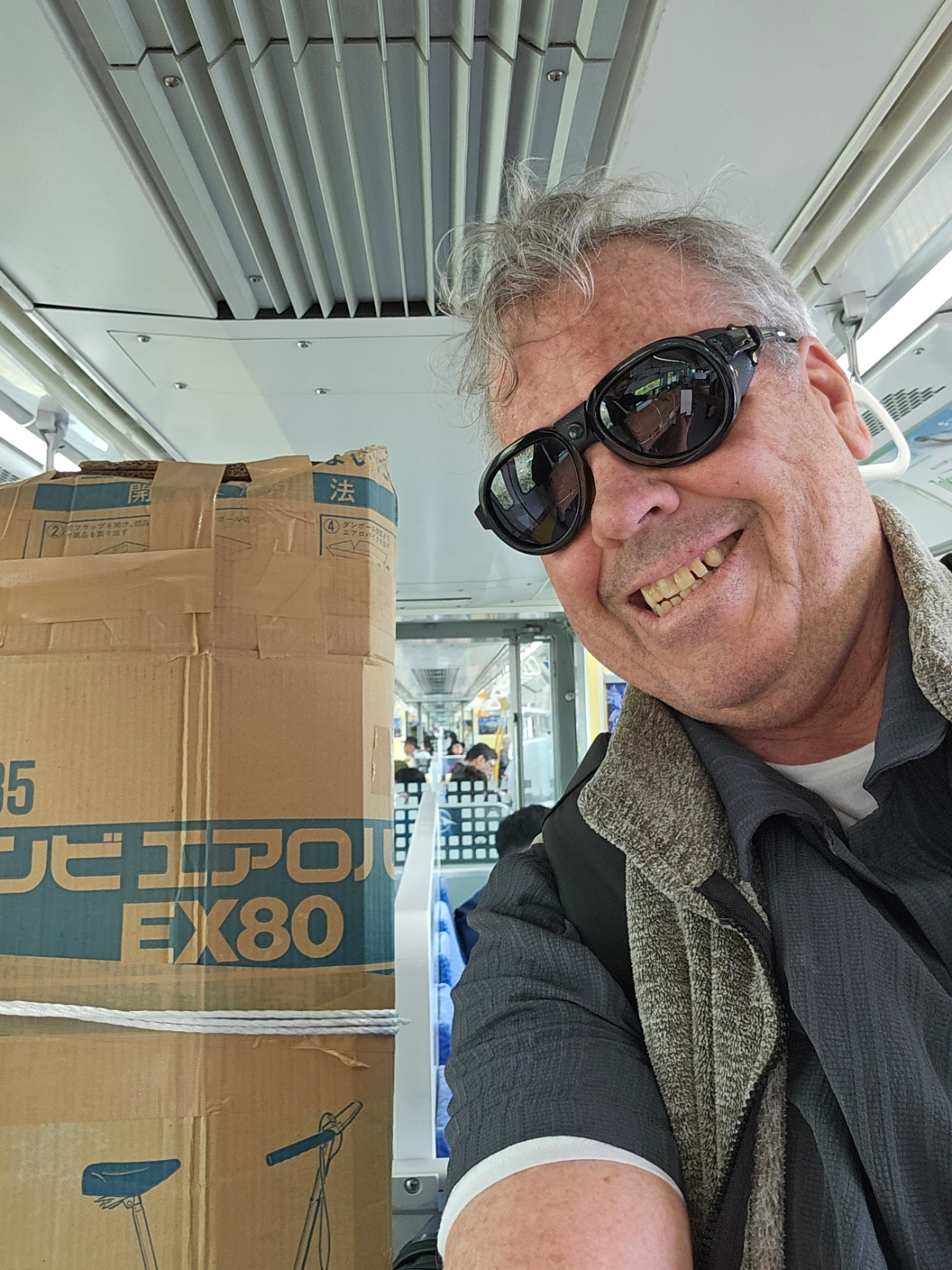
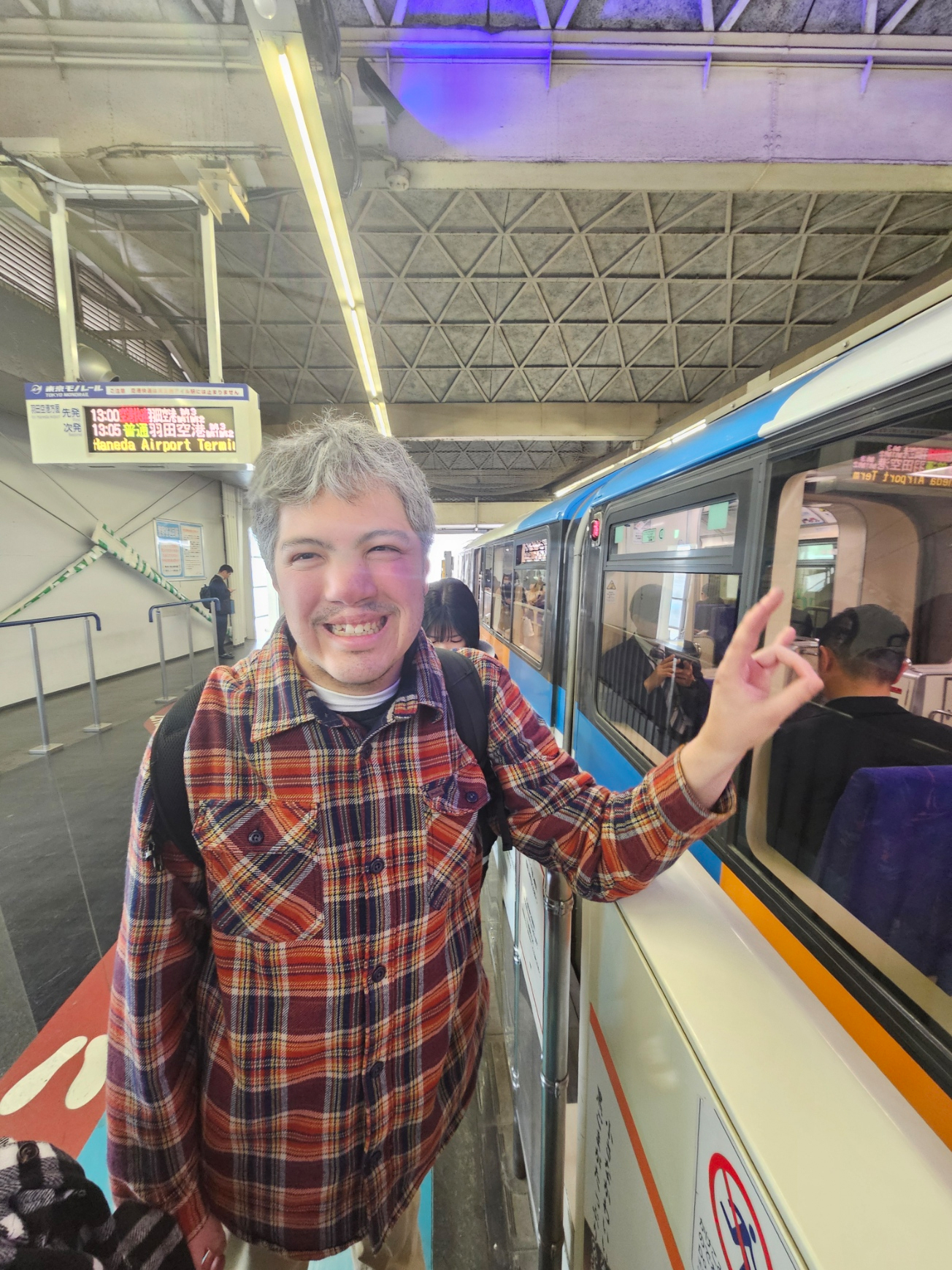
There is something almost comic in the sight of the ranma entering the monorail, and then immediately something grave. A carved remnant of an old family interior now rides inside one of the sleekest and most indifferent forms of urban motion. That contrast is not decoration. It is the truth. Old memory survives not by remaining untouched, but by passing through the channels the present has made available.
The monorail is efficient, public, timed, spatially unforgiving. Nothing about it shares the pace of the old house. Yet the ranma goes there anyway, not as parody, but as proof. The family is not trying to freeze the house in reverence. It is trying to carry what matters through time.
Haneda
By Haneda, the scale has widened enough that no one can pretend this is a sentimental whim. The object has already crossed too many thresholds for that. It has been chosen, wrapped, lifted, guarded, handed off, balanced, watched, and accompanied. At the airport the burden enters a larger machine — terminals, restaurant pauses, platform changes, airfield views, baggage logic, gates, departure timing. The family has not left the house behind. It has brought the house into the machinery of continuation.
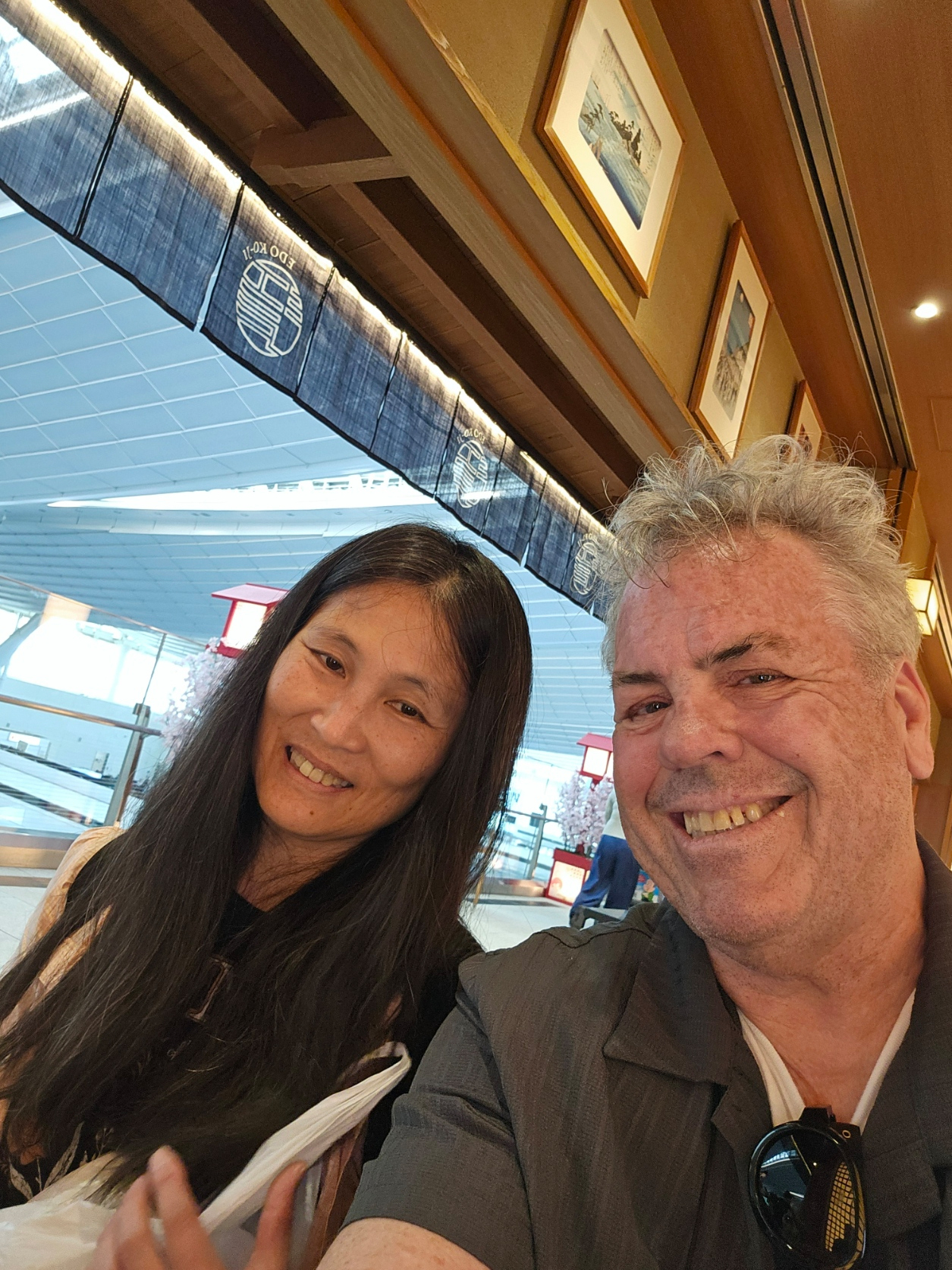
Even the pauses belong now. To sit down and eat is no longer separate from the burden, because the burden is still there, still traveling, still requiring stewardship. Fatigue enters the scene. Hunger enters it. So does the strange dignity of pressing onward after caution has already exhausted the body. Departure ceases to mean exit. It becomes transmission.
Old Memory in Modern Systems
Old memory enters modern systems. The family does not preserve Hanasaki by refusing the present. It preserves Hanasaki by forcing chosen meaning through the actual channels available now — counters, sidewalks, train vestibules, monorails, terminals, transfers, receipts, restaurant pauses, gates, flights.
Nostalgia would keep the house still. Preservation accepts motion, awkwardness, handling, risk, and process. The ranma cannot remain forever untouched in its first room. It must survive the move into another life without surrendering what made it worth carrying. Logistics matter here because they are one of the forms love takes once the object is real.
By then the body wanted something other than caution. It wanted water, light, food, and the loosening kindness of evening. Toyama had not disappeared while all this carrying went on. It had simply been waiting beyond the counters and platforms for night to make itself felt again.
The route was awkward. The systems were indifferent. The burden remained real. And yet the ranma moved.
The house entered the present through discovery.
It entered the future through the safe passage of the ranma.