Kyoto: The City of Other Rooms
If Hanasaki is one room of inheritance, Kyoto is a city made of parallel rooms: gates, terraces of remembrance, gold, lanes, bars, workshops, and costume chambers. It does not arrive to replace the family house. It arrives to widen the book’s breathing. In Hanasaki, rooms had to be reopened. In Kyoto, rooms are already arranged, waiting, lit, framed, and entered by choice. The family does not leave its story by coming here. It discovers another scale on which passage, enclosure, refinement, and attention have already been practiced for centuries.
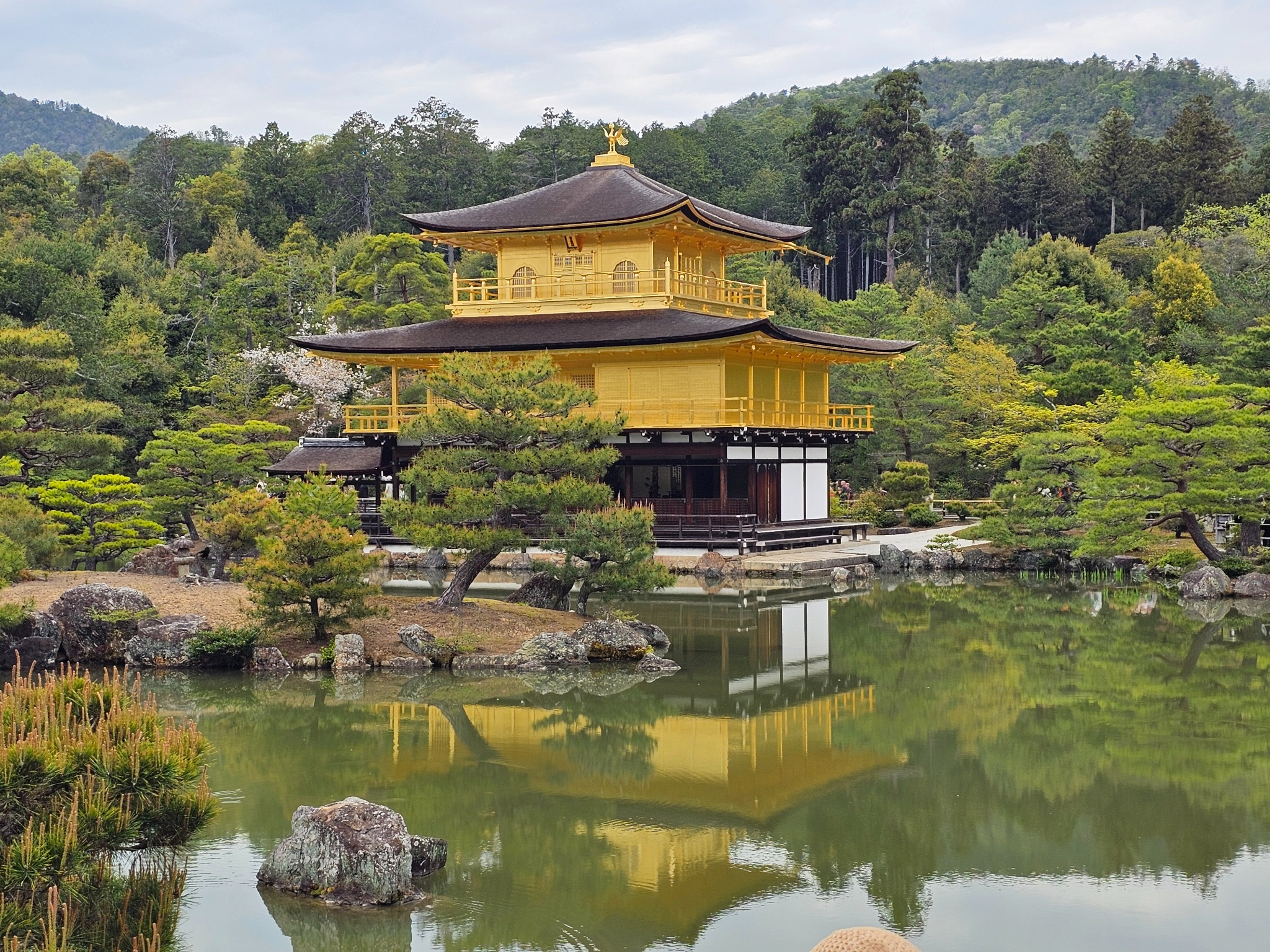
By this point the family has learned that one house, however deep, cannot carry the whole emotional scale of a life. Hanasaki taught them to read what remained under dust, strain, delay, and inheritance. Kyoto begins elsewhere. It begins with places already prepared for entry. Here one moves from gate to court, lane to bar, workshop to display room, shrine terrace to gold pavilion. The city does not ask the family to rescue it. It asks whether they can enter with enough attention to notice what centuries of chosen form have done to space.
Hanasaki pressed from the past. Kyoto receives in the present. One is inherited. The other is entered. One keeps asking what can be saved. The other keeps asking whether the body can still pass through a threshold and change its measure accordingly. That difference matters because it loosens the family from one moral climate. The book can now move between rooms instead of standing forever in a single one.
Hanasaki had to be reopened.
Kyoto is the city where rooms are already waiting.
Gates
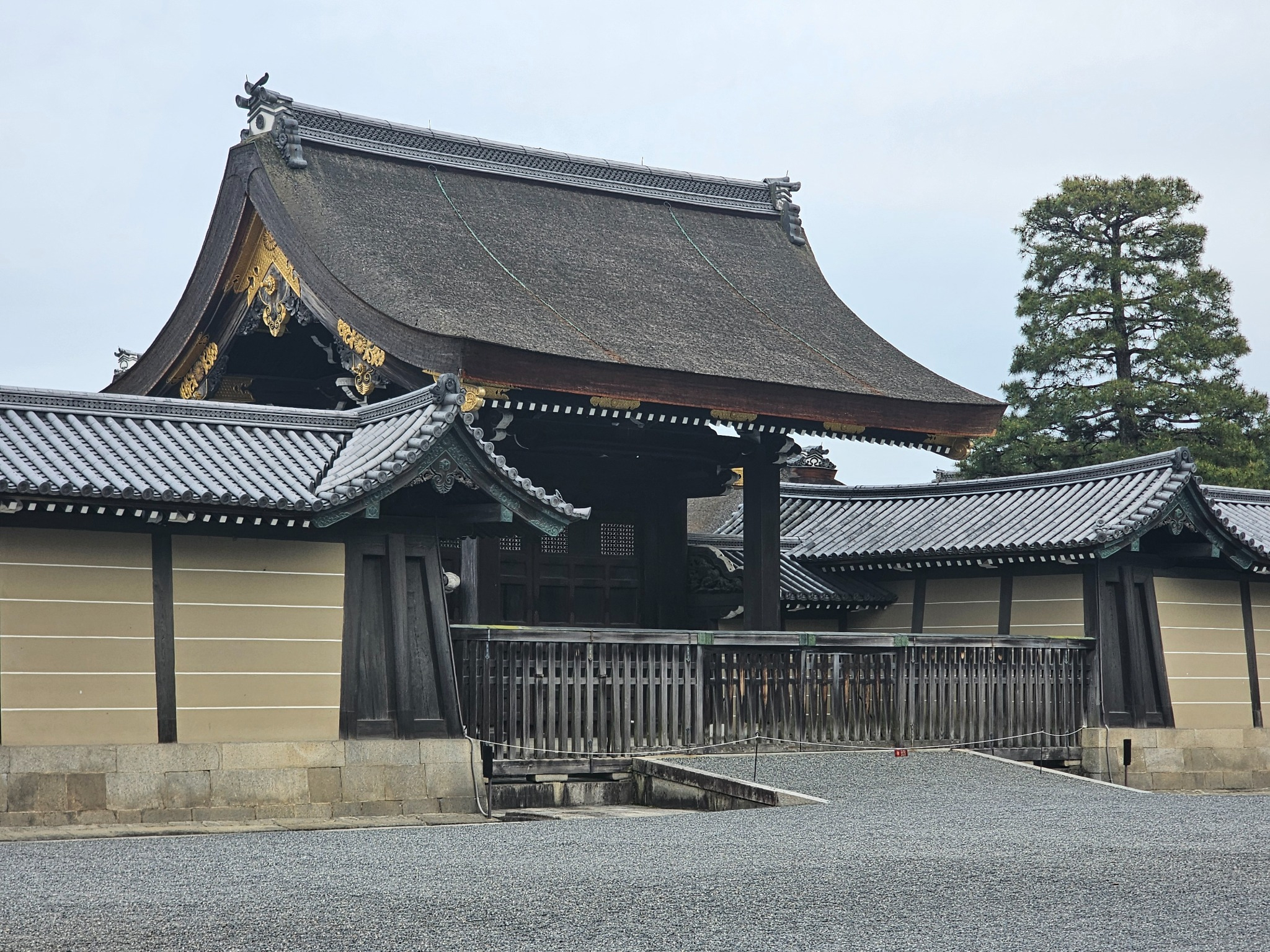
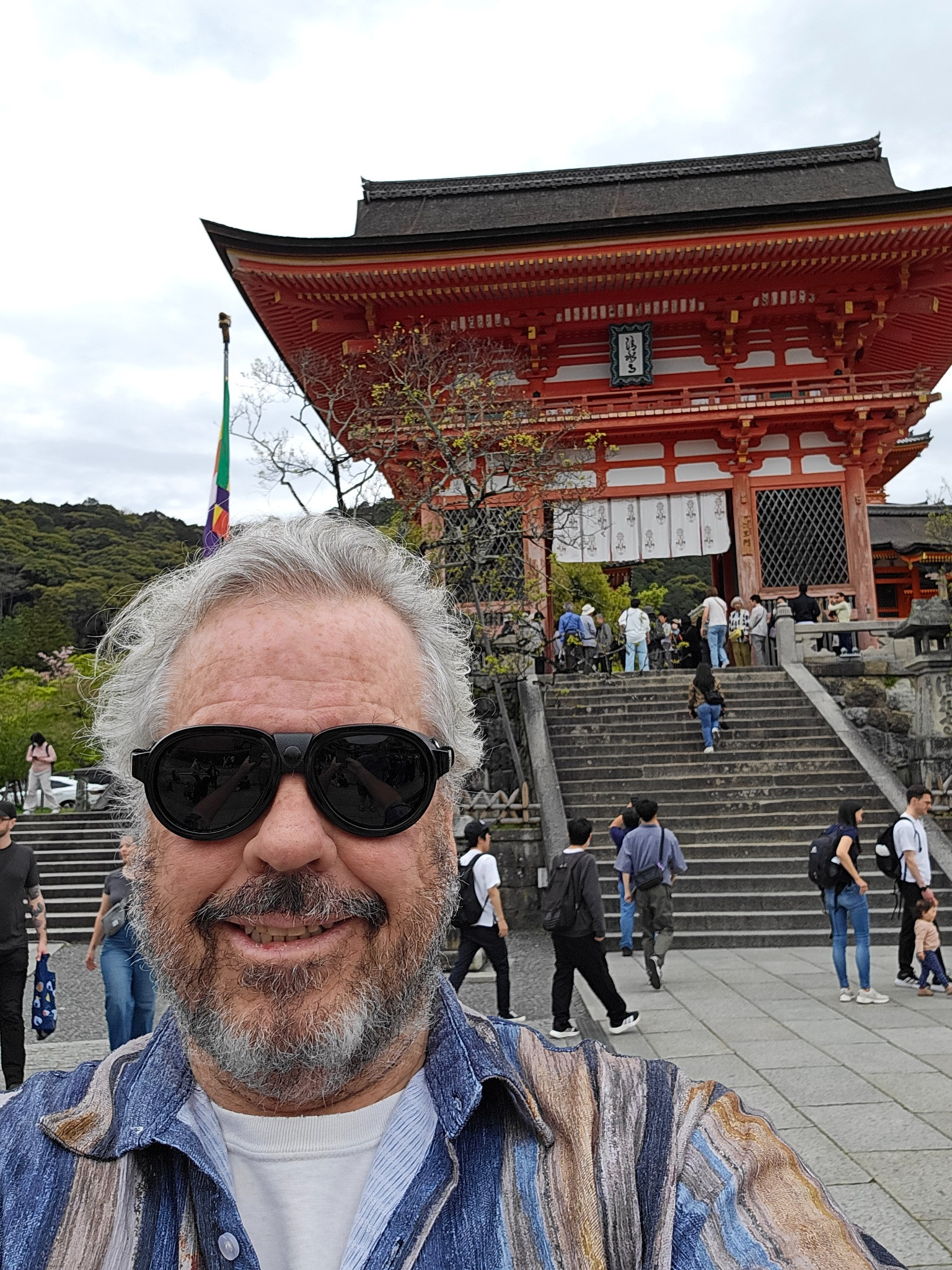
Gates in Kyoto do not merely separate one space from another. They alter the body before the mind has finished naming what is happening. A great wooden roof, a vermilion threshold, a temple approach under spring greenery: each one slows the stride and lifts attention. The city keeps insisting that entry is not drift. One passes beneath something, and in passing beneath it, agrees to be measured differently on the other side.
That is why the gates belong so naturally beside Hanasaki, though not in the language of explanation. The kura door had once done this on a domestic scale. The family house taught hesitation, weight, permission, release. Kyoto repeats the lesson in public and with confidence. Here the threshold is not wounded or hidden. It stands openly in the world and still asks for seriousness.
Cemetery
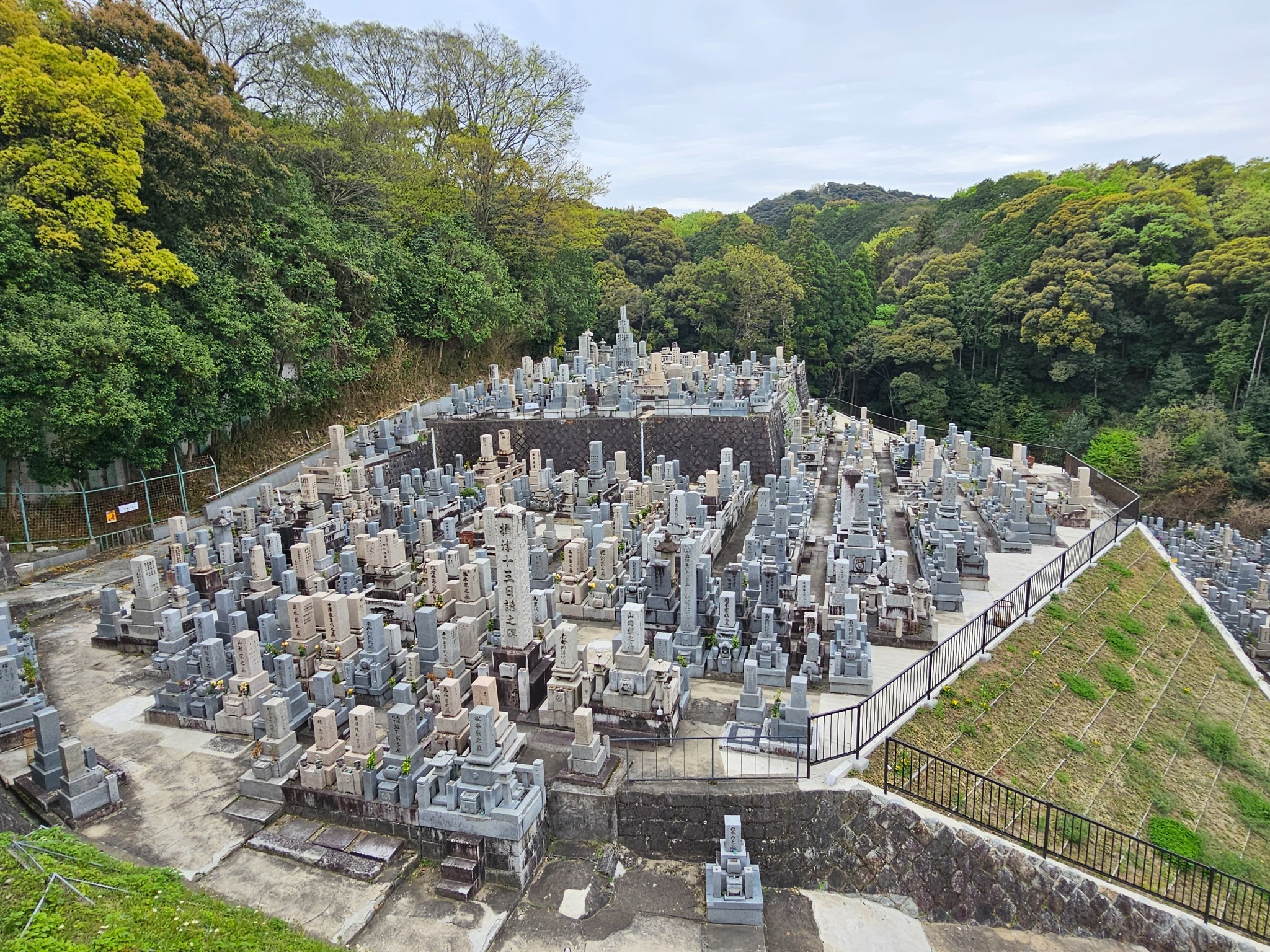
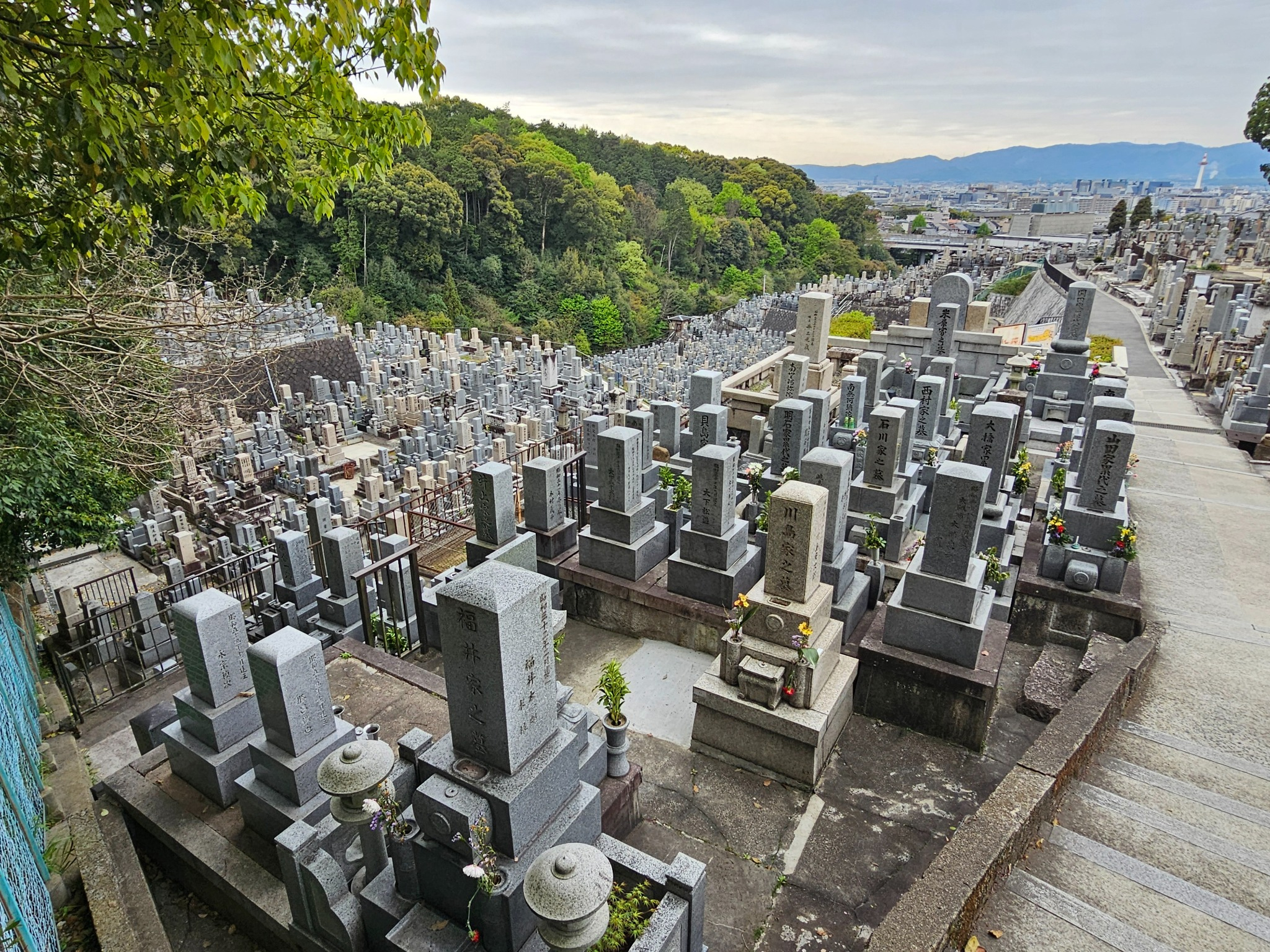
Kyoto’s cemetery terraces carry memory upward through the city. Stone, steps, elevation, names, the slope holding both the dead and the living below: remembrance here does not hide. It rises. If Hanasaki bound house, shrine, and grave into one intimate field, Kyoto spreads remembrance along a broader urban incline and lets the city remain visible beneath it.
That visibility is part of the force. The dead are not sealed off from the rest of life, nor dissolved into it. They are ordered above it, looking outward. The terraces refuse both sentimentality and erasure. They give grief form. After Hanasaki’s ache, that form matters. The burden of inheritance is still there, but here it has stairs, stone, repetition, and air.
Kinkakuji
Kinkakuji arrives with the slight unreality of a place too exact to be mistaken for ordinary life. Gold, water, pine, measured approach, reflective calm: it feels less like an object than a sentence written so clearly that the eye has no choice but to slow down and read it. What startles is not only the gold, but the discipline around it. Radiance is held in arrangement. Brilliance is given distance, water, path, framing.
Hanasaki’s beauty had to be recovered under dust, burden, and family hesitation. Kinkakuji stands already staged by care. That contrast deepens rather than weakens the book. The family has spent chapters learning how beauty survives when threatened. Kyoto now shows beauty stabilized in public life, maintained so thoroughly that it begins to feel inevitable, though of course it never is.
Old Lanes
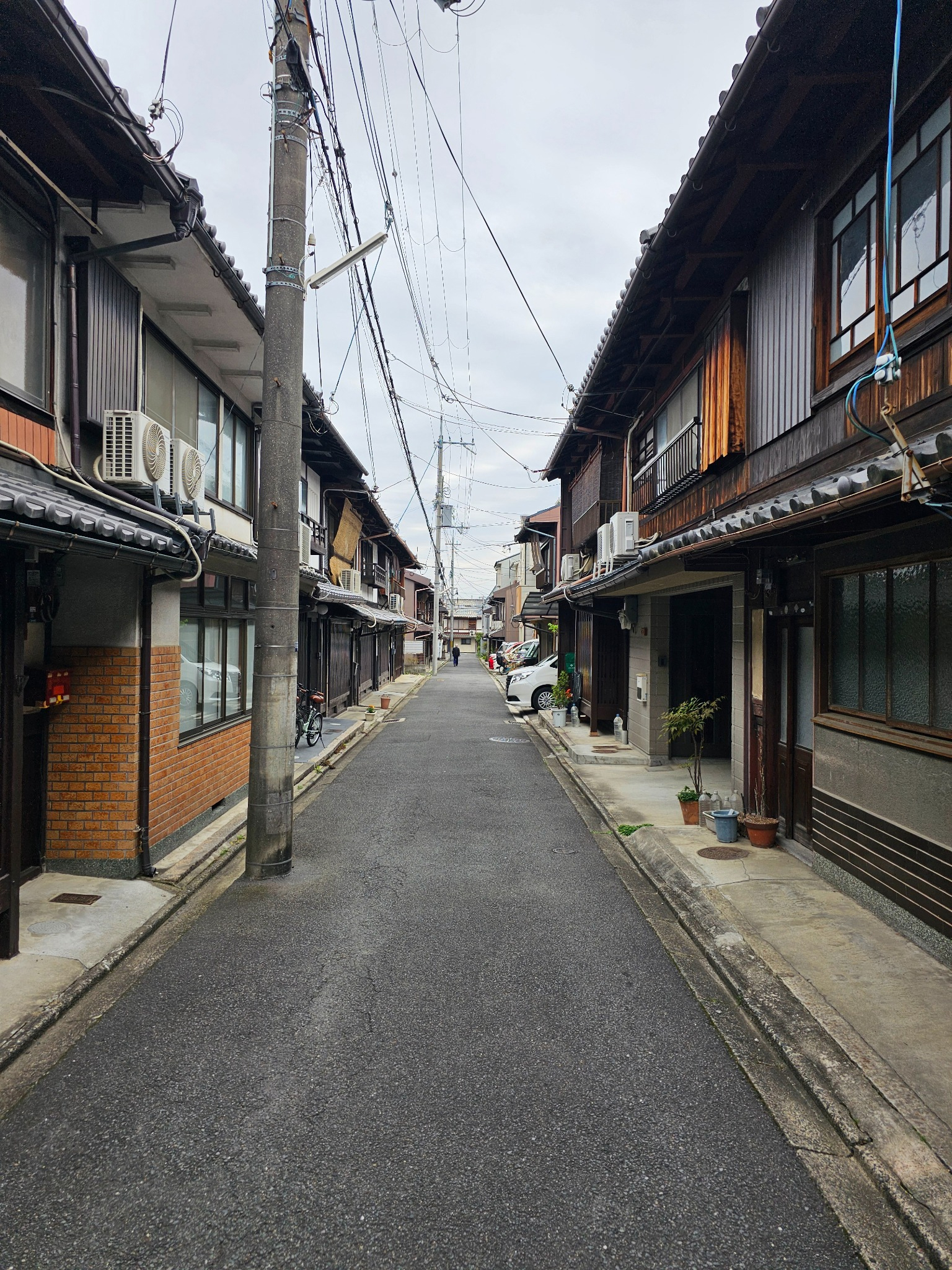
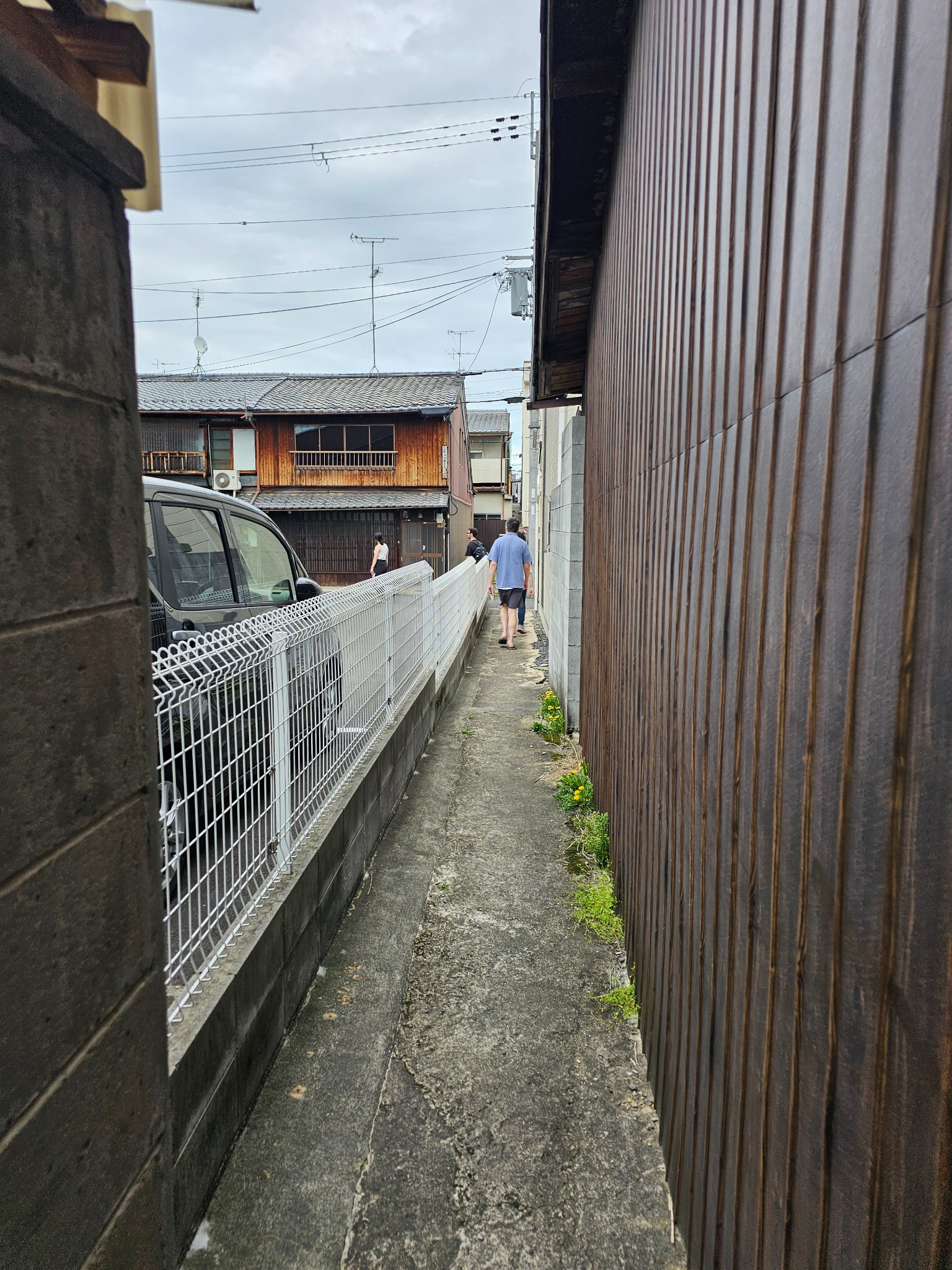
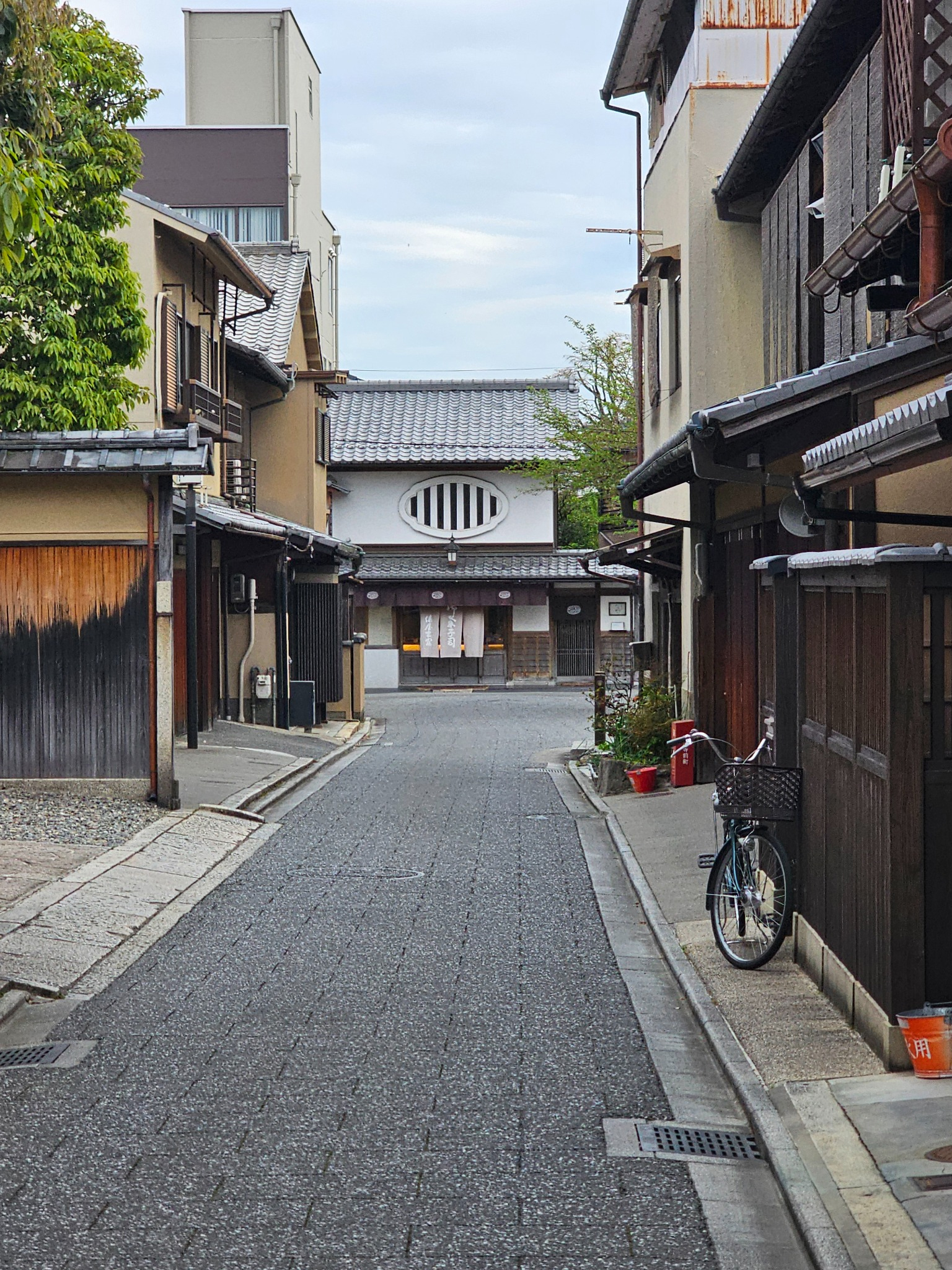
Kyoto’s lanes return the chapter from spectacle to passage. Narrow streets, side alleys, machiya walls, corners where the city folds inward instead of outward — these are the places where continuity lowers its voice. Nothing announces itself too loudly. Scale is kept by compression. The walker is asked to shrink attention down to drains, turns, door edges, timber, plaster, and the exact width of a way through.
A lane is a room stretched into passage. It holds without fully enclosing. It guides without fully declaring itself. Hanasaki taught the book to care about contained spaces. Kyoto teaches that a city, too, can keep meaning alive by narrowing it to a human measure rather than expanding it into spectacle.
Bars
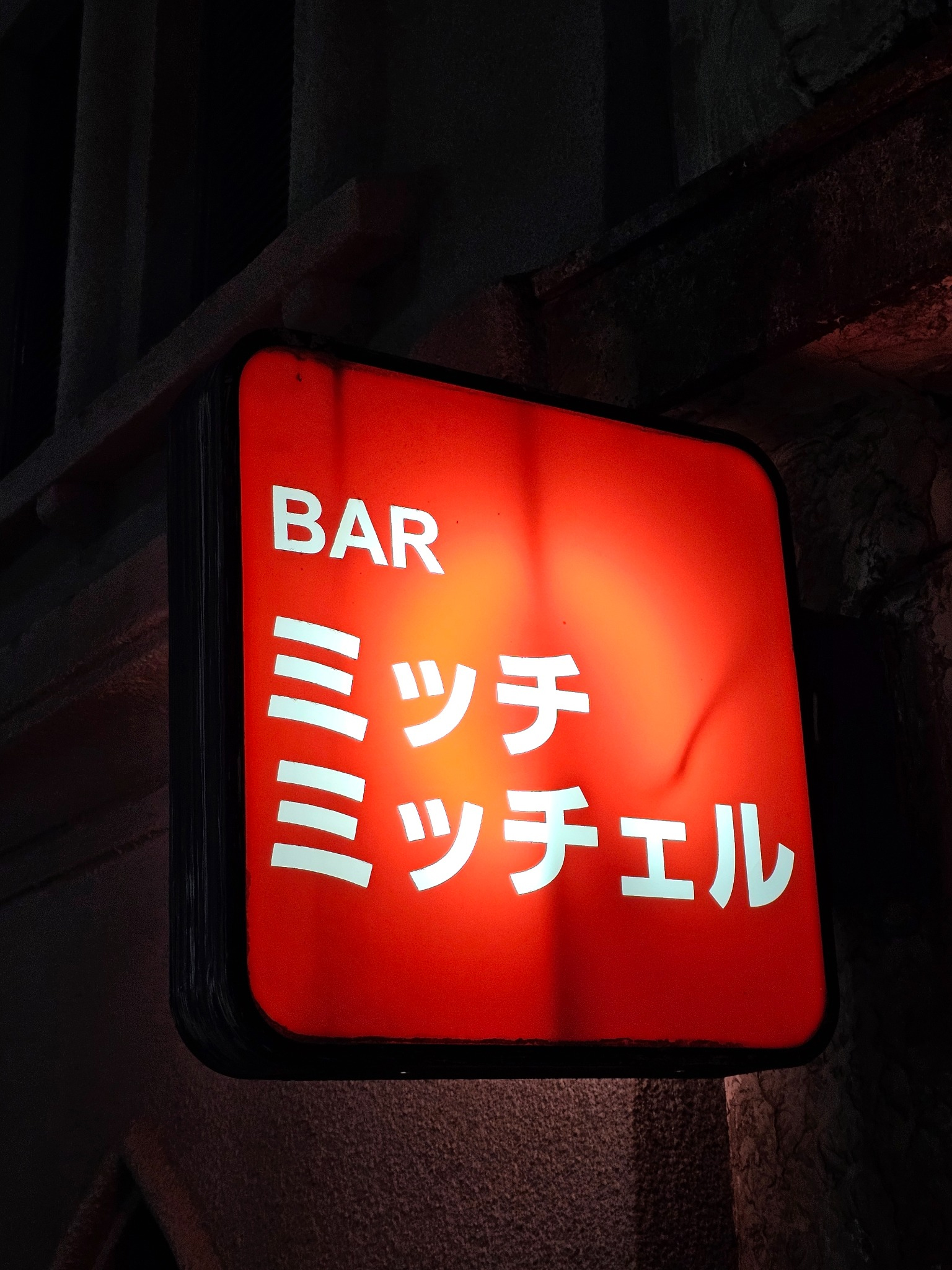
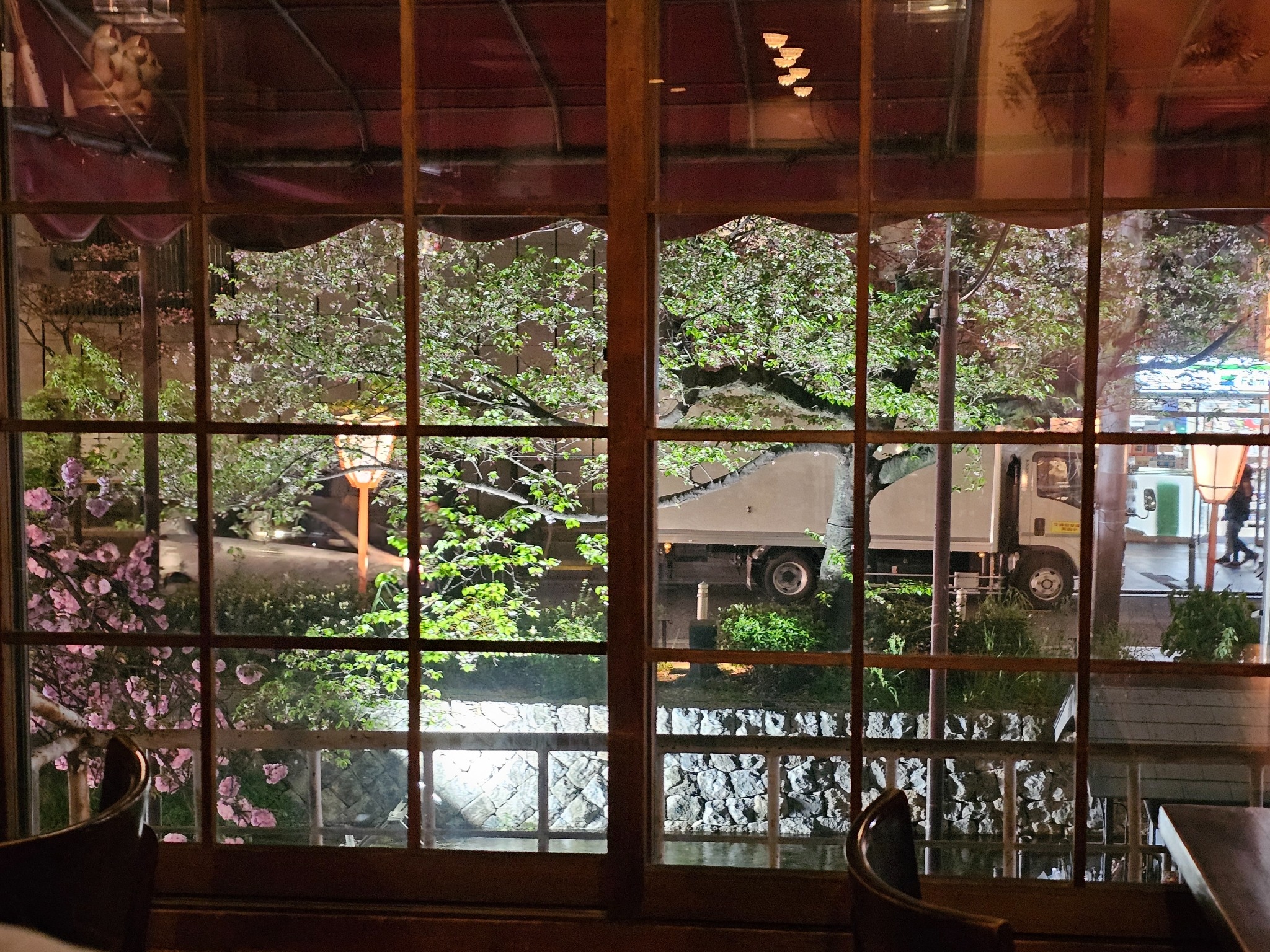
Bars may seem far from shrine gates and cemetery terraces, but in Kyoto they belong to the same grammar of enclosure. A counter, a red sign, a river-view window, carefully lit bottles, records, wood, a narrow entry one might almost miss: these are chosen rooms, not inherited ones. Someone composed them so that mood would gather inside them with precision.
That changes the book’s scale again. Hanasaki contained what remained. Kyoto’s bars contain what has been selected in the present. Both ask for arrangement. Both depend on thresholds. Both shape feeling through enclosure. But one was given by family time, and the other is entered because one wishes, for an hour, to let a room alter the quality of attention.
Workshops
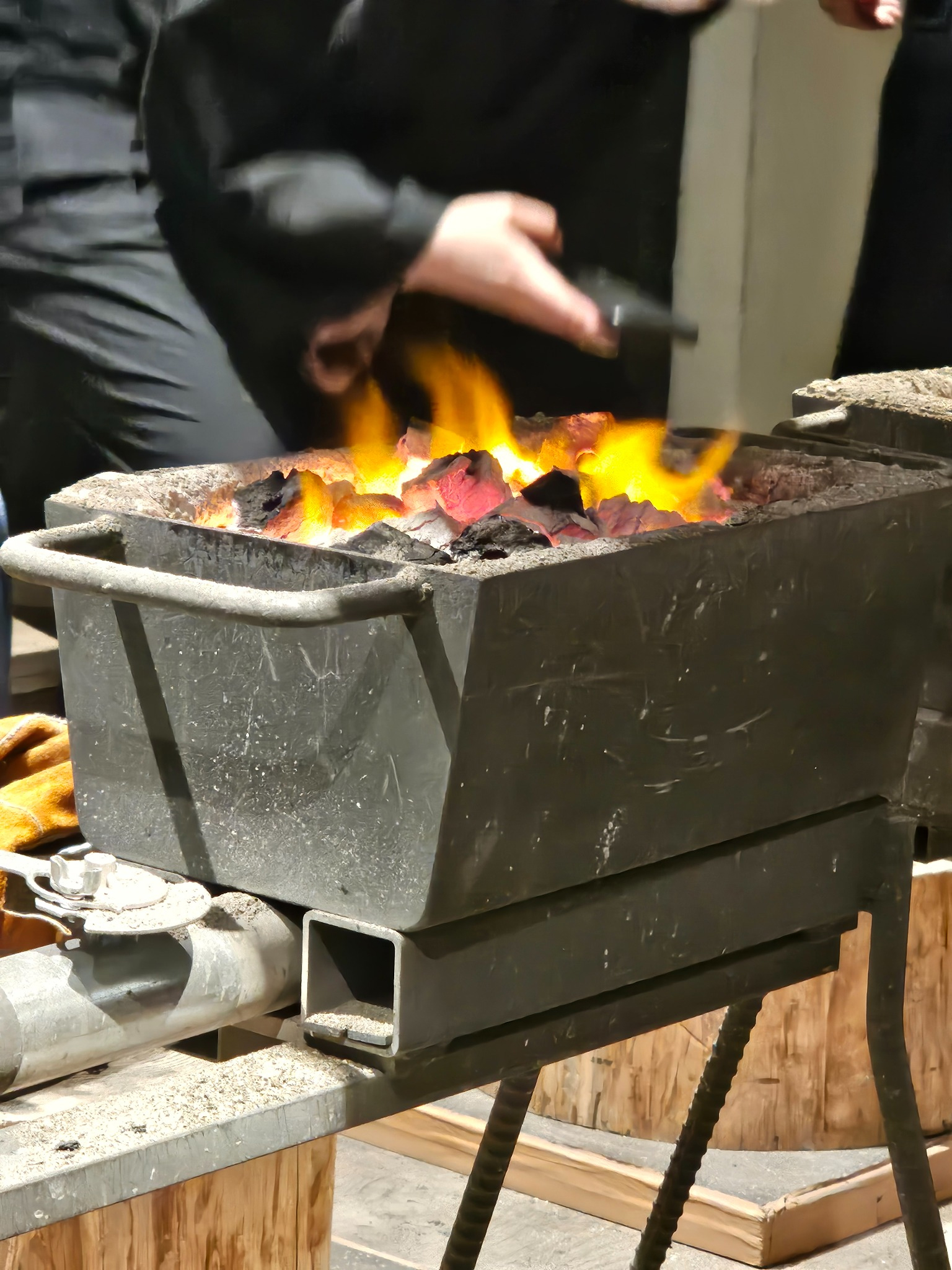
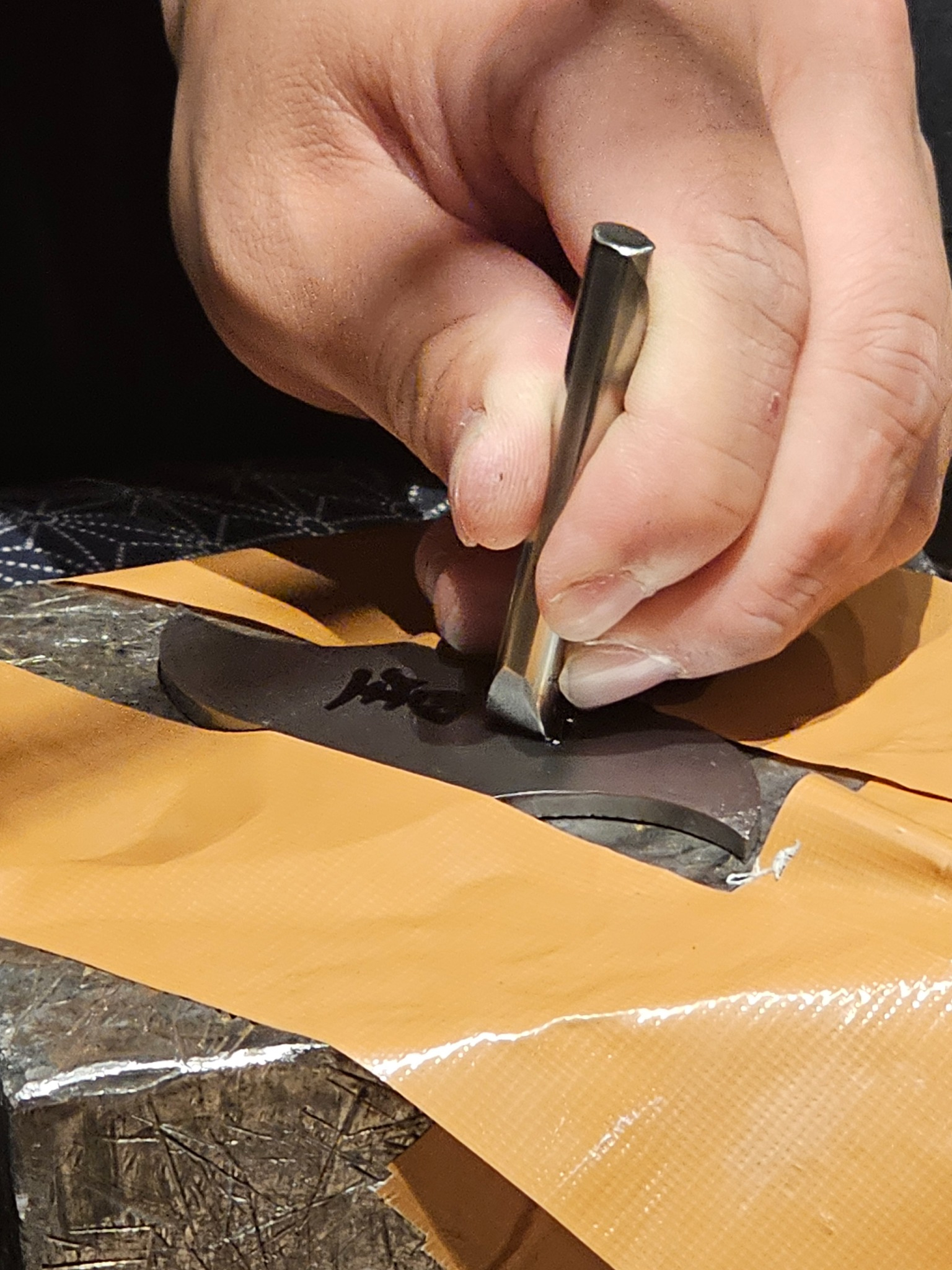
Workshops bring labor back into sight. The family house had been full of its residue — carving, metalwork, ceramics, screens, scrolls, the finished surfaces of old skill — but much of that labor had to be inferred from what remained. Kyoto lets the body see making while it is still underway. Heat. Tools. Hands. Engraving. Shaping. The bench, the flame, the repetition of skill under the eye.
That visibility matters because the book has been trying all along to feel the human work inside objects without flattening them into artifacts. In Kyoto the labor is not only preserved. It is present tense. The city does not merely display refinement. It still manufactures it.
Museum / Costume Room
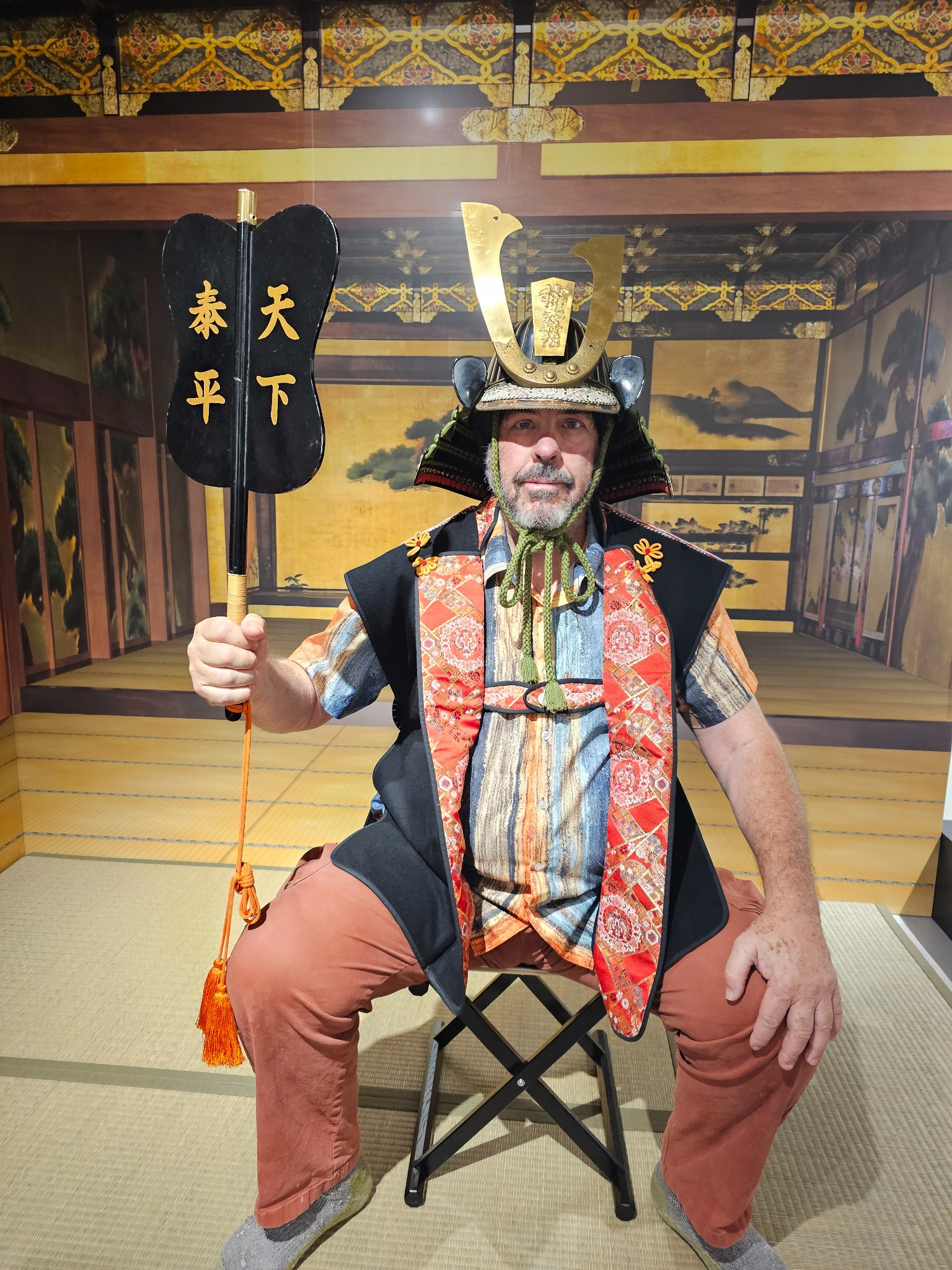
The costume room completes the chapter because it lets the body enter history without pretending to become it. Helmets, dress, staged pose, display, the odd half-seriousness of stepping into another era for a moment: none of this is trivial. It reveals that time is often approached through selected surfaces, ritual play, and formal imitation before it is understood more deeply.
That tension belongs in Uchi. The whole project asks how one re-enters older forms without falsifying them. The costume room answers with honesty. You do not become the past. You pass into one of its rooms for a while, aware of distance, yet changed by the act of entry all the same.
Civilizational Mirror
Kyoto stands beside Hanasaki not by repetition, but by expansion. The house had condensed passage, storage, shrine, grave, lane, burden, and inheritance into one local world. Kyoto unfolds the same concern across sacred, artistic, commercial, civic, and theatrical rooms. The scale is larger. The grammar is the same. Spaces hold meaning. Bodies cross thresholds. Attention changes according to where it has entered.
The family therefore does not leave its story when it comes here. It enters another scale of the same question: how does a culture build rooms people can still enter with seriousness? Kyoto answers with gates, terraces, gold, lanes, bars, workshops, and costume chambers. It shows what becomes possible when refinement is not merely rescued, but publicly arranged and kept enterable.
From here the next movement becomes visible. Gold screens and kura wood can finally begin speaking directly to one another.
* * *
Kyoto appears here not as overflow, but as measured parallel. Another architecture. Another system of rooms. Another way of teaching the eye, the body, and the mind that entry matters.
Hanasaki taught the book what remained in one house.
Kyoto teaches it how a civilization arranges rooms so meaning can keep being entered.