Mountains on the Day of Leaving
Leaving is different after a place has finally been seen. The train arrives as trains always arrive, the platform still asks for waiting, and the mountain still stands where it has always stood. Yet nothing is casual anymore. What had once been scenery has become relation. Departure no longer feels like simple exit. It feels like motion carrying knowledge away before the body is ready to lose the view.
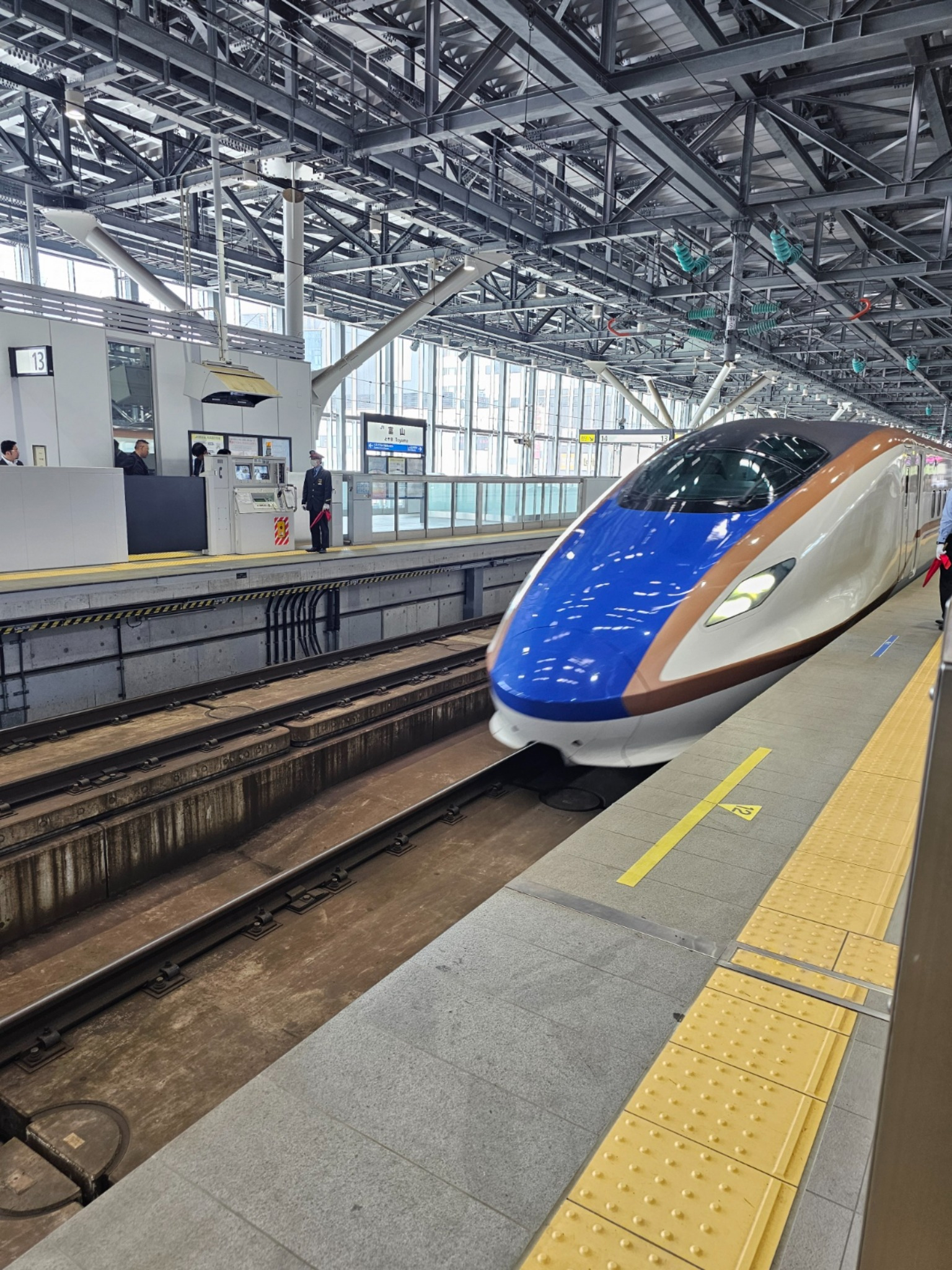
Leaving begins before anyone says goodbye. It begins when the train is no longer abstract transit but the visible mechanism by which a known world will soon begin withdrawing. The platform does not look different because departure is meaningful. It looks more exact. The metal edge, the painted line, the ordinary timing of arrival, the practiced calm of waiting — all of it sharpens because the body now understands that it is standing at the lip of removal.
The family has spent enough time in Hanasaki, Toyama, and Kyoto that departure can no longer pretend to be casual. The mountains have entered the blood. So have roads, signs, baths, platforms, screens, gates, beams, windows, and carved wood. Leaving now gathers them without being able to carry them all. That is where the day gets its peculiar ache. Not in dramatic farewell, but in the knowledge that a place can be fully seen and still not be keepable.
Departure becomes heavier and gentler at the same time once the place has been truly seen.
The Shinkansen Arrives
The arriving Shinkansen is still only a train, and that is why it hurts. Nothing ceremonial has been arranged to honor the fact of leaving. The nose enters, the cars align, the doors open, the schedule continues. The whole mechanism remains indifferent in the clean, practiced way large systems must remain indifferent. Yet against that indifference the family’s seeing presses harder. The train does not know what was found in the house. It does not know what was carried, wrapped, doubted, or preserved. It only arrives to take bodies onward.
The platform and train together turn feeling into sequence: stand back, wait, board, settle, look once more. Departure enters through instructions and timing. The heart obeys public procedure whether it is ready or not.

The Mountains
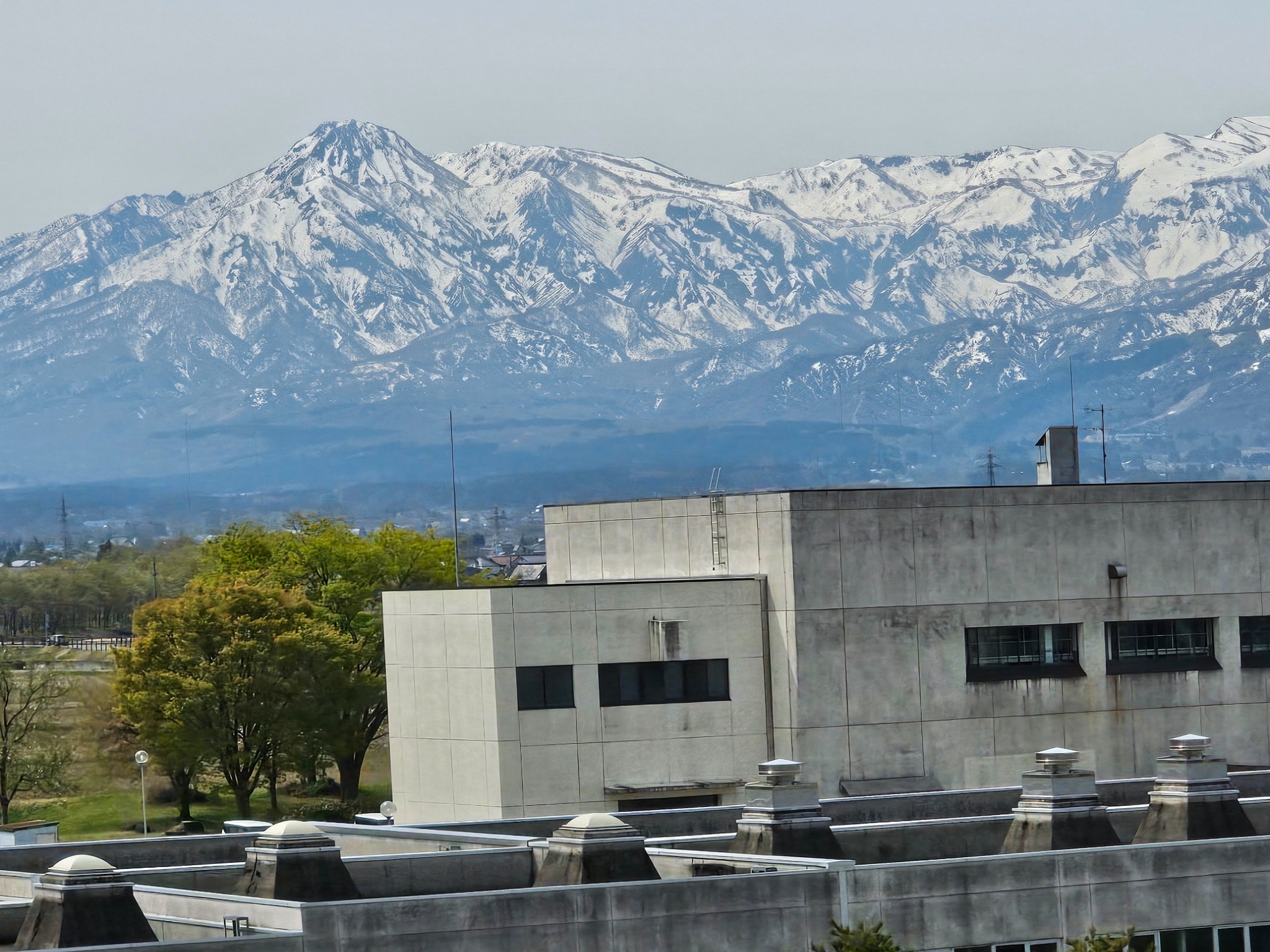
Mountains change departure because they refuse to move with the traveler. They stand in the window while the train claims velocity. Their stillness throws the traveler’s motion into relief. On the day of leaving, that contrast becomes almost unbearable. The body goes forward. The mountain does not come. What has been entered remains where it is.
Earlier in the journey, the mountains could still be admired. Now they become witnesses. Snow, distance, ridge, weather — all of it gathers into one hard fact: there was a place here, and it was not invented by feeling. The mountain keeps standing after the human schedule has already begun pulling away. That is what gives it authority. It does not plead. It remains.
Leaving under mountains is unlike leaving under flatter skies. One does not merely depart a house or a city. One departs a scale.
The Vestibule Selfie
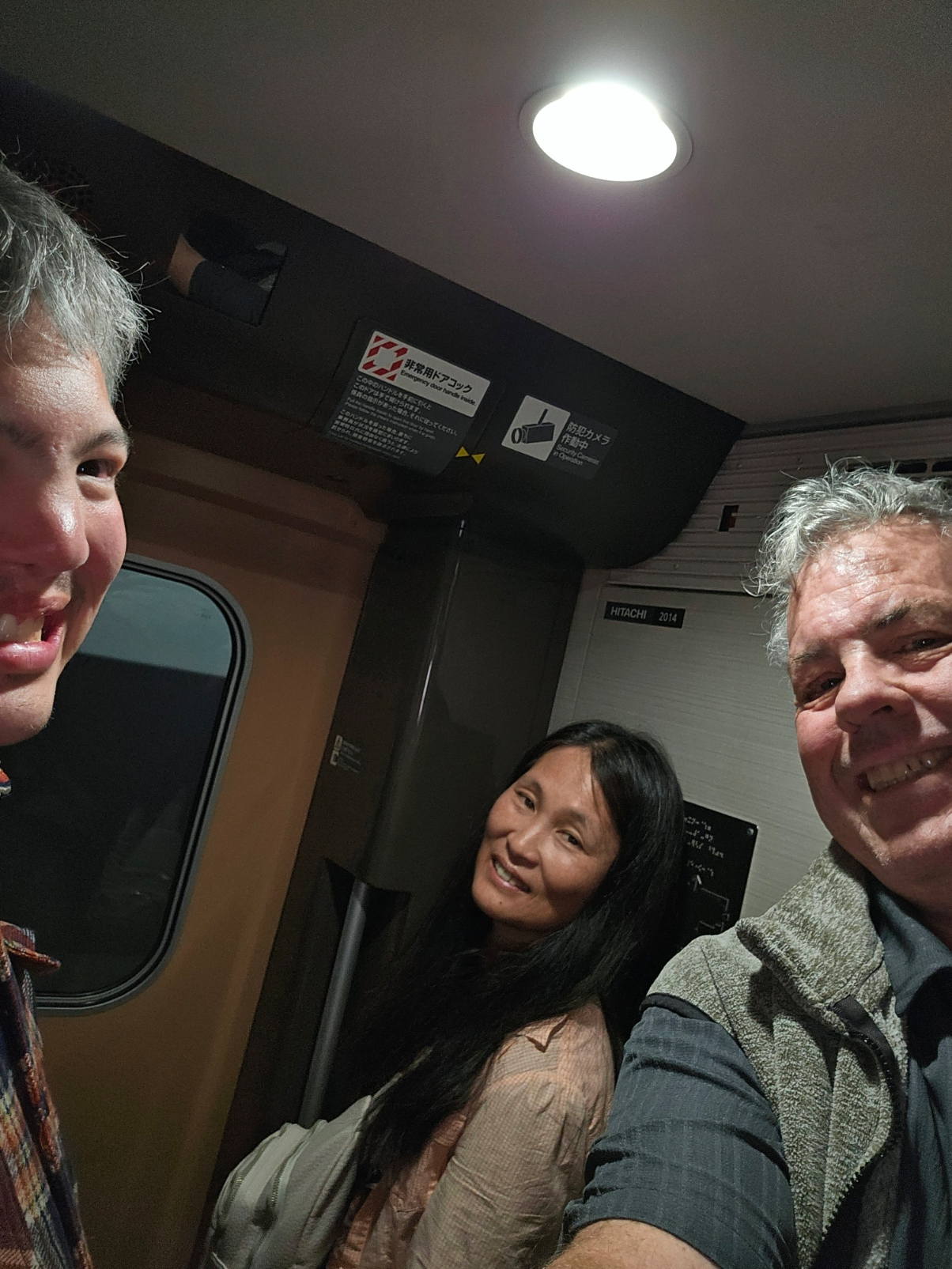
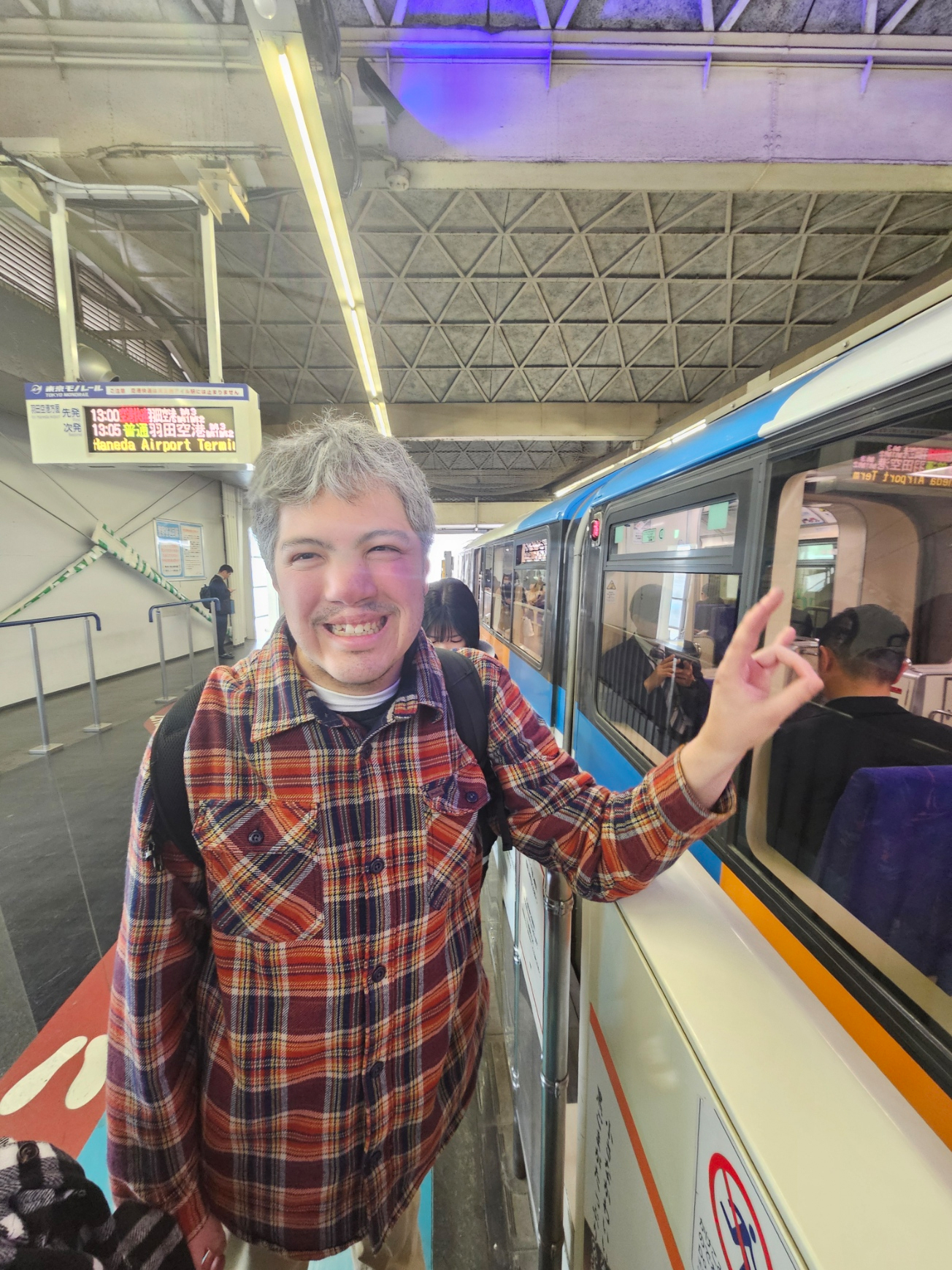
The vestibule selfie is modest, almost comically so, beside the weight of departure. It does not try to become art. It simply records shared passage: bodies between places, family enclosed in transit, the ordinary proof that they were there together while movement had already begun.
A platform is too large. A mountain is too large. An airport is too large. The family selfie in the vestibule draws the scale back down to faces, shoulders, nearness, and the slight awkwardness by which real life survives even serious emotion.
Haneda Platform
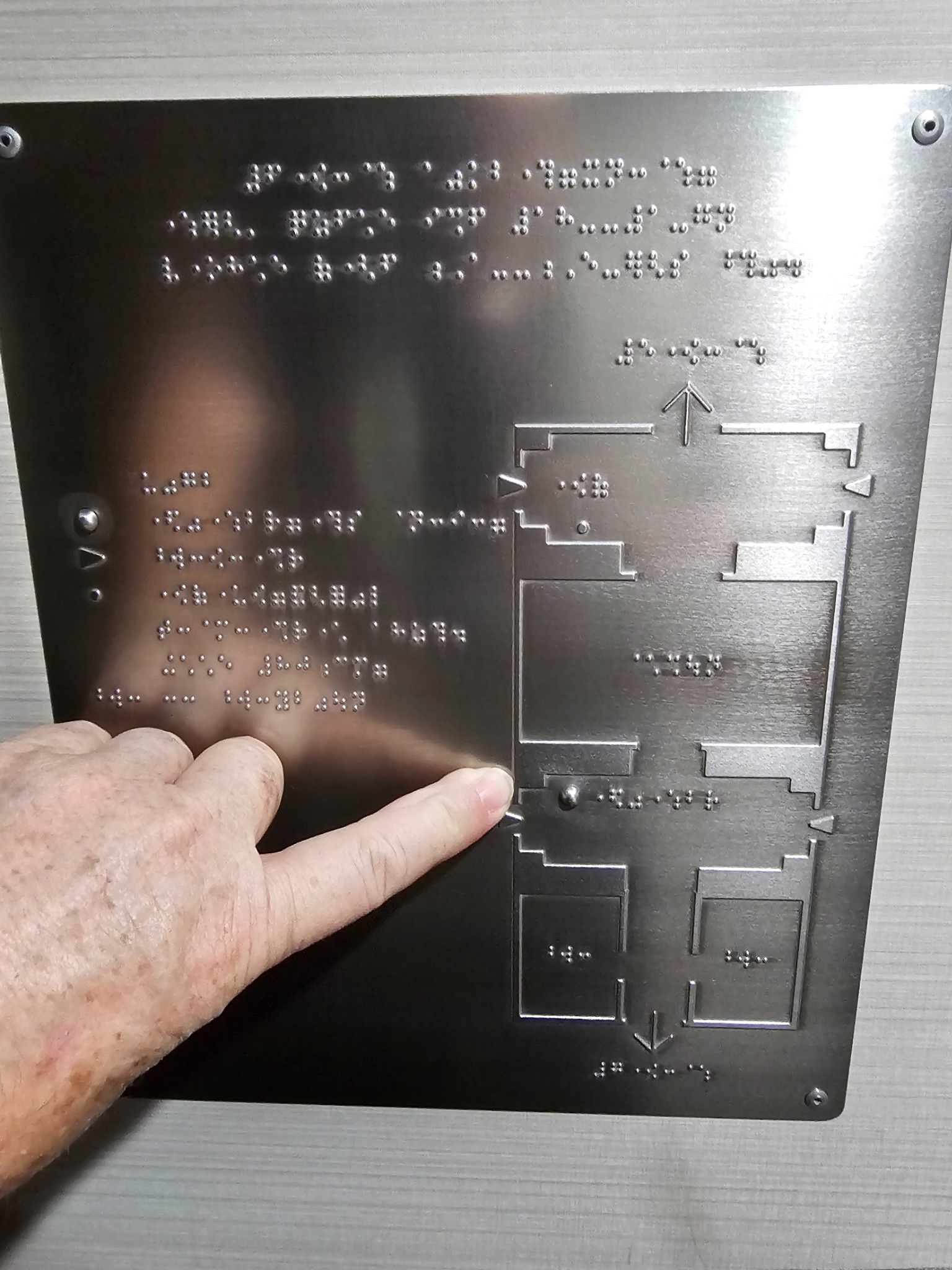
By Haneda the journey has narrowed again into waiting. No matter how much has happened before a platform, it asks for patience in straight lines. One stands, one watches, one listens for approach, one lets the body submit to sequence once more. Nothing in it is trying to help the traveler feel. It only keeps offering the exact conditions in which feeling must endure itself.
The platform also belongs to the long discipline of public departure. People are always leaving somewhere. Trains always continue. Announcements always come. A family carrying the ache of real seeing has to stand inside that shared impersonality and let it do its work. Departure refuses to build special architecture for private feeling. It places feeling inside the common world and asks it to travel there.
Airport Glass
Glass places departure in a frame while keeping it out of reach. The plane is visible, exact, and already belonging more to system than to family. Tarmac, wing, distance, movement held at a remove: leaving becomes fully legible only when the traveler can see what will carry him away without yet touching it.
The view is clean, but the feeling is not. What has been learned in Hanasaki and beyond cannot board all at once. It lingers on the wrong side of glass. Distance becomes visible before distance has completed itself. The window gives departure one last room in which to gather.
Departure After Seeing
There is a vagueness to many departures. One leaves before truly knowing what is being left. That vagueness protects the body. It allows travel to feel clean, almost technical. This departure does not have that luxury. The family has seen too much. The house has become specific. The mountains have become specific. Toyama and Kyoto have become specific. Even the station and the bath have become specific. Leaving therefore cannot be thin. It has density now.
And yet density is not the same as despair. The day of leaving carries tenderness as well. To depart a place after really seeing it is also to grant it the respect of reality. The place does not dissolve into travel anecdote. It remains itself. Departure did not erase the work of seeing. It completed it into motion.
The mountains held one part of that feeling. The train held another. The platform held waiting. The glass held distance before it was final. Each structure took some weight from the body and gave it a shape the body could bear for a little longer.
* * *
The train arrived. The mountains stayed. The platform asked for waiting. The glass held distance before it became absolute.
Departure did not erase the work of seeing.
It completed it into motion.